TIM PALMER: In China the fallout is still being felt from an open rebellion over air pollution at the country's annual session of parliament.
It was a dramatic shift for a Congress that's normally seen as no more than a rubber stamp.
Sensing a growing environmental crisis, a third of the delegates rejected a key anti-pollution measure.
Meanwhile China analysts are now expecting major economic reforms from the new administration in Beijing after premier Li Keqiang declared that more sections of the economy needed to be handed over to private enterprise.
China correspondent Stephen McDonell has been covering the closing stages of the National People's Congress in Beijing.
(Ceremonial music)
STEPHEN MCDONELL: China's annual session of parliament, the National People's Congress, has closed with plenty of big vision from the country's new generation of leaders.
Xi Jinping told some 3,000 delegates what an honour it was for him to be president and he was talking up the so-called “China dream”.
(Sound of Xi Jingping speaking)
“China is a great nation with great creativity,” he said, “We created this Chinese culture and we will be able to expand our path towards Chinese development.”
But a third of the delegates listening to him had just staged a large revolt on the floor of the Great Hall of the People over pollution.
When it came time to endorse the members of a key committee overseeing environmental protection and resource conservation, 850 delegates voted no and 120 abstained.
“Inspired in part by the open source movement, public spaces are emerging where people congregate to share ideas, make cool projects, teach, and brainstorm with collaborators on everything from coding to cooking. With no leaders, they have one rule: “Be excellent to each other.” Take a tour of the hackerspace Noisebridge, located in the heart of San Francisco's Mission District, with co-founder Mitch Altman.”
With educational institutions failing to provide young-people with the information and skills they need to succeed in an ever-evolving planetary-landscape, the hackerspace movement is helping to fill the void. Kids are coming out of schools ignorant, disempowered, lost, and disinterested. Entrepreneurial spirit and constructive risk-taking are in their death-throws as a result. Alternative educational/cultural spaces are needed now more than ever to rejuvenate this untapped generation of human potential.
The March 11, 2011 Tohoku earthquake and tsunami caused the deaths of approximately 16,000 persons, left more than 6,000 injured and 2,713 missing, destroyed or partially damaged nearly one million buildings, and produced at least $14.5 billion in damages. The earthquake also caused a triple meltdown at the Fukushima Daiichi nuclear power plant on Japan’s eastern coast. After reading the first news reports about what the Japanese call “3.11,” I immediately drew associations between the accident in Fukushima and the Chernobyl nuclear disaster of 1986 in what was then the Soviet Union. This was only natural, since studying the cultural fallout of Chernobyl has been part of my life’s work as an anthropologist for the past 17 years. Knowing rather little about Japan at the time, I relied on some fuzzy stereotypes about Japanese technological expertise and penchant for tight organization and waited expectantly for rectification efforts to unfold as a model of best practices. I positioned the problem-riddled Chernobyl clean-up, evacuation, and reparation efforts as a foil, assuming that Japan would, in contrast, unroll a state-of-the-art nuclear disaster response for the modern age. After all, surely a country like Japan that relies so heavily on nuclear-generated power has developed thorough, well-rehearsed, and tested responses to any potential nuclear emergency? Thus, I expected the inevitable comparisons between the world’s two worst nuclear accidents to yield more contrasts than parallels.
Includes 1947 US naval expedition led by Robert Byrd broken off after being attacked by objects that vertically take off from the sea. Russian scientists hypothesize US military HAARP bases on Antartica and Alaska are intended for identifying the characteristics of wormholes used by alien visitors to access and leave earth.
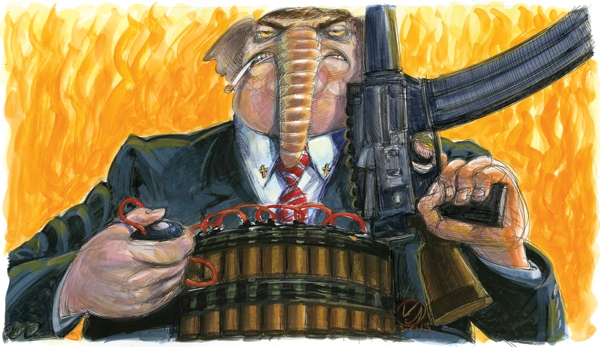
I agree the two parties have become virtually indistinguishable in many respects. But the Republican Party is far more dangerous, in my opinion. And I think Democrats kowtow to big business interests and the Military Industrial Complex mainly because they are more or less forced to if they want to be able to consistently challenge Republican Party dominance. That's no excuse, of course. But I think it's very misleading to portray both parties are essentially opposites sides of the same coin. Anyway, this article points out some important differences between the two parties.
Since last fall, Republicans have pretended to be more moderate – but their politics are harsher and more destructive than ever
After watching voters punish the GOP in the 2012 elections, Republican elites have been talking a brave game about reforms that would make the party less repulsive to Latinos, women and gay-friendly millennials. Florida Sen. Marco Rubio, the GOP's hip-hop-quoting young standard-bearer, is pressing conservatives to back an amnesty for undocumented immigrants. Dozens of party stalwarts, headlined by former Utah Gov. Jon Huntsman, renounced their opposition to gay marriage in a Supreme Court brief. GOP bigwigs have even launched New Republican – a group modeled after Bill Clinton's centrist Democratic Leadership Council – which seeks to rebrand the party as “colorblind,” “not anti-government” and dedicated to “ending corporate welfare.”
Don't be fooled. On the ground, a very different reality is unfolding: In the Republican-led Congress, GOP-dominated statehouses and even before the nation's highest court, the reactionary impulses of the Republican Party appear unbowed. Across the nation, the GOP's severely conservative agenda – which seeks to impose job-killing austerity, to roll back voting and reproductive rights, to deprive the working poor of health care, and to destroy agencies that protect the environment from industry and consumers from predatory banks – is moving forward under full steam.
WASHINGTON – Evgeny Morozov is a Belarus-born technology writer who has held positions at Stanford and Georgetown universities in the United States. His first book, The Net Delusion: The Dark Side of Internet Freedom, argued that “Western do-gooders may have missed how [the Internet] … entrenches dictators, threatens dissidents, and makes it harder — not easier — to promote democracy.” The New York Times described it as “brilliant and courageous.”
In his second book, To Save Everything, Click Here: The Follow of Technological Solutionism, Click Here, Morozov critiques what he calls “solutionism” — the idea that given the right code, algorithms and robots, technology can solve all of mankind’s problems, effectively making life “frictionless” and problem-free.
Evgeny Morozov
Morozov argues that this drive to eradicate imperfection and make everything “efficient” shuts down other avenues of progress and leads ultimately to an algorithm-driven world where Silicon Valley, rather than elected governments, determines the shape of the future.
. . . . . . . . . .
All solutions come with cost. Shifting a lot of the responsibility to the individual is a very conservative approach that seeks to preserve the current system instead of reforming it. With self-tracking we end up optimizing our behavior within the existing constraints rather than changing the constraints to begin with. It places us as consumers rather than citizens. My fear is policymakers will increasingly find that it is much easier, cheaper and sexier to invite the likes of Google to engage in some of this problem-solving rather than do something that is much more ambitious and radical.
. . . . . . . . . .
I have a lot of respect for these people as engineers, but they are being asked to take on tasks that go far beyond engineering — tasks that have to do with human and social engineering rather than technical engineering. Those are the kind of tasks I would prefer were taken on by human beings who are more well rounded, who know about philosophy and ethics, and know something about things other than efficiency, because it will not end well.
. . . . . . . . . .
The newspaper offers something very different from Google’s aggregators. It offers a value system, an idea of what matters in the world. Newspapers need to start articulating that value.
. . . . . . . . . .
There are many problems I have with TED. It has created this infrastructure where it very easy to be interesting without being very deep. If TED exercised their curatorial powers responsibly, they would be able to separate the good interesting from the bad interesting. But my fear is they don’t care as long as it drives eyeballs to the website. They don’t align themselves with the thinkers, they align themselves with marketing, advertising, futurists who are interested in ideas for the sake of ideas. They don’t care how these ideas relate to each other and they don’t much care for what those ideas actually mean. TED has come to exercise lots of power but they don’t exercise it wisely.
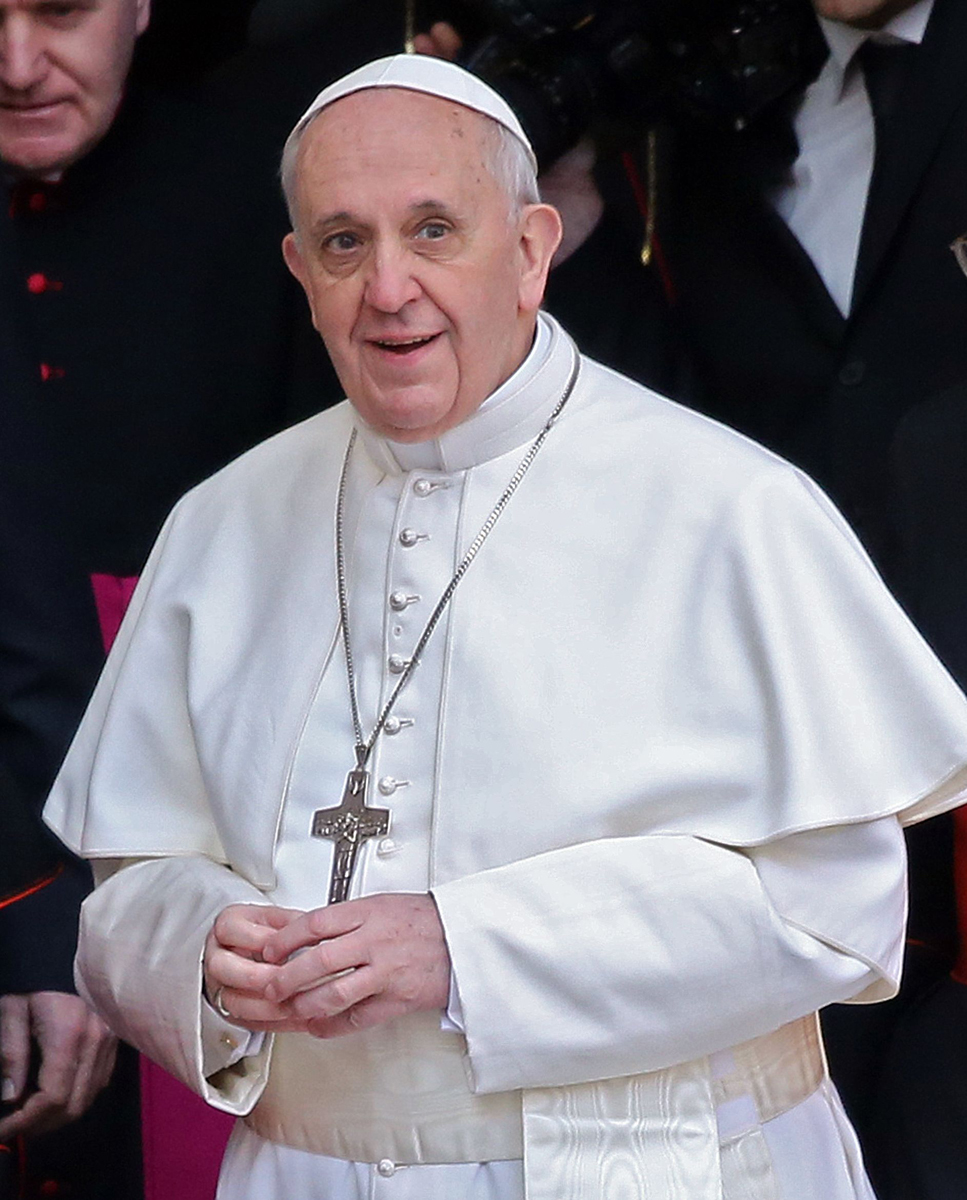
The new Pope is the oldest of the seven cardinals identified by Phi Beta Iota as being of interest in relation to the educational table prepared by Anthony Judge. Argentine, trained in philosophy and psychology as well as theology, he is, as with the others selected by Phi Beta Iota, NOT DOGMATIC.
Latinos have always been the heart of the Catholic Church, and one of the greatest misteps of prior Popes was the rejection — the condemnation — of liberation theology. The Most Holy Father is the first Latino and the first Jesuit to be appointed leader of the Catholic Church.
It will be most interesting to see if the new Most Holy Father elevates the other six cardinals Phi Beta Iota studied, particularly Cardinals Fernando Filoni of Italy, now Prefect of the Congregation for the Evangelization of Peoples; Cardinal George Alencherry of India; and Cardinal John Njue of Kenya.