Yoda: Addictive Macro-Learning – The Future

04 Education, Academia, Advanced Cyber/IO, Civil Society, Collective Intelligence, Liberation Technology
Got Crowd? BE the Force!

Totally Addictive Education: The Future of Learning

Steven Kotler

Forbes, 8/27/2012

EXTRACT:

Today’s educational system is all about standardization. We treat every kid the same. But not every kid learns the same. Some need the microscopic first, others the macroscopic. Some people are tangential learners, some prefer their facts in a linear fashion. Some are quick, others slow. Thankfully, this is changing.

. . . . . . .

Microscopic learning doesn’t really harness this system. It builds the patterns up slowly, one block at a time, but rarely does it require the kind of intuitive BIG PATTERN RECOGNITION that macroscopic learning demands. By keeping things microscopic, we’re keeping things boring. Sure, kids learn this way, but not all kids and, anyway, it’s not much fun.

Read full article (two screens).

Reference: Melanie Ramjoue on UN Intelligence

Advanced Cyber/IO, Ethics, Non-Governmental, Peace Intelligence

UN peacekeeping soldier in front of a tank Improving United Nations Intelligence
Lessons from the Field

UN member states have historically been hesitant to provide the UN with an intelligence-collection mandate at either strategic (headquarters) or operational (field) levels. However, the increased size, length and complexity of peacekeeping operations, compounded by severe security threats to UN personnel, make a stronger UN intelligence capability in the field increasingly necessary.


Author:Melanie Ramjoué   .  Series: GCSP Policy Papers   .  Issue:19

Penguin: Trans-Pacific Partnership – Evil Incarnate?

07 Other Atrocities, 10 Transnational Crime, Commerce, Corruption, Government
Who, Me?

In three parts, this is the first part.

The Trans-Pacific Partnership: This is What Corporate Governance Looks Like

By: Andrew Gavin Marshall

The following is the first installment of a three-part exclusive for Occupy.com on the Trans-Pacific Partnership.

Originally published at Occupy.com

In 2008, the United States Trade Representative Susan Schwab announced the U.S. entry into the Trans-Pacific Partnership talks as “a pathway to broader Asia-Pacific regional economic integration.” Originating in 2005 as a “Strategic Economic Partnership” between a few select Pacific countries, the TPP has, as of October 2012, expanded to include 11 nations in total: the United States, Canada, Mexico, Peru, Chile, New Zealand, Australia, Brunei, Singapore, Vietnam and Malaysia, with the possibility of several more joining in the future.

What makes the TPP unique is not simply the fact that it may be the largest “free trade agreement” ever negotiated, nor even the fact that only two of its roughly 26 articles actually deal with “trade,” but that it is also the most secretive trade negotiations in history, with no public oversight, input, or consultations.

Continue reading “Penguin: Trans-Pacific Partnership – Evil Incarnate?”

Marcus Aurelius: Army at a Cross-Roads, Toxic Leadership Not Helping

Corruption, Ineptitude, Military
Marcus Aurelius

Facing Uncertainty, Budget Cuts, Army Is At A Crossroads

Some changes have been resisted

By Greg Jaffe
Washington Post, November 23, 2012, Pg. 3

For much of this year, Sgt. Maj. Raymond F. Chandler III, the Army's top enlisted soldier, has traveled to bases around the world with a simple message: “We've allowed ourselves to get out of control.”

(COMMENT:  For the past couple of years we have been hearing that despite the exceptional levels of responsibility, operational experience and success, our Soldiers and company/junior field grade officers have acquired in ten plus years of combat experience, the Army's problems are rooted in a lack of garrison soldiering experience.  As the theory apparently goes, troops and leaders have been so busy deploying and training to deploy that they haven't had time to spit shine boots, wax floors, paint rocks, bash the square, etc., and, therefore they are not the Soldiers they should be.  )

Continue reading “Marcus Aurelius: Army at a Cross-Roads, Toxic Leadership Not Helping”

Practical Reflections on United Nations Intelligence + UN RECAP

Advanced Cyber/IO, All Reflections & Story Boards, Earth Intelligence

Updated 21 Dec 2012 1800

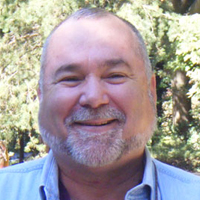
Robert David STEELE Vivas
Click on Image for Personal Web Page

Short Persistent URL for This Post: http://tinyurl.com/UN-21-Intel

DOCUMENT:  2012 Reflections on UN Intelligence 2.3 21 Dec 2012

I had occasion to look at the Report of the Secretary General on the Work of the Organization, and thought this would be a good time to integrate some of what I have learned from working directly with the United Nations (UN), and what I believe could be helpful to the UN as it contemplates “next steps” into the 21st Century.  My thoughts are deeply rooted in my perception of how badly governments have failed at governance, and how dysfunctional the Industrial Era approach to bureaucracy and information channeling has become.  As the world prepares to  migrate to hybrid forms of public governance, the UN's Industrial Era forms of organization and delivery are an impediment to its future viability.  That is a challenge I would like to address, treating the UN as the logical hub for my emergent theory and practice of Public Governance (a mosaic) replacing Public Administration (a stovepipe) in the 21st Century.

Below the line is the document I have drafted in full text, followed by a number of links that are not in the document.

Continue reading “Practical Reflections on United Nations Intelligence + UN RECAP”

Reference: UN Secretary-General Ban Ki-moon

Advanced Cyber/IO
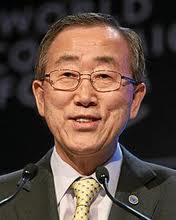
Ban Ki-moon

“It is my conviction that the global problems we face today are simply too complex to be solved by Governments alone. They require collective and coordinated action by Government, by the private sector, by civil society, by academia, and by international organizations and multilateral development banks. Over the next year, I will develop a comprehensive proposal which seeks to harness the power of partnership.”

Source

Priority areas for support should be targeted, better matching these areas with goals and targets, and specific means and tools to reach them should be identified.

Source

Continue reading “Reference: UN Secretary-General Ban Ki-moon”

Rickard Falkvinge: Brasil Kills Internet Bill, Loses Way

Access, Corruption, Government, IO Impotency
Rickard Falkvinge

Brazil Squanders Chance At Geopolitical Influence; Kills Internet Rights Bill In Political Fiasco

Infopolicy: Yesterday, the Brazilian parliament effectively killed the much-heralded Internet Bill of Rights, the Marco Civil, that had been praised by entrepreneurs and free-speech activists worldwide. This follows a ridiculous watering-down and dumbing-down of the bill, at the request of obsolete industry lobbies. Having been permanently shelved, this means that Brazil has practically killed its chance of leapfrogging other nations’ economies – BRICS is now just RICS.

The Internet Rights bill in Brazil, the Marco Civil, was a marvel. It would have enabled Brazil to leapfrog most other economies today, skipping a whole generation of industries.

The Marco Civil would have established that;

  • Internet access is a precondition for exercising citizenship;
  • As such, nobody may be cut off from the Internet for any other reason than failure to pay the connection fees;
  • The messenger immunity was almost absolute – nobody had any kind of accountability for carrying messages for a third party unless explicitly told so by a judge on a case-by-case basis;
  • Net neutrality was written into law;
  • All Internet regulation had to be based on preserving openness, participatory culture, and the open entrepreneurship that the Net brings;
  • Privacy applies online and must not be violated;
  • and much more.

Really, it was that good. Read it for yourself (in English).

Continue reading “Rickard Falkvinge: Brasil Kills Internet Bill, Loses Way”

noble gold