*A Stockholm Syndrome of the Soul: Proto-Intelligence for the Evolution of Collective Thought*
*Preface*
“[Nothing] is [certain]. There is so much mystery involving consciousness…these are just ideas to play around with and to entertain rather than [some] new form of certitude.”
– Jeremy Narby, Anthropologist and Author of The Cosmic Serpent
This book is not the fulfillment of some grail quest meant to discover an elusive, unifying theory of everything. Nothing enclosed here is gospel because monopolies on truth do not exist. All theories and all philosophies, no matter how coherent, are inherently limited in one way or another. At this particular juncture in evolutionary history, it would appear the true nature of reality still remains far too vast to fully comprehend; its scope seemingly impossible to encapsulate within any one framework.
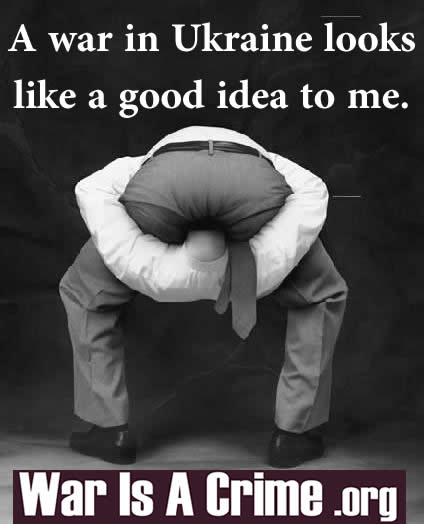
Sorry for the headline if it got you hoping for a quick 1-step guide on how to bomb a country without breaking a sweat. I didn't actually mean that I could teach a dummy to wage a war. I meant that only dummies want to wage wars.
Now there I go misleading you again. While it's true that the editors of the Washington Post are often dummies and often want wars to be waged, that's not what I mean right now. I think members of the U.S. government and its obedient media constitute an important but tiny exception to the rule this report points to.
Click on Image to Enlarge
The facts as reported on April 7th are these:
13% of us in the United States want our government to use force in Ukraine;
16% of us can accurately identify Ukraine's location on a map;
the median error by Americans placing Ukraine on a map is 1,800 miles;
some Americans, based on where they identified Ukraine on a map, believe that Ukraine is in the United States, some say it's in Canada, some Africa, some Australia, some Greenland, some Argentina, Brazil, China, or India;
only a small number believe Ukraine is in an ocean.
Another climate scientist, who is an SR reader sent me this telling me that while he did not agree with the solution James Lovelock offered, he felt it did represent the growing consensus amongst climate scientists that “stupidity and greed” are going to trump rational good sense. I have long agreed with this assessment.!
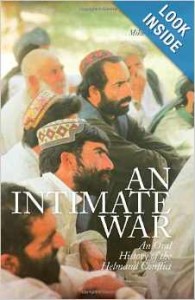
A Territorial Army captain has resigned to publish a book critical of British actions in Afghanistan. Mr Mike Martin said Nato troops in Helmand province “often made the conflict worse”. He quit his role in the TA after the Ministry of Defence (MoD) refused to give him permission to publish the study. An MoD spokesman said books by military personnel are “governed by well-established policy and regulations”.
Amazon Page
Classified materials
Mr Martin studied Helmand for six years and completed an Army-funded PhD at King's College in London. He told the BBC Nato troops did not understand the “complexities” of Afghan tribal conflicts and were “manipulated” by tribal leaders fighting over land and water. “This meant that we often made the conflict worse, rather than better,” he wrote in the study. Mr Martin said he was originally told his final thesis could not be published as a book because it made use of secret cables published by Wikileaks and classified materials.
But he denied the book contained any intelligence material that was not in the public domain. Last week, he was then told by his commanding officer that he was “not authorised to published the book”. He resigned on Monday and will launch the book in London on Wednesday night. The MoD said the department had accepted the material in the book did not contravene the Official Secrets Act. But the book – An Intimate War – An Oral History of the Helmand Conflict 1978-2012 – had not been given official clearance, it added.
“Secretary Kerry? It's Ukraine on the phone asking about liberation again. Have you been able to get them a reference letter yet from Libya or Iraq or Afghanistan? How about Vietnam? Panama? Grenada? Kosovo maybe? Ukraine says Syria says you have a reference letter in the works from Kosovo. No? Huh. They said they'd accept one from Korea or the Dominican Republic or Iran. No? Guatemala? The Philippines? Cuba? Congo? How about Haiti? They say you promised them a glowing reference from Haiti. Oh. They did? No, I am not laughing, Sir. What about East Timor? Oh? Oh! Sir, you're going to liberate the what out of them? Yes sir, I think you'd better tell them yourself.”
Some nations the United States should probably not liberate — except perhaps the 175 nations which could be liberated from the presence of U.S. soldiers. But one nation I would make an exception for, and that is the nation of Hawai'i.
Olsen's case, in very condensed summary, looks like this: Hawai'i was an independent nation, recognized as such by the United States and numerous other nations, with treaties in effect between Hawai'i and other nations, including the United States, that have never been terminated. In 1893 U.S. profiteers and U.S. Marines, in a criminal act, overthrew Hawai'i's government and queen, setting up a new government that lacked any legal standing. President Grover Cleveland investigated what had been done, admitted to the facts, and declared the new government illegitimate, insisting that the Queen retain the rule she had never abdicated. But the fraudulent foreign government remained, and in 1898 once William McKinley was U.S. president, handed over Hawaii (thought it had no legal power to do so) to the United States, as the United States also picked up the Philippines, Guam, Puerto Rico, and Cuba in a bit of a global shopping spree. By 1959, these events were growing lost in the mists of time, and the demographics of Hawai'i were radically altered, as Hawai'i was offered a vote between two bad choices: statehood or continued status as a colony or “territory” (liberation wasn't on the ballot). Thus did Hawai'i seem to become a state without legally becoming any such thing. In 1993, the U.S. Congress passed and President Clinton signed U.S. Public Law 103-150, admitted to and apologizing for this history, without of course doing the one thing legally and morally required — liberating Hawai'i.
Below is one of the better pieces of its type that I've read. While it refers several times to USMA, the majority of it is, IMHO, applicable to new officers from all commissioning sources. I think the most important point author makes comes at the end where he emphasizes the reality of a platoon leader's job. Some context is in order. Author is among the tail end of a cohort of officers and Soldiers who are/were, essentially, either deployed or preparing for deployment. As we withdraw from Afghanistan, that reality will change sharply. Junior officers such as the author will now have to lead units through a new regimen where the order of the day will, at HQDA direction, be a return to the “basics” of garrison soldiering, where area beautification, brilliance of bootshines, and scuff-free floors will supplant marksmanship, tactical proficiency, and ability of junior soldiers to perform as “strategic corporals.” Efficiency and asking permission will displace effectiveness and initiative. Army senior leaders, notably the Sergeant Major of the Army, feel strongly that this change in focus is the solution to the Army's social and disciplinary problems. New officers will be challenged to lead combat veteran Soldiers under those circumstances.
After ardently attempting once to write an essay on “what I know now that I wish I knew then,” I realized that writing even just a two or three paged paper is something cadets do not want to read. This being said, when I was posed with this task I swore I would do three things: 1) provide an honest answer, 2) express the truth in the most unvarnished way possible, and 3) keep things short. Therefore, I have decided to make a list that cadets can squeeze in between their class and sports demands, and their beloved naps and “Not Being At West Point” time.