Phi Beta Iota: This may well be the most important post Dr. Patrick Meier has done to date. Robert Steele is writing a new chapter or article, Public Administration in the 21st Century: New Rules, Hybrid Forms, One Constant — The Public that will integrate and expand on the core insight at the conclusion of the below post: routing around government may be the most important non-violent ethical means of displacing corrupt governments and restoring the sovereignty of the public.
When Philippine President Joseph Estrada was forced from office following widespread protests in 2001, he complained bitterly that ”the popular uprising against him was a coup de text.” Indeed, the mass protests had been primarily organized via SMS. Fast forward to 2012 and the massive floods that recently paralyzed the country’s capital. Using mobile phones and social media, ordinary Filipinos crowdsourced the disaster response efforts on their own without any help from the government.
Below is a very important 2 part analysis of the meaning of the recent heat wave in the US and and the nature of reported temperature increases in general, and whether or not they can be attributed to increases in CO2 concentrations.
The author, John Christy, is a highly regarded climatologist, albeit a skeptical one. At the end of Part II, Christie gently eviscerates the recent analysis by climate activist/scientist James Hansen, et al, by definitively showing how Hansen's analysis is biased to produce a preordained answer, both in terms of Hansen's selection of its data interval and his metric of choice. (See Hansen's op-ed in Washington Post here and I would urge readers to download his report). Anyone interested in trying to sort the wheat from the chaff in the climate wars ought to study these two papers. (I have not changed a word, but reformatted them in a few places, breaking paragraphs into “bullets” and highlighted i; I also inserted a few comments in [red] to clarify his points.)
guest post by John Christy, UAHuntsville, Alabama State Climatologist
Let me say two things up front.
The first 10 weeks of the summer of 2012 were brutally hot in some parts of the US. For these areas it was hotter than seen in many decades.
Extra greenhouse gases should warm the climate. We really don’t know how much, but the magnitude is more than zero, and likely well below the average climate model estimate.
Now to the issue at hand. The recent claims that July 2012 and Jan-Jul 2012 were the hottest ever in the conterminous US (USA48) are based on one specific way to look at the US temperature data. NOAA, who made the announcement, utilized the mean temperature or TMean (i.e. (TMax + TMin)/2) taken from station records after adjustments for a variety of discontinuities were applied. In other words, the average of the [adjusted] daily high and daily low temperatures is the metric of choice for these kinds of announcements.
Unfortunately, TMean is akin to averaging apples and oranges to come up with a rather uninformative fruit.
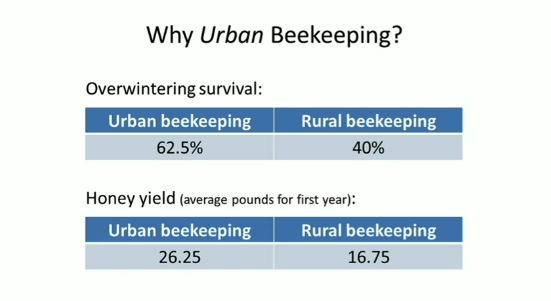
“We need bees for the future of our cities and urban living,” Noah Wilson-Rich said at TEDxBoston. Wilson-Rich completed his Ph.D. in honeybee health in 2005. In 2006, honeybees started disappearing. “We don’t even find dead bodies, and it’s bizarre. Researchers still do not know what’s causing it,” says Wilson-Rich. We’ve been hearing about the disappearance of bees for some time, but Wilson-Rich is bringing a new perspective to the table. Cities need bees, and bees need cities.
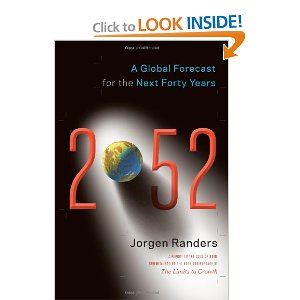
A report to the CoR commemorating the 40th anniversary of The Limits to Growth, written by one of the four original authors. This broad forecast is “an informed guess tracing the big lines in what I see as the probable global evolution toward 2052…the most likely global roadmap to 2052 so that I would know what I am in for.” Since publication of Limits in 1972, “humanity remains in solid overshoot…and we can discern the early signs of the coming gradual destruction of the ecosystem.” (p.xv)
Five Big Issues toward 2052
“The big question is how fast the transition to sustainability will happen…the sustainability revolution has started, but is still in its infancy.” (p13) The transition will require fundamental change to a number of the systems that govern current world developments. The next 40 years will be strongly influenced by how we handle five central issues:
1) The End of Uncontrolled Capitalism: “slow and insufficient response to our challenges will dominate”; old-fashioned capitalism will survive in parts of the world, but will be strongly modified elsewhere;
2) The End of Economic Growth: continuing technological advance will come to our partial rescue, but lack of space and cheap resources will force solutions with a lower ecological footprint to fit within the carrying capacity of the planet;
3) The End of Slow Democracy: the fundamental question is whether democracies will agree on a stronger state and faster decision-making before we run into the brick wall of self-reinforcing climate change;
4) Intergenerational Conflict: the era of generational harmony will come to an end, leading to slower economic growth and a smaller pie to share;
5) The End of Stable Climate: negative impacts will be significant, but not disastrous before 2052; there will be more droughts and floods, and sea level will be 0.3 meters higher; “self-reinforcing climate change will be worry number one, with methane gas emissions from the melting tundra leading to further temperature increase, which in turn will melt even more tundra” (p47); the world will still be operational, but with higher operating costs and scary prospects for the rest of the 21C.