Review comments forthcoming.

The truth at any cost lowers all other costs — curated by former US spy Robert David Steele.
Review comments forthcoming.
A converstion is developing that will lead to a taxonomy for collective intelligence in all its forms, including public intelligence. Below is a first effort by Tom Atlee that decisively corrects our preliminary conclusion that public intelligence was the umbrella term.
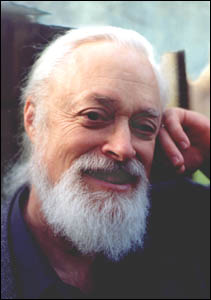
Dear Robert,
I guess I'm stuck on what seems to me the straight-forward simplicity of “collective intelligence” as the overall category — as the intelligence capacity of any collective — family, group, organization, community, society, culture, network — they're all collectives (at least in my sense of the word). “Intelligence capacity” includes things like problem-solving, pattern recognition, analytic or integral model-making, learning (knowledge-building and revision), application of knowledge, insight, etc. — anything and everything having to do with engaging successfully with the patterns of reality. The different types of intelligence have diverse gifts to offer — different types of cognition needed to deal with certain types of patterns — e.g., Gardner's seven “multiple intelligences” (including emotional intelligence), on the one hand, or “business intelligence” and “street smarts” on the other. In this definition, at this level, I find “collective intelligence” to be totally embracive of the requisite diversity, and the term “public intelligence” to be awkward, at best (public as opposed to private?).
However, there's a whole ‘nother framing from which to view this, which I sense is your “home base” — “the craft of intelligence (as in “intelligence agency”). I see the “craft of intelligence” (as a specific sub-category of the broader CAPACITY of intelligence, in this case focused on the collective practice of gathering, sorting, organizing, and analyzing data into useful patterns (information, understanding, narratives, meaning) for decision-makers. With this definition, at this level, the term “public intelligence” means to me the publicly visible and highly participatory practice of doing that for democratic decision-makers who, in the fullest democratic sense, includes or is the public, itself (the citizenry), who are practicing intelligence to inform their own empowered decision-making.
So public intelligence is, for me, a subset of collective intelligence. Much of my “wise democracy” work can be squeezed into the “public intelligence” category. But I have also framed collective intelligence more broadly and think of my larger work as being largely involved with that broader category.
“Co-intelligence” is a larger category still, involving the interactive, collaborative intelligence of the whole (which can be a group, but it can also be an event, nature, evolution, the universe, or Spirit).
I hope that's useful, at least in terms of where to place me in the weave you're creating…
Co-heartedly,Tom
We urge one and all to support Tom Atlee's gentle intelligent efforts to restore the Collective Intelligence that is inherent in humanity as a Whole. Visit him at the Co-Intelligence Institute and make your donation there, please.

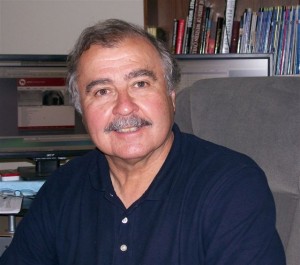
Stephen E. Arnold is an independent consultant. He's the author of The Google Legacy: How Search Became the New Application Platform, the first three editions of the Enterprise Search Report, and Google Version 2.0: The Calculating Predator. His work has been distributed by Bear Stearns and Outsell Inc. This information is based on research for this forthcoming study, Beyond Search: What to Do When Your Search System Doesn't Work, Gilbane Group, 2008. His Web site is www.arnoldit.com.
Search panacea or ploy:
Can collective intelligence improve findability?

Marshall Auerback has 27 years of experience in the investment management business, serving as a global portfolio strategist for RAB Capital Plc, a UK-based fund management group with $2 billion under management, since 2003. He is also co-manager of the RAB Gold Fund. He serves as an economic consultant to PIMCO, the world’s largest bond fund management group, and as a fellow of the Economists for Peace and Security. He is one of the Brainstrusters associated with New Deal 2.0 as sponsored by the Franklin and Eleanor Roosevelt Institute.

Recent Headlines:
Friday, 08/7/2009 – 1:05 pm by Marshall Auerback | 1 Comment
Monday, 07/27/2009 – 11:59 am by Marshall Auerback | Post a Comment
Tuesday, 07/21/2009 – 2:59 pm by Marshall Auerback | Post a Comment

Yochai Benkler is the Berkman Professor of Entrepreneurial Legal Studies at Harvard, and faculty co-director of the Berkman Center for Internet and Society. Before joining the faculty at Harvard Law School, he was Joseph M. Field ‘55 Professor of Law at Yale. He writes about the Internet and the emergence of networked economy and society, as well as the organization of infrastructure, such as wireless communications. www.benkler.org. Below is his Foreword to the book as re-mixed by Hassan Masum.
The Wealth of Networks:
Highlights Remixed
Continue reading “Who's Who in Collective Intelligence: Yochai Benkler”
The International Intelligence Fellows Program, for senior officers (flag and bull colonel), is an example of where the future of intelligence must lie–in what the Swedes originated and I enhanced by adding sense-making:

abette Bensoussan is Managing Director of The MindShifts Group, a company specialising in competitive intelligence, strategic planning and strategic marketing projects in the Australasia region. Babette is widely recognised and sought after for her international expertise in competitive analysis, and has provided mentoring and training to executives and organizations to assist with the delivery of the highest level of knowledge and implementation of competitive intelligence.
Recognised internationally in 2006 by being given the highest and most prestigious U.S. award in the field of Competitive Intelligence – the SCIP Meritorious Award, Babette is the first Australian and first female international recipient to be honoured with this award.
Babette has shared her knowledge of competitive business analysis by co-authoring two books, Strategic and Competitive Analysis and Business and Competitive Analysis Effective Application of New and Classic Methods have both been the top selling books in this field since being published in 2003 and 2007 respectively. Her third book Analysis without Paralysis: 10 Tools to Make Better Strategic Decisions was released in June 2008 and The Financial Times Guide to Analysis for Managers in the near future.
