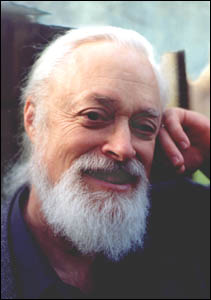
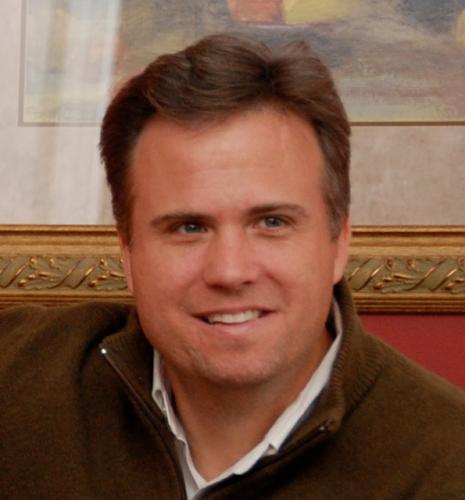
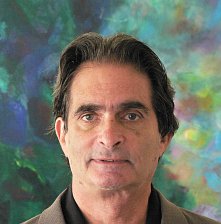
The author of this incisive — and entertaining — analysis of (1) Israel's political condition and (2) its arrogance with regard to pernicious meddling in the domestic politics of it friends is a former member of the Knesset, a hero of the 1948 War, and perhaps Israel's leading (and most rational) peace activist. He is also one of my heros.
I explore here the diversity of responses – my own and others’ – to existential threats like extreme climate change … and I offer one way to map and make sense of those responses.
In my last post I said that in this post I would “discuss some of my own strategies for affirming life in the strange circumstances in which we find ourselves… in the face of the possible end of civilization or of the human race itself.”
Working on this has turned out to be more complex, interesting, challenging, and productive than I expected – especially since my own responses to our “strange circumstances” have been changing so often, even day to day and hour to hour.
Nelson Mandela's story, if told as a novel, would not be deemed possible in real life. Worse, we don't tell such stories in many of our novels.
A violent young rebel is imprisoned for decades but turns that imprisonment into the training he needs. He turns to negotiation, diplomacy, reconciliation. He negotiates free elections, and then wins them. He forestalls any counter-revolution by including former enemies in his victory. He becomes a symbol of the possibility for the sort of radical, lasting change of which violence has proved incapable. He credits the widespread movement in his country and around the world that changed cultures for the better while he was locked away. But millions of people look to the example of his personal interactions and decisions as having prevented a blood bath.
Mandela was a rebel before he had a cause. He was a fighter and a boxer. Archbishop Desmond Tutu says that South Africa benefited greatly from the fact that Mandela did not emerge from prison earlier: “Had he come out earlier, we would have had the angry, aggressive Madiba. As a result of the experience that he had there, he mellowed. … Suffering either embitters you or, mercifully, ennobles you. And with Madiba, thankfully for us, the latter happened.”
Lofgren’s opinion piece addresses the logical policy implication of a U.S. counter-terrorism strategy that is playing into the hands of the strategy enunciated by Abu Bakr Naji, as so well described by William R. Polk.
Chuck Spinney
It’s Time for a Total Withdrawal from the Middle East
My friend, Bill Polk, a distinguished historian specializing in the Middle East, is busily writing a series of extended essays aimed at increasing our understanding of the conflict in Syria and, by extension, our seemingly perpetual war with the Islamic world. I posted the first part of this series, collectively entitled Understanding Syria, on 8 November 2013 here. Attached below is the next essay in the series. More will follow.
I found this essay to be a particularly powerful argument. Those on this list who follow the strategic theories of late Colonel John R. Boyd will find Bill’s analysis of the intellectual/philosophical basis for moral and political cohesion in the first half and the basis of the strategy for Jihad laid out by Abu Bakr Naji (in the last half of the essay) to be entirely consistent with Boyd’s ideas — from grand strategy to tactics. I found the discussion of Jihadist strategy rings lots of Boyd’s bells — particularly those relating to Sun Tzu, Boyd’s critique of Clausewitz’s failure to address the idea of pumping your adversary’s friction to increase his expenditure of effort, his conception of generating non-cooperative centers of gravity, and Boyd’s dissection of insurrection, revolution, and guerrilla war.
What I find to be particularly disturbing about Bill’s analysis is that the counter strategy being pursued by the United States to counter militant Islam fits Naji’s strategy — to paraphrase Eric Von Manstein’s description of the French strategy in 1940 — like a “hand fits a glove.” If you doubt this, think about the nature of our strategic “achievements” in Iraq and Afghanistan.
No doubt, T.E. Lawrence would be smiling ironically at the “Lob-Ottomanization” of U.S. counter-terror strategy.
Readers are feel free to distribute/post Polk's analysis (including my intro if they so desire).
Whether we know it or not, like it or not, want it or not, we are engaged in a struggle, and that struggle concerns the human spirit—understanding it, experiencing it, defending it against attacks.
The spirit isn’t some vague ghost or apparition. It’s front and center, even in this blind world. It animates action. It has great power. It defies reduction.
The spirit proliferates thought and vision. It doesn’t settle for simplistic harmonies that short-circuit its inventions. It isn’t a happy-happy rainbow. It isn’t a child’s fairy tale.
In articles about my collection, The Matrix Revealed, I’ve stressed, over and over, that human thought originates in a non-material sphere. A sphere outside conventional energy and space and time.
That means the brain isn’t thinking. It’s performing calculations directed by ideas that are far more than chemical/biological reflexes.
Technocracy and its utopian fantasies provide a perfect negative example.