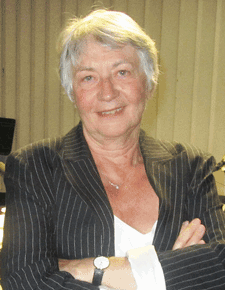
Béatrice Giblin is a geographer and Professor of Geopolitics. She is teaching at Paris 8 University (former experimental center of Vincennes). Professor Giblin is the founder of the French Institute of Geopolitics (2002) that she headed for ten years. Moreover, she is Head of the geographical and geopolitical magazine Hérodote, founded by Yves Lacoste whom she succeeded in 2006. Professor Giblin was the first to talk about internal geopolitics in 1984 in an article dealing with power rivalries in the coalfield located in the Nord – Pas-de-Calais, the North region of France. Incidentally, the topic of her thesis was to analyze this region as a political territory, which was a a first in the French regional studies.
The Conflicts in the World – A Geopolitical Approach
Editor – Leonhardt
Exploring Geopolitics, 17 January 2014
This interview is about the French book “Les conflits dans le monde: Approche géopolitique” that was edited by Professor Giblin.
The “My New Book” Blog seeks to provide a multidisciplinary angle on the countries and the world we live in. The interviews address the book’s key themes, questions and findings. Moreover, the book is put in perspective by linking it to the author’s background and existing literature. Overall, the underlying question is: why should we consider reading this new book?
Below each interview, you find a form that enables you to ask the author more questions, or share your views on the topics that the book covers.
Continue reading “Beatrice Giblin: The Conflicts in the World – A Geopolitical Approach”

 Obama won by appealing to a broad swath of voters—the young, ethnically diverse, and non-affluent—who typically aren’t a part of the traditional political calculus. But he failed to garner much support among older, white Americans. If our political fights pit one group, one generation, or one race against all the multicultural “others,” then we all will surely lose.
  After years of apparent stability, white people may wake up in a country that feels unfamiliar—one in which they are a “minority.” This asks the question: what does it mean to be American now?