Seymour M. Hersh on Obama, Erdoğan and the Syrian rebels
In 2011 Barack Obama led an allied military intervention in Libya without consulting the US Congress. Last August, after the sarin attack on the Damascus suburb of Ghouta, he was ready to launch an allied air strike, this time to punish the Syrian government for allegedly crossing the ‘red line’ he had set in 2012 on the use of chemical weapons.* Then with less than two days to go before the planned strike, he announced that he would seek congressional approval for the intervention. The strike was postponed as Congress prepared for hearings, and subsequently cancelled when Obama accepted Assad’s offer to relinquish his chemical arsenal in a deal brokered by Russia. Why did Obama delay and then relent on Syria when he was not shy about rushing into Libya? The answer lies in a clash between those in the administration who were committed to enforcing the red line, and military leaders who thought that going to war was both unjustified and potentially disastrous.
October 9, October 30, November 13 and December 4; 2013.
Columbia Law School in association with Software Freedom Law Center
From approximately 17:11 in NSA Spying talk 3 of 4 by Prof. Eben Moglen, a presentation sponsored by the Software Freedom Law Center of the Columbia Law School.
“The anonymity of reading is the central, fundamental guarantor of freedom of the mind. Without anonymity of reading there is no freedom of the mind, and there is literally slavery.”
This is at 6:35 from part 4:
“Collectively, we are trying to save the freedom of humanity and democracy, which cannot be otherwise saved. As we have seen, pervasive relentless surveillance destroys freedom of thought. And without freedom of thought, all other freedoms are merely privilege, conceded by government.”
CNO Actual has arrived, more or less, at the same point I defined in 1992. That was the year when I was nearly fired by an outraged mob of Navy Captains for daring to suggest, in the Joint Strategy Board or whatever it was called, that we needed to drop at least two carrier battle groups (as I recall we had 13 at the time), and focus instead on a distributed expeditionary Navy that increased amphibious and littoral capacity from under 10% to just over 30%.
Click on Image to Enlarge
Below are the references. I wrote to various CNOs over the years, receiving only one response from N-85, signed by a Marine Corps Major General who told me, in essence, “go spit in the ocean.”
I am certain of two things. Yes, we need a 450 ship Navy. No, CNO has no one that can do that and simultaneously engineer the necessary 30% cut in the Navy's budget over 4-6 years. CNO has found the words. Now, can he actually devise and execute a plan to make it so? I doubt this very much. Certainly this is a righteous mission I would be glad to help with.
The orginal shorter version was written in 1999 with help from Ron O'Rourke at CRS and Norman Polmar at Janes. Accepted for publication by USNI Proceedings in that year, it was withdrawn by author after they kept postponing publication in favor of articles from Admirals.
This is a draft updated version that brings in the knowledge I developed in the 1990's and then presented to the US Army Strategic Studies Institute, on the four threat classes and the four forces after next. It adds the 10 high-level threats from 2004 integrated into a holistic analytic model in 2006. A tiny handful of us have been preparing for this day. We know how to win over Congress, the vendors, and the increasingly anti-military public. We know how to nurture the larger DoD context within which a 450 ship Navy is affordable and achievable.
Chinese firm China Precision Machinery Export-Import Corp. (CPMIEC) has made its first public statement on Turkey’s $3.4 billion long-range air and missile defense system, claiming that the finalization of the tender “is almost done.”
Wu Yang, the coordinator of the project, spoke at DIMDEX 2014 International Maritime Defence Exhibition in Doha, saying: “It’s almost done. We are also approaching the end in the evaluation of Turkey’s requests.”
In September 2013, NATO member Turkey chose CPMIEC, a firm that has been sanctioned by Washington, to co-produce the system, rejecting rival bids from Russian, United States, French and Italian firms.
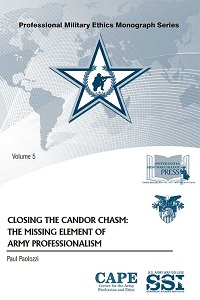
Article below appeared in last week's Army Times. Paper to which article refers attached; I've been carrying a hardcopy in my rucksack for weeks. Author works for the Undersecretary of the Army. Many of us feel that the Army absolutely cannot deal with truth or candor. Messengers often get killed. PC often rules the day.
A provocative paper recently published by the U.S. Army War College raises the question of whether the Army can handle the truth. Called “Closing the Candor Chasm: The Missing Element of Army Professionalism” and written by Col. Paul Paolozzi, the paper says speaking the truth, the whole truth and nothing but the truth is a way of building professional relationships and a stronger Army. Candor can be intimidating and unwanted in some circumstances, but it should be a key part of professional communication, Paolozzi says.
Paolozzi cites performance evaluations, training, education and counseling as areas in which complete honesty is missing. Candor, he says in the report, “is messy, hard, creates discomfort, and its presence is most often inversely proportional to rank and organizational size.”
Full Text of Army Times (main story and sidebars) below.
Interview with activist and economic pioneer Wayne Walton. Wayne is an entrepreneur and founder of Mountain Hours: a community-based, usury-free, alternative currency. Much of his activism takes place in his native Summit County, Colorado where he is currently working toward restoring human sovereignty through monetary reform. More information about Wayne, Mountain Hour Money, and Jubilee Shares can be found at http://mtnhours.com/ as well as http://start.hourmoney.net/
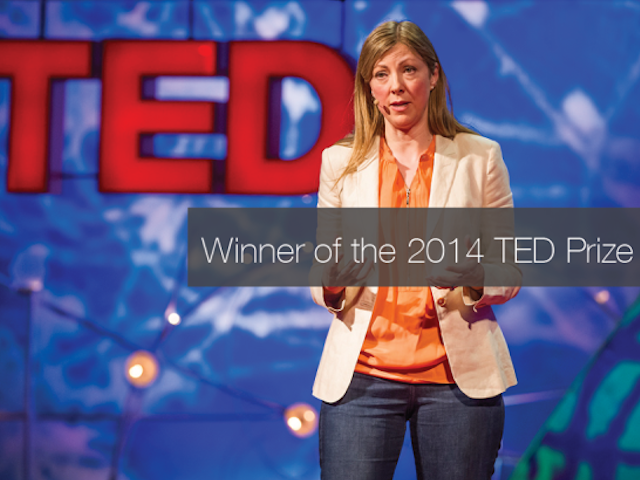
Anti-corruption activist Charmian Gooch launched a new global campaign on Tuesday night to unmask shell corporations and lobby for legislation requiring more transparency, using a newly awarded $1 million TED Prize.
The Global Witness co-founder won the prestigious award to expand on her organization’s work to unmask shell companies used by dictators, criminals and terrorists for money laundering and to hide assets around the world.
Click on Image to Enlarge
“My wish is for us to know who owns and controls companies, so that they can no longer be used anonymously against the public good,” Gooch said while accepting the award and unveiling her wish. “Together, let’s ignite world opinion, change the law, and together launch a new era of openness in business.”
“This isn’t just a dry policy issue,” Gooch added. “This is a human issue which affects us all. This is about being on the right side of history.”
Shell companies are widely used around the globe by people and entities that want to conceal financial transactions or the true ownership of corporations. Activists have argued that widespread use of shell corporations have made it easier for dictators and criminals to hide money, evade taxes, or illegally transfer assets.