Dr. Webster Griffin Tarpley is in some ways a complement to individuals such as Chalmers Johnson and Noam Chomsky who attempt to speak truth to power from an academic point of view. Others such as Ralph Peters, Chuck Spinney, and Robert Young Pelton comes at truth to power froma “ground truth” perspective.
Many will disagree with Dr. Tarpley's analytic conclusions, but we stand firm on the importance of his point of view and the need to hear his voice. He is a valued contributor to Phi Beta Iota.
Phi Beta Iota: Dr. Tarpley is a brilliant historian, and we continue to believe that his work on 9-11 was of the highest order, but new evidence has been produced that suggests he might be an agent of influence of the Israeli Mossad, perhaps not directly recruited, but financially subsidized through intermediaries. With regret, and continued respect, he is suspended as a contributor effective 30 January 2010. His obsession with blaming the CIA for everything should be understood in this light, but is never-the-less respected as a voice that must be heard.
Tip of the hat to Dr. Webster Tarpley, gifted historian and speaker of truth to power, for picking this up. We leave it to the reader to speculate about what role, if any, the U.S. Government played, and what might play out in the future as the indigenous peoples of Saudi Arabia find that they are power that cannot be suppressed.
+++++++Begin Story Extract+++++++
PakistaniDefence.com, 2 August 2009
Saudi Prince Bandar bin Sultan, the kingdom's former ambassador to the United States, is reportedly under house arrest over a conspiracy against the monarch.
Saad al-Faqih, head of the opposition group Islamic Reform Movement, told Arab-language TV al-Alam that Prince Bandar has been disappeared and the media has published no word from the ex-diplomat's whereabouts since nearly three months ago.
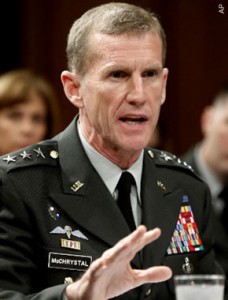
McChrystal: A'stan commander doing his best -- but for what?
Tip of the hat to the New York Post, the primary outlet for Ralph Peters' syndicated column. Below the article is reproduced in its entirety for archival purposes and with permission of the author. Clicking on the photograph leads to the original article for as long as it remains available.
More Troops Aren't The Answer
New York Post
August 3, 2009
By Ralph Peters
OUR troops in Afghanistan are performing heroically, doing everything we ask of them. But we shouldn't ask them to die without a purpose.
We're floundering in Afghanistan — confusing techniques with strategy. Not one senior official, political or mi! litary, has explained convincingly why we're still there.
Only a few months ago, our “strategy” became the pacification of villages, providing security to the inhabitants and extending the writ of the government in Kabul.
But Afghans see their government as an enemy — a cabal of thieves grabbing all they can. We're fighting for an Afghan government that won't fight for itself or sacrifice to help its own people.
Our own officers don't trust the Kabul government. Why should Afghans believe us when we promote it? They know what they'll face — from both sides — when we leave.
Now RUMINT (“rumor intelligence,” the military term for insider scuttlebutt) has it that the new strategy isn't working and, instead of occupying rural hamlets, we'll shift to a newer new strategy of protecting major population centers.
On the plus side, that's what worked reasonably well for Afghanistan's medieval rulers, who concentrated on the ownersh! ip of cities and caravan routes.
On the down side, it never made Afghanistan a real country.
Worse, RUMINT also holds that our commander in Afghanistan, Gen. Stan McChrystal (a terrific soldier tasked with the impossible), may request additional American troops above the 21,000 already in the pipeline.
Their mission would be to buy time to build Afghanistan's security forces. Yet, after almost eight years of US efforts, the illiterate Afghans who Kabul press-ganged into uniform still perform abysmally (a few elite units notwithstanding). They don't believe in their government, either.
So our troops shoulder deadly burdens for a corrupt government that sides with the Taliban in the media to win votes from a hostile population. How, exactly, is this supposed to come out?
The echoes of Vietnam keep getting louder. Our well-intentioned aid only corrupts. We never pause to try to think like Afghans. And we comfort ourselves with platitudes, then lie about our prospects.
When political and milit! ary leaders don't know what to do, they send more troops, hoping things will magically work out. In Iraq, the surge was part of a comprehensive plan. In Afghanistan, though, another surge would be rubbing a rabbit's foot and crossing our fingers.
Meanwhile, Afghans in the countryside just wish we'd leave them alone (Vietnam redux). They don't know why we're there any more than we do.
What does this accomplish for our security? How does occupying a village in Helmand Province or even a major Afghan city deter al Qaeda's Arab leadership from its global jihad? Despicable as they are, the Taliban didn't attack our homeland.
We're fighting the wrong enemy, in the wrong place, in the wrong way. And sending more troops won't fix it.
The Taliban can't defeat us, but we can't win if we set ourselves absurd goals. Is an endless stalemate in a wasteland worth it?
We shouldn't evacuate Afghanistan entirely. It remains an excellent mother! ship for a smaller, hyper-lethal US force that would co ntinue to hunt and kill al Qaeda-affiliated terrorists in the back-country that straddles the border with Pakistan.
But the idea of building a modern Afghan state with a respected rule-of-law government is an impossible dream — and not worth the life of a single soldier, Marine or Navy corpsman.
Afghanistan isn't the heartland of terror. It's just the heart of darkness.
Readers of this column know I believe in killing our enemies wherever we can find them. But I don't believe in killing our own troops because our leaders duck fundamental questions.
During his election campaign, President Obama promised us that he knew how to fix Afghanistan. His macho rhetoric made it his war. But I'm willing to let him off the hook on that one — if we just stop pouring lives and money down a bottomless rat-hole. Concentrate on destroying our global enemies, not on teaching hygiene to Afghan hillbillies.
In the words Gen. ! David Petraeus applied to Iraq, “Tell me how this ends?”
It looks alarmingly as though the answer is “Vietnam.” I recently joked to a fellow military retiree that, if the parallels to the 1960s get any stronger, we might at least get some good music out of this mess.
I believe that Gen. McChrystal is doing his best. I'm convinced his subordinate officers are doing their best. And I know our troops are doing their best.
As the Pentagon prepares to bolster its counterinsurgency capabilities, the big winners appear to be light intratheater cargo planes, unmanned aerial vehicles, countermine warfare systems. Losers may include amphibious craft, heavy armored vehicles and air defense systems, according to defense officials and experts.
. . . . . . .
Unless DoD gets billions more from the White House, the money will be shifted from existing weapon programs to new irregular warfare tools, and to efforts to gird the Navy and Air Force to fight a major conventional war, Ochmanek said.
. . . . . . .
The Navy and Air Force will address “higher-end gaps” related to a major conventional war with a peer military.
+++++++Phi Beta Iota Editorial Comment+++++++
The profound ignorance of history and strategy within the most senior ranks of the Pentagon (i.e. the Policy and Acquisition elements ignoring Intelligence) is not surprising, but continues to disappoint.
$60 billion within a budget that is close to $1 trillion a year now is chump change. This is less than a 10% shift and comes under the heading of “cosmetics.” While the Air Force does indeed need redirection, both an increase in the C-130 and other innovative intra-threater delivery devices (e.g. geo-guided precision air drops), and the Air Force desperately needs a long-haul lift capability, the Air Force cannot be trusted to get this right as their leadership is currently oriented. Similarly, the Navy needs a 450-ship littoral Navy, a distributed Navy with many small platoforms able to execute the “pile-on” operational concept devised in 1992, but that is not where the Navy will spend the money–they are too busy justifying strategic nuclear submarines with five-foot wide tubes as their primary “Irregular Warfare” platform.
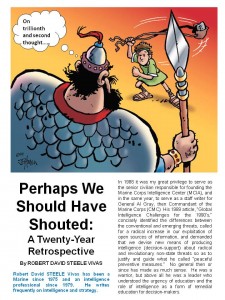
The Army Strategy Conference got it right in 1998–not only do we need to abandon the two theater concept (how very sad that it should take Versailles on the Potomac 21 years to catch up with the Army's Strategic Studies Institute)–but the Pentagon needs to understand the 1+iii (One Plus Triple Eye) concept advanced in 1998 and confirmed in 2008 at the Army Strategy Conference focused on Rebalancing the Instruments of National Power.
From where we sit (the cheap seats), the USA appears to lack a national strategy, a foreign affairs strategy, a military and military support to Whole of Government strategy, and a military acquisition strategy. Nothing has changed–just the specific words used to pay lip service to fad of the day, Irregular Warfare.
Historical References:
Truth Spoken Power Deaf 1998-2009450-Ship Navy (2009 Update to 1999)1+iii Alternative Paradigm for Force Structure1+ iii Conference Summary (1998)
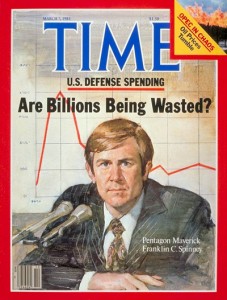
The original modern whistle-blower, whose friends got him the cover of TIME Magazine to protect him from vengeful senior policy-makers who did not wish to hear truth spoken to power. Below is his book, still the most trenchant and relevant and certain NOT to be read by anyone engaged with the Quadrennial Review (QDR) or 2010, which is already known to be focusing, at the USD Policy level, on three challenges: China, China, and China (China space, China sea, China cyber).
TIME Cover Chuck Spinney
Focusing on China to justify long-haul high-end weapons and mobility and space systems we do not need is NOT to be confused with having a “China Strategy,” or any strategy at all. As one wag advised us today, first the politicos decide what they want to do, then they convince themselves that whatever they decided to do is a strategy.
Irregular Warfare (IRWF), IInformation Operations (IO), and everything else we actually need appear to be in line for lip service, nothing more.
In Afghanistan, Americans should deploy Pvt. Social Worker and Maj. Sociologist.
PBI: The conclusion first:
“You have to learn to discriminate if you're going to win,” said Villalobos. “And in Afghanistan, that's the problem. You don't know how to do that. You don't speak the languages; you don't understand the cultures. And then you have two other problems. First, you are the invader, the outsider.” And that's not going to change. “And second, you add to this the problem with your own record of human-rights violations.” Villalobos mentioned the Iraq horror picture show at Abu Ghraib in 2004 and the long history of abuses at the Bagram military base.To achieve anything in that sort of environment, soldiers have to be willing and able to move around among the public. But the “force protection” that is at the heart of so many U.S. military tactics and procedures makes that awkward if not impossible. You can't convince the people you can protect them from the insurgents, after all, if you look like you're not sure you can protect yourself. They just ask why you're there in the first place. And that question is increasingly hard to answer.
PBI: Now the middle meat:
“Afghanistan,” said Villalbos, “is super complicado.”
“In the old days, your problem was to defeat the enemy, and it didn't matter which way you did it,” the veteran guerrilla told me. “We had rural societies that were cut off from each other; you could eliminate your enemies without people seeing, and you could create a long peace that way. But in a world that is more interconnected, the idea of human rights has become more universal, and there has developed a direct relationship between human rights and military effectiveness.” Is McChrystal reading Villalobos? They seem to be very much on the same page.
As Villalobos sees it, the power to intimidate is much more limited than it used to be, and the risk of too much intimidation is that you will scare civilians right into the arms of your enemies. (Indeed, this was one of Al Qaeda's big mistakes in Iraq.) “Too much discussion about human rights has been about ethics,” said Villalobos, “and it's not only an ethical problem, it's an operational problem. The army of the future needs officers that are sociologists and soldiers that are social workers.
PBI: Read the beginning and other bits by clicking the Newsweek logo.
+++++++Marcus Aurelius Comment+++++++
Quite possibly, much of the force protection problem can be traced to a terrorist attack on a US bus Honduras in the late 1980s. That influenced future Southern Command (Latin America) commander GEN George Joulwan who later was European command commander during the Balkans interventions. GEN Joulwan's very robust view of force protection arguably set the tone for much of what our forces are doing today in the CENTCOM AOR.
+++++++Phi Beta Iota Editorial Comment+++++++
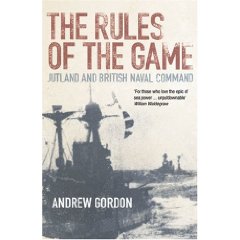
“Force Protection” is code for “Friendly Casualty Aversion” as well as the US Army's old mind-set of not allowing commanders any latitude in the way of mistakes–zero tolerance paved the way for micro-management and micro-reporting, and that is how the US Army trains, equips, and organizes. It became effective at killing indiscriminately and very ineffective at winning and holding ground and the hearts and minds on that ground.The Battle of Jutland and the “Rules of the Game” lessons learned and not learned by the British Empire apply equally to the American Empire.What this boils down to is that the Americans have substituted technology for thinking and doctrine for strategy.There is no good strategic reason for being in Afghanistan, nor is there a good strategic reason for continuing to spend $1 trillion a year on a 1950's force structure model, and now toward $90 billion a year on a secret intelligence community optimized to cover Soviet communications and little else. At the same time, between partisan ideology, Wall Street special interests, and bureaucratic corporatism, US foreign policy can safely be said to be–we quote Madeline Albright–the equivalent of “gerbils on a wheel.” See the other book below by Morton Halperin, a book that includes as one of the “rules of the game,” “Lie to the President if you can get away with it.” With a lack of integrity so prevasive, America is her own worst enemy.