
“Managing attention & information”
Created and curated by Howard Rheingold
Howard Rheingold curates this topic from blogs, tweets, videos and much more: find out how!
See Also:

The truth at any cost lowers all other costs — curated by former US spy Robert David Steele.
I will not replicate all that is at www.oss.net and to a much lesser extent, www.earth-intelligence.net, but do want to recognize a handful of extraordinary individuals by isolating their especially meritorious contributiions to the long-running debate about national intelligence reform and re-invention.
See Also:

It all started because of the discovery problem.
Too many things to choose from, more every day. No efficient way to alert the world about your service, your music, your book. How about giving it away to help the idea spread?
The simplest old school examples are radio (songs to hear for free, in in the hope that someone will buy them) and Oprah (give away all the secrets in your book in the hope that many will buy.)
There's a line out the door of people eager to spread their ideas, because in a crowded marketplace, being ignored is the same as failure.
Some D-Day reflections from 2009 that still merit reflection today.
“The Rule of LGOPs” Little Groups of Paratroops
On this the 67th anniversary of the World War II D-Day invasion it is only fitting to remind ourselves that rarely do things go as planned in battle. The 18th century military strategist Carl Von Clausewitz called it the “fog of war.” It must have been pretty foggy on the night of June 5th and morning of June 6th 1944 off the coast of Normandy. In the pre-dawn hours Airborne troopers were dropped all over the field of battle, few hitting the “drop zone” as planned…
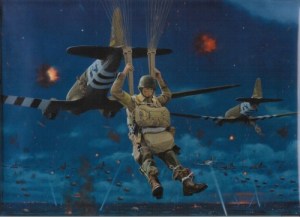
Rule of LGOPs
“After the demise of the best Airborne plan, a most terrifying effect occurs on the battlefield. This effect is known as the Rule of LGOPs. This is, in its purest form, small groups of 19-year old American Paratroopers. They are well-trained, armed-to-the-teeth and lack serious adult supervision. They collectively remember the Commander’s intent as “March to the sound of the guns and kill anyone who is not dressed like you…” …or something like that. Happily they go about the day’s work…
The Rule of LGOPs is instructive:
– They shared a common vision
– The vision was simple, easy to understand, and unambiguous
– They were trained to improvise and take the initiative
– They need to be told what to do; not how to do it
Phi Beta Iota: John focuses on issues of complexity and resilience, and both his blog and his book reviews at Amazon will begin to appear here as they are posted.
See Also:

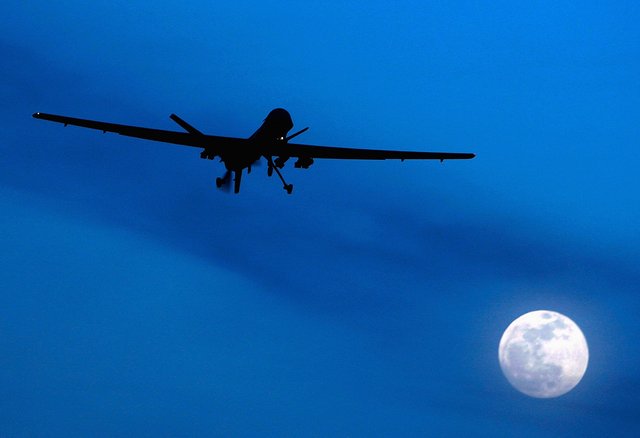
Advisers urge military to rely less on drones, more on expertise
Eli Lake, 1 June 2011
The Washington Times
Military operations in Afghanistan rely too much on intelligence gathered by unmanned drones, often exclude important publicly available data and do not focus enough on the recruitment of human agents, a Pentagon report says.
The report by the Defense Science Board, a panel that advises the Pentagon, says that the defense budget does not properly direct funding for open-source intelligence collection – information available to the public and gathered from a wide variety of sources, including academic papers and newspapers.
“Overall, these problems tend to exclude valuable sources of social and behavioral science data, including human geography,” according to the report.
It also says analysts often are overwhelmed by the volume of data collected by ball-shaped sensors outfitted on the bottom of military aircraft and from high-tech camera and radar pods placed on blimps and sometimes even telephone poles. While the technology has helped pinpoint and kill enemy combatants and to detect cellphone conversations on the battlefield, its created a “a crisis in processing, exploitation, and dissemination” of the information.
DSB May 2011 Counterinsurgency (COIN) Intelligence, Surveillance, and Reconnaissance (ISR) Operations
Phi Beta Iota: There is NOTHING NEW here. All of this was in General Al Gray's seminal article, “Global Intelligence Challenges in the 1990's” (American Intelligence Journal, Winter 1989-1990) and in the original modern intelligence reform book, ON INTELLIGENCE: Spies and Secrecy in an Open World (AFCEA, 2000). Joe Markowitz continues his polite urgings on the importance of open source intelligence, but in this corrupt environment he is as effective as Brent Scowcroft with Dick Cheney. The Department of Defense is OUT OF CONTROL. It lacks intelligence and integrity. This will not change until we get a Secretary of Defense committed to intelligence and integrity; OR we get an honest President, a Congress that fulfills its Article 1 responsibilities, and an Open Source Agency that can empower the public the way that Thomas Jefferson, James Madison, and George Mason all agreed was necessary if the Republic were to be preserved.
Continue reading “Defense Science Board to DoD: Get Brain + RECAP”

31 May 2011: BBC Link corrected.
Dear friends,
The personal is political.
This is true in so many ways. I am part of my culture and social systems, and they are part of me, embedded in me. They shape how I think and act, how I respond, what I think is right and possible — and I, in turn, play my role in them, no matter what I do or don't do.
This isn't something I can escape. It is simply what is. What I CAN do is try to be aware of it, of how this dynamic plays out in my life and in the lives around me. And try to make that dynamic into something that enlightens, empowers, and frees me and us.
Among the most important 21st century “personal is political” dynamics is the increasing personalization of commodities and the commodification of our personal lives.
Continue reading “Reality Always Bats Last: Personal Political Pathos”
A door is not responsible if it swings and hits you in the nose. Neither is the hand of the guy who punched you.
Philosphers and lawyers talk about agency. Responsibility comes with the capacity to act in the world. If you can decide, if you can act, you have agency.
Life without agency would be a nightmare. Trapped in a box, unable to do anything by choice, nothing but a puppet…
Why then, do organizations and individuals struggle so intently to avoid the responsibility that comes with agency? “It's not my job, my boss won't let me, there's a federal regulation, we're prohibited, it's our supplier, that's our policy…”
It's not something you can turn on or off. Either you have the capacity to act in the world. Or you don't.
NIGHTMARE FOR FUTURE REFERENCE
by Stephen Vincent Benet
That was the second year of the Third World War,
The one between Us and Them.
Well, we've gotten used.
We don't talk much about it, queerly enough.
There was all sorts of talk the first years after the Peace,
A million theories, a million wild suppositions,
A million hopeful explanations and plans,
But we don't talk about it, now. We don't even ask.
We might do the wrong thing. I don't guess you'd understand that.
But you're eighteen, now. You can take it. You'd better know.
Continue reading “Reference (Poem): Nightmare for Future Reference”
