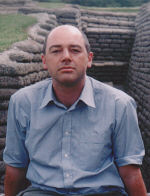
Jen is a social scientist at Los Alamos National Laboratory where she works on the Collective Decision Making Systems project available at http://cdms.lanl.gov. This project investigates how the design of systems (especially those online) supports accurate and reliable decision making in groups.
David Weinberger (born 1950 in New York) is an American technologist, professional speaker, and commentator, probably best known as co-author of the Cluetrain Manifesto (originally a website, and eventually a book, which has been described as “a primer on Internet marketing”). Weinberger's work focuses on how the Internet is changing human relationships, communication, and society. A philosopher by training, he holds a Ph.D. from the University of Toronto and taught college from 1980-1986. He was a gag writer for the comic strip “Inside Woody Allen” from 1976-1983. He became a marketing consultant and executive at several high-tech companies, and currently serves as a fellow at the Berkman Center for Internet and Society at Harvard Law School, where he co-teaches a class on “The Web Difference” with John Palfrey. He had the title Senior Internet Advisor to Howard Dean‘s 2004 presidential campaign, and provided technology policy advice to John Edwards‘ 2008 presidential campaign.
Richard J. Aldrich is in the School of Politics at the University of Nottingham and is co-editor of the journal Intelligence and National Security. His publications include Intelligence and the War Against Japan: Britain, America and the Politics of Secret Service (Cambridge University Press, 2000) and The Hidden Hand: Britain America and Cold War Secret Intelligence (Overlook, 2002). His current projects include an examination of intelligence and state formation since 1648.
5.0 out of 5 stars Was Going to Ignore, Then Could Not Put It Down
December 17, 2007
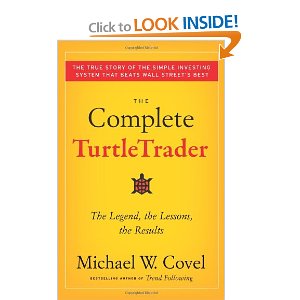
This book arrived in the mail with no letter. I normally do not read or review unsolicited books, but as I was deep into The Battle for the Soul of Capitalism instead of ignoring it I picked it up and it grabbed me.
This is a fine book, a tale well told with deep detail where there needs to be detail. My only thought as I put it down was, Wow! followed by another thought: what would it take to make Wall Street traders a force for good as John Bogle calls for in his own book?
If you want to be a trader in today's market where you buy on dips and sell on spikes, this book is as good as any.
In the mid ’90s, Robert Steele, a former-CIA officer and early proponent of open source intelligence, testified before the Aspin-Brown Commission about the tremendous value of unclassified information. The Commission decided to put this open source intelligence, or “OSINT,” to the test and directed that Steele and his network of commercial intelligence contacts would go head-to-head against the secret intelligence community in a battle-of-the-INTs. The subject would be the tiny and generally dismal nation of Burundi. The battle was engaged at 17:00 on a Thursday and the delivery deadline was 10:00 the next Monday.
The names of the top 10 journalists covering Burundi (ripe for debriefing)
The names of the top 10 academics covering Burundi (ripe for debriefing)
20 two-page executive-level political-military summaries on Burundi
Burundi order-of-battle information down to the tribal level.
1:50 maps of the country
1:50 cloud-free imagery of the country that was less than 3 years old.
The CIA showed up with a PowerPoint chart of nominal value and a regional – not country-specific – economic study. You could pretty much conduct a non-combat operation in Burundi with Steele’s info; you wouldn’t send your worst enemy to Burundi based on what the CIA provided.
The Congressional Research Service’s recent report on open source intelligence reminds us that the point Steele made eleven years ago remains valid today: the value of any given piece of information is found in its utility, not in how it was obtained.
Stolen information is useless if it doesn’t answer any questions or in the case of the Burundi exercise, cannot be obtained period.
Additionally, while secrets always come with baggage (is the source lying to you? does the source even know what he’s talking about? is the information old? is this a trick?) OSINT can be fact-checked in real-time by multiple sources.
(No wonder the Department of Homeland Security seems so interested in it.) All the unwanted attention showered on the recent intelligence estimate on Iran’s nuclear weapons capabilities focused on the IC’s analysis of mostly secret information, but I would argue that it is collection or the lack thereof that is at the root of most intelligence problems. The CRS report conveniently if inadvertently points out a potential solution to both problems:
The ultimate metric for the Intelligence Community is, however, the quality of analysis. Today’s analysts work with the awareness that products reflecting ignorance of information contained in open sources will discredit the entire intelligence effort. This will be especially the case when intelligence products are made public and are scrutinized by knowledgeable outside experts.
I think it is high time we repeated the Burundi experiment (perhaps take a close look at someplace relevant like Pakistan). See how substantial (as opposed to ideological) the critiques from the world’s foremost experts are, and figure out if charges of “politicization” are accurate or if more fundamental flaws need to be addressed.
In the mid ’90s, Robert Steele, a former-CIA officer and early proponent of open source intelligence, testified before the Aspin-Brown Commission about the tremendous value of unclassified information. The Commission decided to put this open source intelligence, or “OSINT,” to the test and directed that Steele and his network of commercial intelligence contacts would go head-to-head against the secret intelligence community in a battle-of-the-INTs. The subject would be the tiny and generally dismal nation of Burundi. The battle was engaged at 17:00 on a Thursday and the delivery deadline was 10:00 the next Monday.
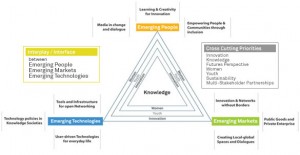
Global Knowledge Partnership and the Global Knowledge Summit are a uniquely Malaysian initiative and offer some interesting views that are all the more valuable for their seeming ignorance of the World Information Summit, which we speculate has lost credibility among those who wish to move more efficiently and purposefully.
We speculate that Malaysia, which has also been a pioneer in seeking to establish a global Islamic information sharing and sense-making network, to include an Islamic Press Service, sees itself as the natural leader for the Islamic Caliphate (Extended) in relation to modern information communication technologies (ICT) where it excels.
We include this organization and its events in the UN/NGO reference category in part because of the UN representation at GK3 and in part because it appears to be operating with the proper spirit of embracing as many stakeholders as possible for the right reasons.