
IPOA 2010 Annual Summit of the Stability Operations Industry
Starts: Sunday October 17, 2010 at 06:00PM
Ends: Tuesday October 19, 2010 at 05:00PM
Region: Washington D.C.

The truth at any cost lowers all other costs — curated by former US spy Robert David Steele.
IPOA 2010 Annual Summit of the Stability Operations Industry
Starts: Sunday October 17, 2010 at 06:00PM
Ends: Tuesday October 19, 2010 at 05:00PM
Region: Washington D.C.
This is precisely the kind of search we like to see. It is a shame that most of what comes up on the Internet is baloney from corporations trying to pretend they have ethics. Here are a couple of selections that we thought worthy of including here. There is also an entire literature on business ethics, multi-cultural deliberative dialog, and so on.
Ethical and Legal Issues in Contemporary Conflict
Business Executives for National Security, 1 October 2009
Ethical Security: The Private Sector in Peace and Stability Operations
ISS Monograph Series No 139, November 2007
Ethics of Conduct for Peace and Stability Operations
Daniel H. Levine, Institute for Philosophy and Public Policy
December 2008 – December 2009
Ethics is how civilizations codify lessons learned with blood, so that future generation can build on lessons of the past.
This is an audio presentation by David Harvey accompanied by an animation that shows an interesting series of recent historical and geographical connections in the global financial system. The speaker admits to not having any solutions, but only providing the overview of what has happened.
test

By: Jane Hamsher Friday July 23, 2010 9:44 am
I was on MSNBC talking about the schism among Democrats regarding Arizona’s new immigration law and the Justice Department’s response. Obama is worried about his plummeting poll numbers among Hispanics (down 12 points this year), while Arizona Congressional Democrats are worried about being voted out of office. But nobody is talking about pot.

When asked about it by Dylan Ratigan, I said that everyone discussing the “immigration problem” was ignoring the elephant in the middle of the room: marijuana prohibition. It’s channeling millions in drug money into the Mexican cartels, and represents 60% of all cartel profits. That money gets used to finance violence not only at the border but in over 200 cities across the United States where they currently have a presence — up from 100 cities three years earlier.
Continue reading “Journal: Legalize Marijuana, Displace Illegal Mexicans”
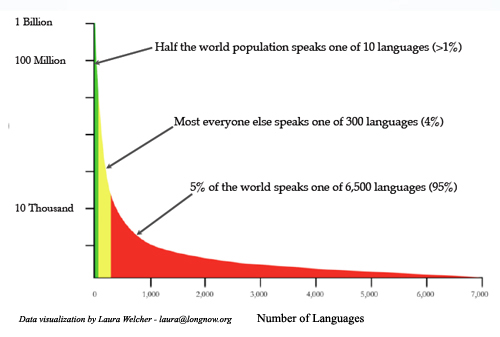
The Rosetta Project is pleased to announce the Parallel Speech Corpus Project, a year-long volunteer-based effort to collect parallel recordings in languages representing at least 95% of the world’s speakers. The resulting corpus will include audio recordings in hundreds of languages of the same set of texts, each accompanied by a transcription. This will provide a platform for creating new educational and preservation-oriented tools as well as technologies that may one day allow artificial systems to comprehend, translate, and generate them.
Continue reading “Building an Audio Collection for All the World’s Languages”

Presented by Michael Ravnitzky & Phil Lapsley at The Next HOPE, July 2010 in NYC
(page 18 of the presentation)
The three exemptions most misused
• Exemption b(1) – currently and properly classified national security information
• Exemption b(2) – internal materials
• Exemption b(5) – legally privileged material; usually the “deliberative process privilege”
Be especially skeptical of these.
Audio version (mp3) of the above presentation 64 kbps | 16 kbps
\\
Continue reading “Rummaging in the Government's Attic: Lessons Learned from 1,000 FOIA Requests”
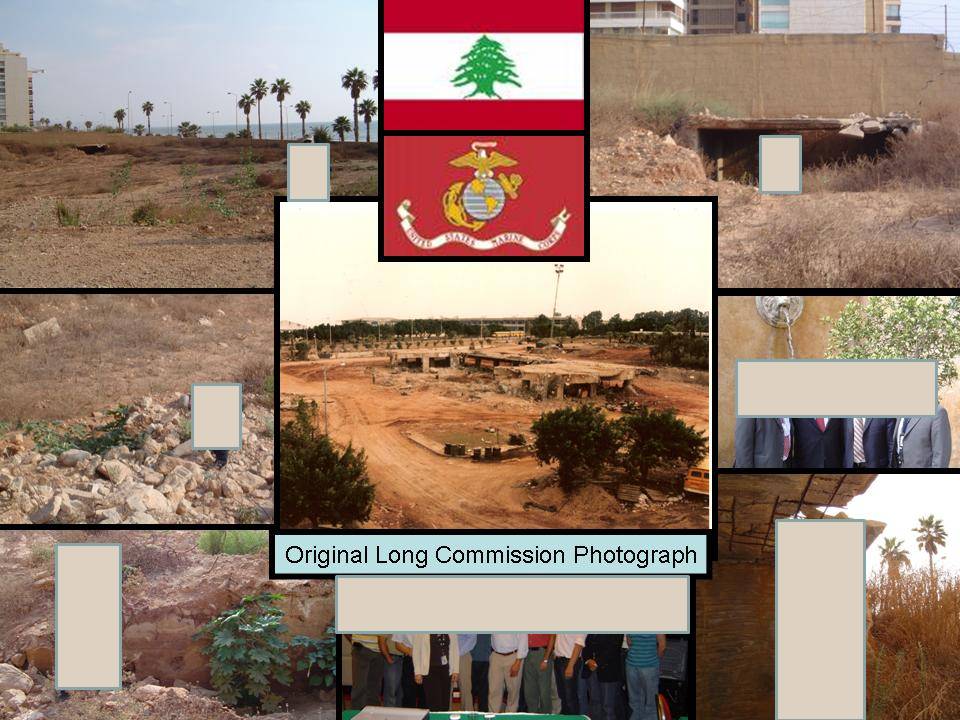
The Long Commission Report was very closely held, at the time only five people including John Guenther and Robert Steele, had access to the entire report. Here's the bottom line:
1) The threat changed and no one noticed. The battalion commander, who had previously served as the senior Marine in the CIA's Special Operations Group (SOG), was told he was in a benign threat environment in which casual shrapnel was the highest threat to his troops, and it therefore made sense, if they were to be billeted ashore (Navy cannot stand dust and bootmarks on its lily decks), to put them in a solid building.
2) Policy-makers had no clue about the connection between their behavior and the threat. They thought lobbing in battleship shells the size of small cars would “send a message” without realizing that a) this changed the Marine Corps role from peace-keeper to belligerent; and b) they might inspire a message back.
