“Foreign Liaison and Intelligence Reform: Still in Denial” comments on the excellent article about secret foreign liaison, “Foreign Intelligence Liaison: Devils, Deals, and Details,” in IJIC 20/1 Spring 2007, pp. 167-174.

The truth at any cost lowers all other costs — curated by former US spy Robert David Steele.
“Foreign Liaison and Intelligence Reform: Still in Denial” comments on the excellent article about secret foreign liaison, “Foreign Intelligence Liaison: Devils, Deals, and Details,” in IJIC 20/1 Spring 2007, pp. 167-174.

This is my most patriotic book, and a very serious book. All of the chapters and the 500+ non-fiction annotated bibliography are available as individual downloads:
Legitimate Grievances (US Internal)
Legitimate Grievances (Anti-US Global)
Call to Arms: Fund We Not Them
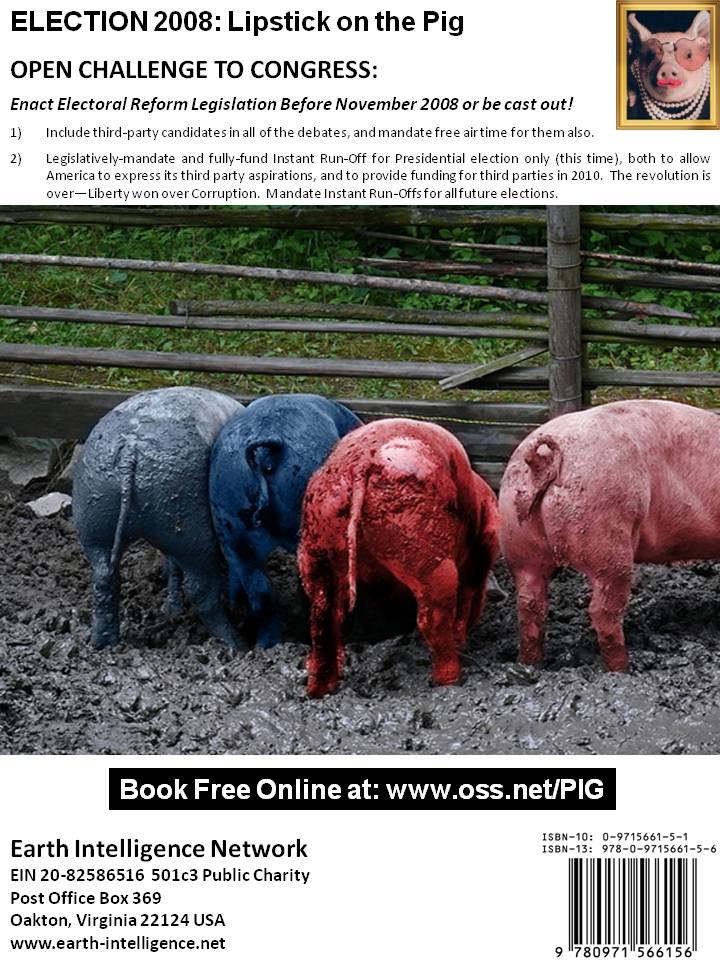 I dare to hope that serious people considering me for any mission or any task will recognize the earnest civic value of this contribution. Certainly I know that the public is waking up to the “Borg” that uses the Presidency as theater while Wall Street controls, the Treasury, Justice, and the Federal Reserve (which is neither Federal nor a Reserve).


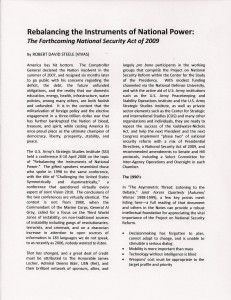
The Army Strategy Conference is generally the best and most serious show in town when it comes to thinking about its topic–strategy. In 1998 the conference nailed the future, but the Services remained beholden to their budget share wars and contractor-driven bells and whistles for profit strategies–they betrayed the public interest. In 2008 the conference again nailed it, and here is the draft article in both document form (click on the image) . The military talks about “we can't do it all” but the military leadership is still not serious about enabling inter-agency planning, programming, budgeting, and campaigning.
At the very bottom, following the full-text online, Frog left is the full detailed notes from this conference, and Frog right is the summary article of the 1998 conference.

 Seminal Work that Redirected My Life
May 8, 2008
United Nations
Together with C. K. Prahalad's The Fortune at the Bottom of the Pyramid: Eradicating Poverty Through Profits (Wharton School Publishing Paperbacks), this book redirected my life. Although I have been an intelligence and operations professional all my life, and spent the last 20 years kicking doors down all over the world to get secret intelligence communities to focus on the 96% of the information they could get legally, ethically, and generally free or at very low cost, I was lacking a strategic frame of reference.
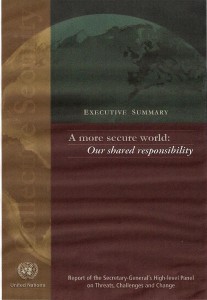
This book literally blew my mind into smithereens. Starting with the fact that LtGen Dr. Brent Scowcorft is one of the last adults still standing with his integrity intact, I was moved to the core of my being by the following list, which is in priority order:
01 Poverty
02 Infectious Disease
03 Environmental Degradation
04 Inter-State Conflict
05 Civil War
06 Genocide
07 Other Atrocities
08 Proliferation
09 Terrorism
10 Transnational Crime
I cannot under-state the force with which this list hit me. In combination with Prahalad's book, which makes the point that capitalism is focused on the billion rich with a one trillion marketplace, while the five billion poor represent a FOUR trillion marketplace, I suddenly realized that the Panel had delivered one side of a strategic matrix for creating a prosperous world at peace.
Despite the existence of other superb books, such as High Noon 20 Global Problems, 20 Years to Solve Them; The Future of Life; and Plan B 3.0: Mobilizing to Save Civilization, Third Edition, no one–no one–had created a list in priority order that calls into question every national security budget on the planet, but especially that of the USA.
These two books led to my decision to sell my for-profit, OSS.Net, and create, with 23 other co-founders, the Earth Intelligence Network, a 501c3 Public Charity, and to commit myself to being intelligence officer to the poor for the remainder of my life.
I will just list the twelve policies and the eight humanities below, all other information is at EIN, and I do not want to distract from other reviews. This book, this list, is the single most important first step in empowering the collective intelligence of the public to the point that we can eradicate corruption, protect our commonwealths, and achieve a prosperous world at peace.
Twelve policies that must be harmonized at the budget level across all Nations and corporations and foundations, and organizations (this is important because governments are organized as stovepipes–it is lunacy to use up water we don't have to grow grain we do not need to create ethanal with food instead of sugar cane, bacteria, or algae):
01 Agriculture
02 Diplomacy
03 Economy
04 Education
05 Energy
06 Family
07 Health
08 Immigration
09 Justice
10 Security
11 Society
12 Water
The eight humanities (this is important because nothing the US or EU do unless we create, within seven years, an EarthGame that helps these dominant demographics avoid our mistakes:
01 Brazil
02 China
03 India
04 Indonesia
05 Iran
06 Russia
07 Venezuela
08 Wild Cards (e.g. Congo)
There are so many books relevant to all of the above I must point to my lists, but want to list just a couple of future-oriented books here, the last being the first by EIN (free online, but lovely here at Amazon):
The leadership of civilization building: Administrative and civilization theory, symbolic dialogue, and citizen skills for the 21st century
How to Change the World: Social Entrepreneurs and the Power of New Ideas, Updated Edition
Collective Intelligence: Creating a Prosperous World at Peace
See also 2008 Chapter: Annotated Bibliography on Reality

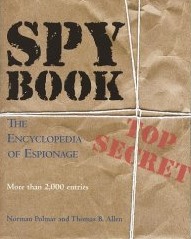
How to Restore Spies Credbility: Go Open Source
In the mid ’90s, Robert Steele, a former-CIA officer and early proponent of open source intelligence, testified before the Aspin-Brown Commission about the tremendous value of unclassified information. The Commission decided to put this open source intelligence, or “OSINT,” to the test and directed that Steele and his network of commercial intelligence contacts would go head-to-head against the secret intelligence community in a battle-of-the-INTs. The subject would be the tiny and generally dismal nation of Burundi. The battle was engaged at 17:00 on a Thursday and the delivery deadline was 10:00 the next Monday.
On Monday morning Steele showed up with:
The CIA showed up with a PowerPoint chart of nominal value and a regional – not country-specific – economic study. You could pretty much conduct a non-combat operation in Burundi with Steele’s info; you wouldn’t send your worst enemy to Burundi based on what the CIA provided.
The Congressional Research Service’s recent report on open source intelligence reminds us that the point Steele made eleven years ago remains valid today: the value of any given piece of information is found in its utility, not in how it was obtained.
Stolen information is useless if it doesn’t answer any questions or in the case of the Burundi exercise, cannot be obtained period.
Additionally, while secrets always come with baggage (is the source lying to you? does the source even know what he’s talking about? is the information old? is this a trick?) OSINT can be fact-checked in real-time by multiple sources.
(No wonder the Department of Homeland Security seems so interested in it.) All the unwanted attention showered on the recent intelligence estimate on Iran’s nuclear weapons capabilities focused on the IC’s analysis of mostly secret information, but I would argue that it is collection or the lack thereof that is at the root of most intelligence problems. The CRS report conveniently if inadvertently points out a potential solution to both problems:
The ultimate metric for the Intelligence Community is, however, the quality of analysis. Today’s analysts work with the awareness that products reflecting ignorance of information contained in open sources will discredit the entire intelligence effort. This will be especially the case when intelligence products are made public and are scrutinized by knowledgeable outside experts.
I think it is high time we repeated the Burundi experiment (perhaps take a close look at someplace relevant like Pakistan). See how substantial (as opposed to ideological) the critiques from the world’s foremost experts are, and figure out if charges of “politicization” are accurate or if more fundamental flaws need to be addressed.
– Michael Tanji, cross-posted at Haft of the Spear
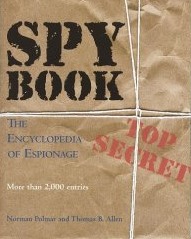
WIRED MAGAZINE DANGER ROOM
By Noah Shachtman
December 14, 2007
In the mid ’90s, Robert Steele, a former-CIA officer and early proponent of open source intelligence, testified before the Aspin-Brown Commission about the tremendous value of unclassified information. The Commission decided to put this open source intelligence, or “OSINT,” to the test and directed that Steele and his network of commercial intelligence contacts would go head-to-head against the secret intelligence community in a battle-of-the-INTs. The subject would be the tiny and generally dismal nation of Burundi. The battle was engaged at 17:00 on a Thursday and the delivery deadline was 10:00 the next Monday.
On Monday morning Steele showed up with:
Continue reading “2007 How to Restore Spies Credibility–Go Open Source”