What is one to think about a country and a time in which 64 per cent of the population cannot identify the three major branches of government? Not the individuals, just the basic system. Nearly two out of three. This may be the most depressing statistic I have ever published.
Wednesday marked national Constitution Day, the 227th anniversary of the signing of the U.S. Constitution. But only 36 percent of Americans can actually name the three branches of government the Constitution created.
Could there be any question that dominance, or even as the U.S. military liked to put it, “full-spectrum dominance,” was the obvious, uncontested, and only possible result?
A Jihadist Paradise on Earth
As the present chaos across large swathes of our world indicates, however, it didn’t turn out to be so. The planet was telling quite a different story, one focused not on the concentration of power but on a radical form of power drain. In that story, the one for which the evidence kept piling up regularly in the post-9/11 years, no application of power seemed to work for Washington. No enemy, no matter how minor, weak, ill armed, or unpopular could be defeated. No jihadist group wiped out. Not one.
When you get past the details of the Scottish independence referendum Thursday, there is a broader story underway, one that is also playing out in other advanced nations.
It is a crisis of the elites. Scotland’s push for independence is driven by a conviction — one not ungrounded in reality — that the British ruling class has blundered through the last couple of decades. The same discontent applies to varying degrees in the United States and, especially, the eurozone. It is, in many ways, a defining feature of our time.
. . . . . . . .
Power is not a right; it is a responsibility. The choice that Scotland is making on Thursday is of whether the men and women who rule Britain messed things up so badly that they would rather go it alone. And so the results will ripple through world capitals from Athens to Washington: The way things are going currently isn’t good enough, and voters are getting angry enough to want to do something about it.
Climate and democracy are what I call meta-issues – issues which impact virtually every other issue and therefore, I believe, have priority over all other issues. This is a controversial assertion. But I want to stress that it comes not from denial of the importance of other issues, but from caring about them from a big enough perspective to see that they can’t be successfully addressed in isolation from these two all-pervading issues which have the power to make or break everything else we are doing.
After receiving my last message, an organizer for Sunday’s mega-People’s Climate March in NYC (and elsewhere) asked me what I thought of it. [Note: This post was written after the subsequent post about research and polarization, but mistakenly posted before it.]
While urging anyone who feels called to attend this important mega-demonstration to do so if they can, I want to give a more nuanced response to the organizer who wrote to me, and to share it with you here.
It has been joked that all people are equal but some are more equal than others.
In a similar vein, I would suggest that all issues are important and interconnected, but some are more important and interconnected than others.
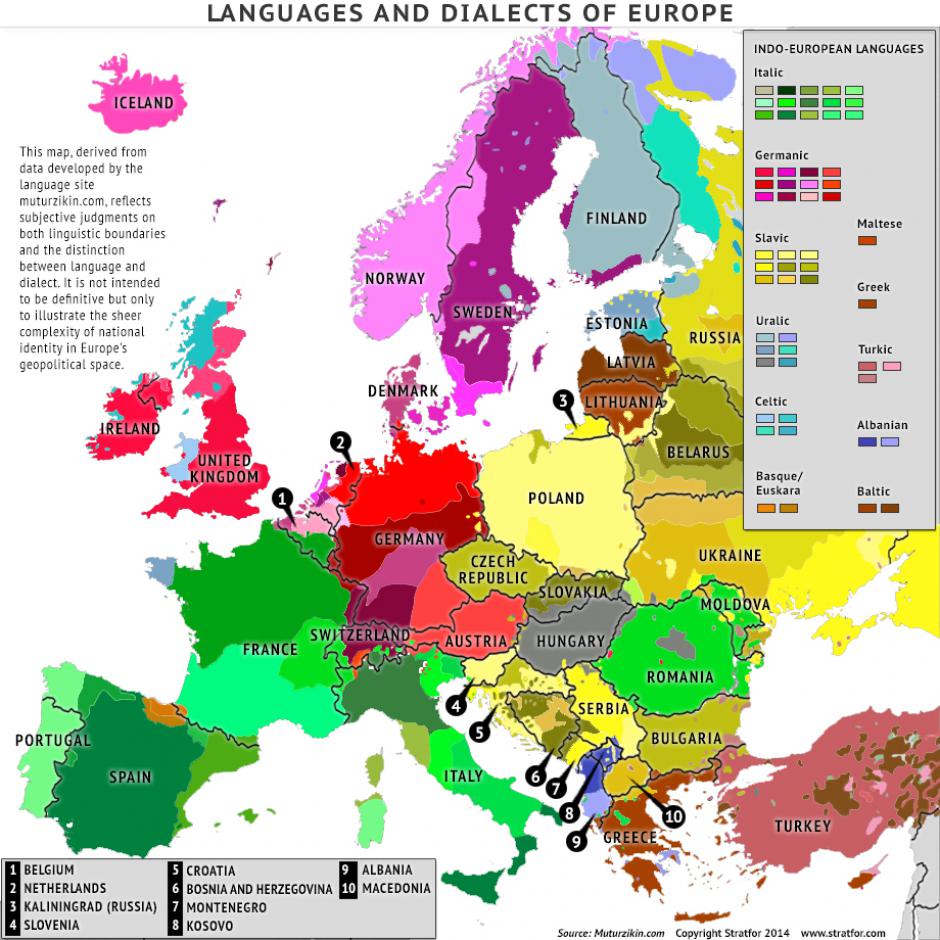
The idea of Scottish independence has moved from the implausible to the very possible. Whether or not it actually happens, the idea that the union of England and Scotland, which has existed for more than 300 years, could be dissolved has enormous implications in its own right, and significant implications for Europe and even for global stability.
Click on Image to Enlarge
. . . . . . .
The point of all this is to understand that the right to national self-determination comes from deep within European principles and that it has been pursued with an intensity and even viciousness that has torn Europe apart and redrawn its borders. One of the reasons that the European Union exists is to formally abolish these wars of national self-determination by attempting to create a framework that both protects and trivializes the nation-state.
. . . . . . .
The right to national self-determination is not simply about the nation governing itself but also about the right of the nation to occupy its traditional geography. And since historical memories of geography vary, the possibility of conflict grows. Consider Ireland: After its fight for independence from England and then Britain, the right to Northern Ireland, whose national identity depended on whose memory was viewing it, resulted in bloody warfare for decades.
. . . . . . .
I think that however the vote goes, unless the nationalists are surprised by an overwhelming defeat, the genie is out of the bottle, and not merely in Britain. The referendum will re-legitimize questions that have caused much strife throughout the European continent for centuries, including the 31-year war of the 20th century that left 80 million dead.
Patrick Cockburn reports that Prince Bandar bin Sultan, the Saudi ambassador to Washington (1983-2005), once told M16 head Sir Richard Dearlove: “The time is not far off in the Middle East, Richard, when it will literally be ‘God help the Shia.’ More than a billion Sunni have simply had enough of them.”
There are thus deep animosities within Islam, as there have been, historically, within Christianity.
There was a time when Protestants viewed Roman Catholics as idolatrous heretics and bloody wars of religion ravaged Europe. ISIL is now fighting such a war against Shiites, Christians, Yezidis, secularists, and others it sees as unbelievers and as stooges of the west. But its primary target is the Shiites.