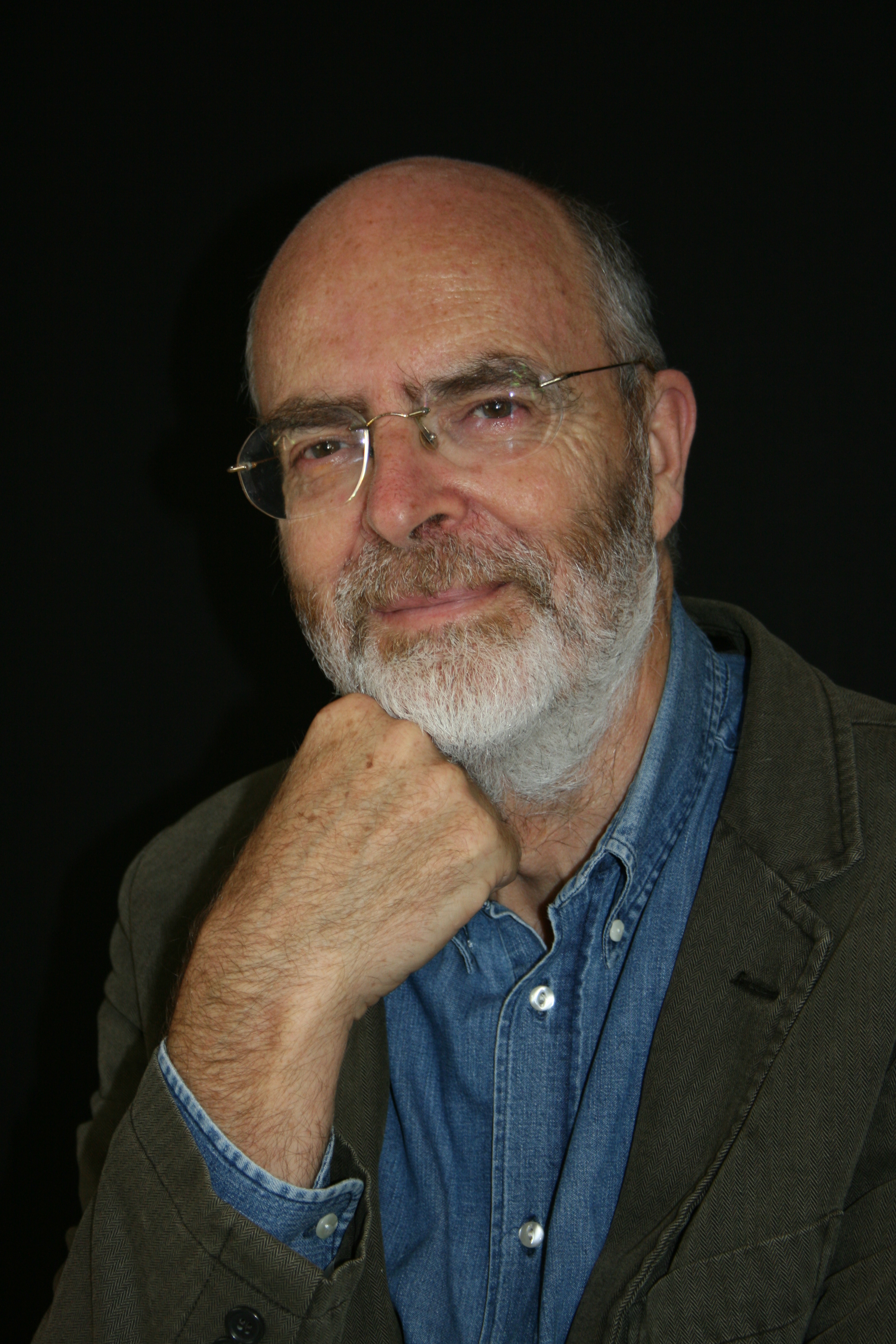
Interview with Dr. Sally Goerner. Dr. Goerner is the director and co-founder of the Integral Science Institute, a non-profit research and educational centre. With advanced degrees and professional experience in computer science, engineering, nonlinear dynamics and psychology, Dr. Goerner’s speciality is showing how a range of major social, scientific, economic and political crises and alternatives can all be seen as part of one common evolutionary transition.
All the activities of life can be viewed as efforts to satisfy fundamental needs. The specific things we think we want or desire are actually best viewed as attempts to satisfy those more fundamental needs that are universal and can be satisfied in so many different ways. However, some “satisfiers” are actually toxic and/or addictive, undermining other areas of our life and driving acquisitive cultures that are destroying our world and prospects for future generations. The co-intelligence worldview suggests that we seek to understand the life-dynamcs of “needs” and find ways to satisfy the needs of all involved at every level. This activity can look like conflict resolving peacemaking, like self-organizing democracy, like nature respecting sustainability, and many other good things many of us are already involved with. There is a tight bond between co-intelligence and the healthy satisfaction of needs. Practices like Nonviolent Communication and Human-scale Development are co-intelligent because they help us serve life in that way. And we can push the envelope even further…
As the diversity in tech movement gains traction, open source faces an identity crisis.
EXTRACT
The first story we must look at is: who exactly is an open source contributor? The answer to this seems obvious enough. Open source contributors are hackers. The movement as a whole traces its roots back to Richard Stallman and the hackers at MIT in the late 70s. The hacker identity is a specialisation of the geek identity, which can be seen as a continuation of the scientist and mathematician archetype that stretches back centuries.
JERUSALEM — Israel entered its latest conflict with Hamas armed with a high-tech arsenal, real-time battlefield intelligence and strong domestic support for dealing a heavy blow to Hamas.
But again on Friday, Israeli forces were taken by surprise, this time with two soldiers killed and one taken prisoner when militants once again attacked from a tunnel in Gaza.
As frustration grows in Israel over the military’s limited success so far in trying to neutralize Hamas, the militant Islamic group that governs Gaza, despite hitting 4,300 targets in 24 days of intense bombing, some military experts say it is increasingly evident that the Israel Defense Forces have been operating from an old playbook and are not fully prepared for a more sophisticated, battle-ready adversary. The issue is not specifically the tunnels — which Israel knew about — but the way Hamas fighters trained to use them to create what experts in Israel are calling a “360-degree front.”
“Hamas has changed its doctrine and is using the tunnels as a main method of operation,” said Israel Ziv, a retired general who headed the military’s Gaza division and its operations directorate. “This is something we learned amid the fighting.”
(note: this version was originally written at the request of Jay Wallsjasper of On the Commons, slightly expanded and updated on July 13; it’s a little more elaborate than the first informal assessment shared here before)
Michel Bauwens, 19th July 2014:
We’re nearing the end of June , the day of my departure from Quito and my direct involvement in the FLOK process, where I have been director of the research team. Many people have asked about my assessment of the results of the process. The FLOK process was a complex process and the assessment can only be complex as well.