Host of Air America’s Clout, Richard Greene, hosts the author of An Act of State, William Pepper, who represented James Earl Ray on behalf of the Martin Luther King family and is now representing RFK patsy Sirhan Sirhan.
This is the antecedent to my previous post on Gen. Mattis.
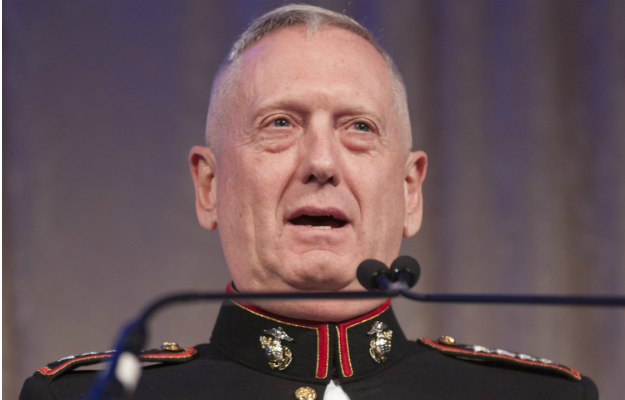
The administration’s mishandling of Marine Gen. James Mattis
Posted By Thomas E. Ricks Friday, January 18, 2013 – 9:50 AM
Word on the national security street is that General James Mattis is being given the bum's rush out of his job as commander of Central Command, and is being told to vacate his office several months earlier than planned.
General James Mattis, USMC
Why the hurry? Pentagon insiders say that he rubbed civilian officials the wrong way — not because he went all “mad dog,” which is his public image, and the view at the White House, but rather because he pushed the civilians so hard on considering the second- and third-order consequences of military action against Iran. Some of those questions apparently were uncomfortable. Like, what do you do with Iran once the nuclear issue is resolved and it remains a foe? What do you do if Iran then develops conventional capabilities that could make it hazardous for U.S. Navy ships to operate in the Persian Gulf? He kept saying, “And then what?”
Inquiry along these lines apparently was not welcomed — at least in the CENTCOM view. The White House view, apparently, is that Mattis was too hawkish, which is not something I believe, having seen him in the field over the years. I'd call him a tough-minded realist, someone who'd rather have tea with you than shoot you, but is happy to end the conversation either way.
Presidents should feel free to boot generals anytime they want, of course — that's our system, and one I applaud. But ousting Mattis at this time, and in this way, seems wrong for several reasons:
TIMING: If Mattis leaves in March, as now appears likely, that means there will be a new person running CENTCOM just as the confrontation season with Iran begins to heat up again.
Here are a few things I have heard since I posted my comments on Friday about the Obama administration pushing General Mattis out at Central Command. Thanks to all who wrote in to make this follow-up possible:
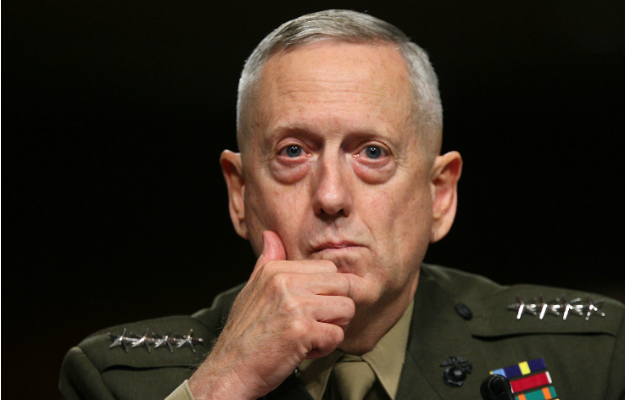
General James Mattis, USMC
A particular point of disagreement was what to do about mischief Iran is exporting to other countries. Mattis is indeed more hawkish on this than the White House was.
National Security Advisor Tom Donilon in particular was irked by Mattis's insistence on being heard. I cringe when I hear about civilians shutting down strategic discussions. That is exactly what the Bush administration did in late 2002 when generals persisted in questioning whether it was wise to invade Iraq. That led to what some might call a fiasco.
I wonder if Donilon understands that the key to making effective, sustainable national security policy is having robust, candid discussions between civilian and military leaders that bring to the surface differences and also explore assumptions. I am told that that is what Mattis was trying to do. He knows, as do all smart generals, that in our system, at the end of the discussion the civilians get to decide what to do. In a talk at Johns Hopkins SAIS in late November, Mattis said that, “We military leaders have a right and duty to be heard, to give our best military advice, but we were not elected to and we have no right to dictate.” (In the same talk, Mattis also likened Cairo today to Paris in 1789 — a very interesting thought, and one that made me wonder if 15 years from now, one Arab leader will dominate the entire region as Napoloen dominated Europe early in the 19th century.)
Insisting on being heard should be part of the duty of a senior general. That's the lesson of two great books: H.R. McMaster's Dereliction of Duty and Eliot Cohen's Supreme Command. Indeed, General Mattis cited the latter in his talk at Johns Hopkins SAIS. I suspect Donilon needs to brush up on both.
By Paul Goodsell and Joseph Morton, World-Herald Staff Writers
Former Nebraska Sen. Chuck Hagel faces a Jan. 31 confirmation hearing before the Senate Armed Services Committee for his appointment by the president as secretary of defense.
During his 12 years in the Senate — and the four years since he left office — Hagel has taken positions on a number of issues related to military policy.
Much of the public focus on Hagel recently has been on his initial support of and later opposition to the Iraq War, his caution about military intervention in Iran over its nuclear program, and the depth of his support for Israel. Senators are sure to ask Hagel about those issues.
But here are some additional areas that could come up:
Sen Hagel, if confirmed as SECDEF, may start firing Service Secretaries. Keeping Acquisition and Intelligence will be a sure sign that nothing is actually going to change.
Although the transition between presidential terms is usually marked by large-scale personnel turnover at politically appointed government posts, sources said that this time, many of the most important leaders at the Pentagon are likely to stay, creating continuity in a time of fiscal uncertainty.
Among them, Deputy Defense Secretary Ashton Carter is expected to stay on for at least one year following confirmation of the top Defense Department job, according to Pentagon sources.
While it appears more and more likely that former Sen. Chuck Hagel will be confirmed to replace Defense Secretary Leon Panetta, Hagel will likely inherit much of his predecessor’s team. Besides Carter, Frank Kendall, undersecretary of defense for acquisition, technology and logistics, and Robert Hale, Defense Department comptroller, are likely to remain, sources said.
According to a Pentagon official, the president asked Carter to stay in his current DoD post, a decision, sources added, was made easier because of the good relationship he has with Hagel.
Carter had been rumored as a candidate for Cabinet-level positions, but that possibility appears to have passed for the moment. Michael Vickers, who was considered for the job of CIA director, is thought likely to remain at DoD as well.
None of the decisions has been finalized, as Hagel will be given the option to push for his own people, but sources don’t expect Hagel to rock the boat. Change is more likely to occur at the service head level, said Loren Thompson of the Lexington Institute think tank. But those decisions are likely to wait until a new secretary is settled, Thompson said. And while the staffs may remain similar, there will be a distinction in mandate and ideology between the current and likely defense chiefs.
In spite of all the money being spent by Monsanto, Syngenta, and Bayer Crop Science and others to buy off governments the truth about the connection between neonicotinoids and the collapse of the bees is finally breaking through.
As time went on, however, Surov and his team ‘noticed quite a serious effect when we selected new pairs’ from the previous generation's cubs. They ‘continued to feed them as before. These pairs' growth rate was slower and reached their sexual maturity slowly.' By the third generation, the hamsters were infertile.”
. . . . . . . . . .
But infertility was almost the least of the strange pathologies observed. The GM diet hamsters developed hair growing in recessed pouches inside their mouths.
. . . . . . . . . .
Jeffrey M. Smith of the Center for Global Research, describes what happened: ‘Within just 10 days, the animals developed potentially pre-cancerous cell growth, smaller brains, livers and testicles, partially atrophied livers, and damaged immune systems. Moreover, the cause was almost certainly side effects from the process of genetic engineering itself. In other words, the GM foods on the market, which are created from the same process, might have similar affects on humans.”
ABOARD A MILITARY AIRCRAFT, Jan. 17, 2013 – The across-the-board spending cuts that would result if a “sequestration” mechanism in budget law kicks in March 1 will hollow out U.S. military forces faster than most Americans imagine, the chairman of the Joint Chiefs of Staff said today.
Army Gen. Martin E. Dempsey said during a recent news briefing that if sequestration happens, the American military “will be less prepared in months and unprepared in a year.”
During an interview today on his return trip from NATO meetings in Brussels, the general said the cuts would quickly bring about a new type of hollow force.
ROBERT STEELE: Below is an extracted paragraph from the alleged letter, the one paragraph that makes sense:
To avert this crisis, we urge you to take immediate action to provide adequate and stable funding for readiness. We need a legislative solution that provides the time and flexibility to properly shape the best military force in the world. This means prioritizing warfighting readiness, appropriately sizing our military and civilian workforce and force structure, and reducing overhead costs. We must also be given the latitude to enact cost-saving reforms we need while eliminating the weapons and facilities we do not need.
My initial reaction is “wow!” HOWEVER, the Joint Chiefs of Staff have not met Senator Sam Nunn (D-GA) basic guidance as issued when he was Chairman of the Senate Armed Services Committee (SASC):
I am constantly being asked for a bottom-line defense number. I don’t know of any logical way to arrive at such a figure without analyzing the threat,; without determining what changes in our strategy should be made in light of the changes in the threat; and then determining what force structure and weapons programs we need to carry out this revised strategy. Senator Sam Nunn, then Chairman, SASC Source (p. 3)
The Joint Chiefs of Staff have been dishonest and unprofessional up to this point, as have been their predecessors going all the way back to the end of World War II. They have administered to budget share driven by the Military Industrial Congressional Complex (MICC) while accepting extremely dishonest appraisals of the global threat, producing an incoherent strategy, and perpetuating an acquisition system that is so dysfunctional it could reasonably be found to be treasonous,the United States being at war at this time (whether legitimately declared or not).



 Saturday, January 19, 2013 – 5:17 PM
  Share
Share