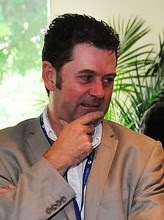
It sounds like a Rolodex for the 1 percent: two million deal makers, power brokers and business executives — not only their names, but in many cases the names of their spouses and children and associates, their political donations, their charity work and more — all at a banker’s fingertips.
Such is the promise of a new company called Relationship Science.
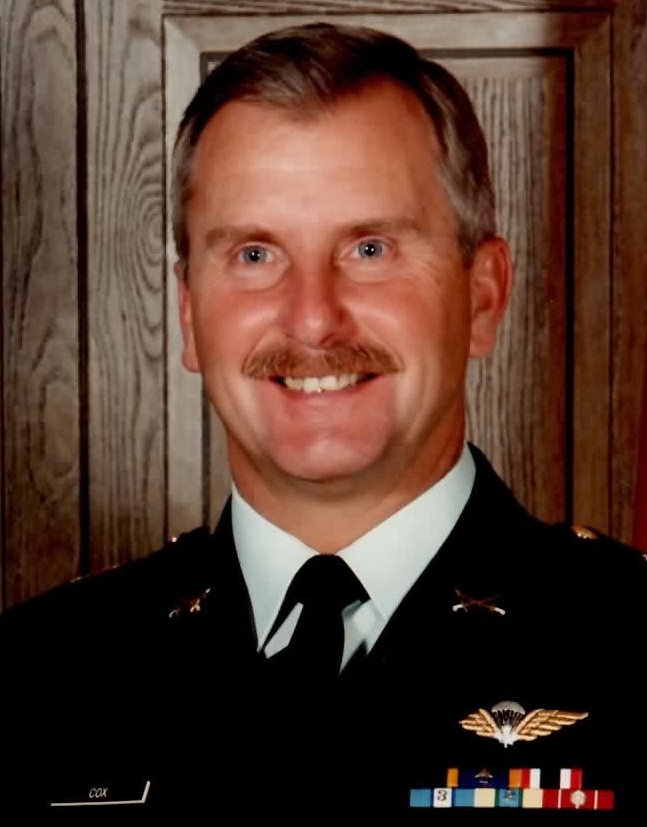
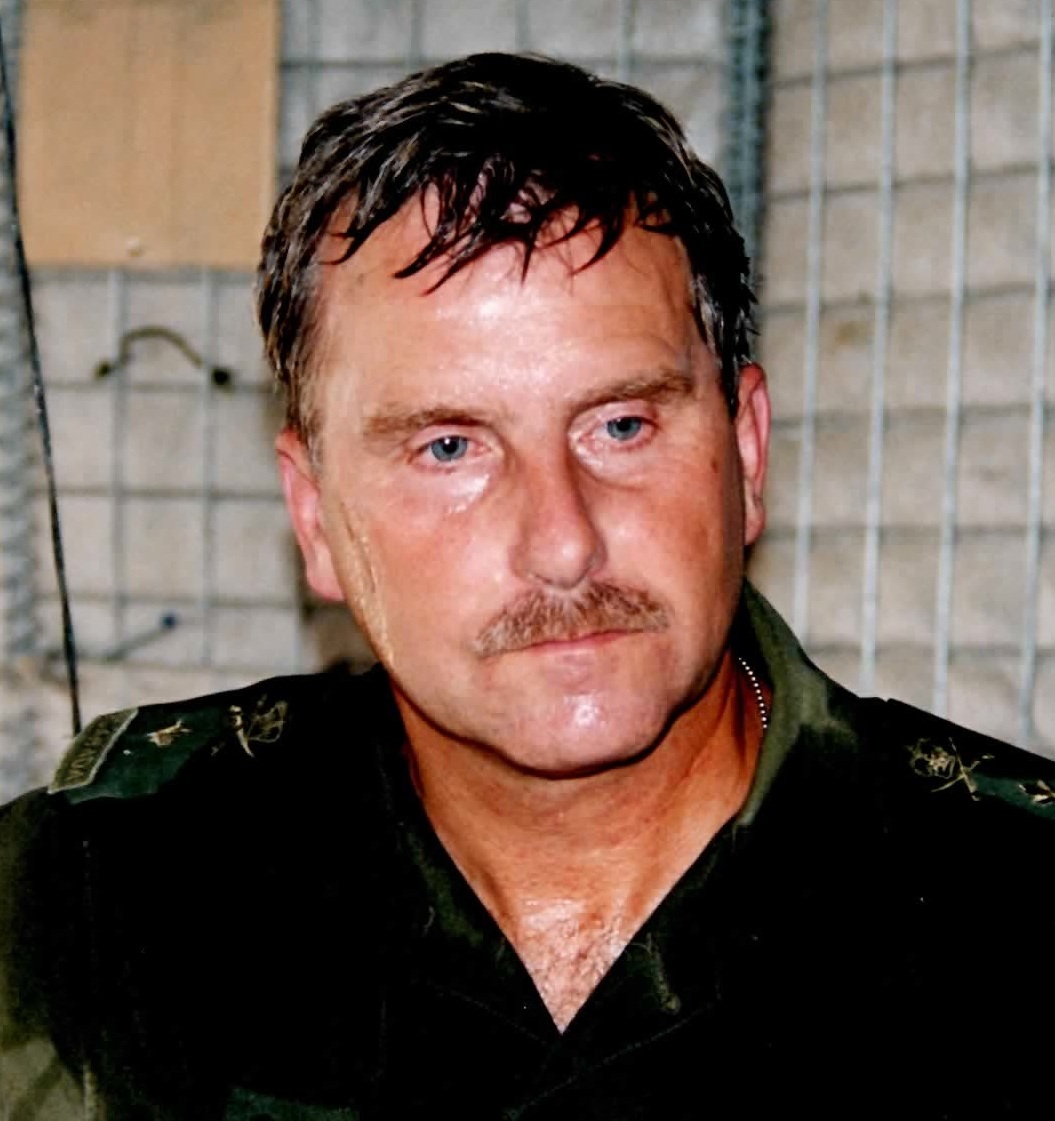
Phi Beta Iota: BGen James Cox, CA, as Deputy N-2, was General William Clark, USA / SACEUR ‘s action flag for Open Source Intelligence (OSINT). He arranged for Robert Steele to brief all flag officers and colonels in charge of military intelligence across all NATO and Partnership for Peace (Eastern European) countries, and he sponsored the triad of NATO OSINT documents that remain a standard in the field, albeit long over-due for being replaced with a new “rainbow series” that itemizes sources and methods within each of the eight tribes: Academic/Gold, Civil Society/Brown, Commerce/Gray, Government/Red, Law Enforcement/NYPD Blue, Media/Orange, Military/Olive Green, and Non-Governmental/Non-Profit/UN Blue. Our efforts to inform the Secretary General of the United Nations have failed so far.
On the Record:
I can say that even during what was done and the establishment of an ‘OSINT' cell in the SHAPE Int staff, I never thought that anyone had it fully ‘right.' By that I mean, when the OSINT cell was raised in SHAPE, all they did was collect open source information, mainly from print media like Jane's, the Economist Intelligence Unit and Stratfor, and feed it to the small analytical staff. There was no analyizing the open source information in its own right and producing ‘real' OSINT from it.
The process, to my mind, simply stopped at “OSINFO” and never got to “OSINT.”
Even today, I think this is still a problem in most ‘modern' intelligence staffs. People think that simply collecting open source info – although now from a wider range of sources – is OSINT, when I say it is not. It's like collecting satellite pictures and calling them IMINT … the job isn't done until they are analyzed and an assessment made.
BGen James Cox, CA (Then) UNOSOM II Chief of Staff in Mogadishu
If I was king of the world, I would build an OSINT organization to rival existing national SIGINT organizations (CSEC in Canada, NSA in US) and HUMINT organizations (CSIS in Canada, CIA in US). This OSINT organization would be in a number of big buildings around the country, tapped into all the sources you have long written about (media, experts, academia … all tribes) AND they would produce magnificent ‘single source' OSINT products that could be added to SIGINT, HUMINT, IMINT etc. products at the national level.
Given the power and range of today's global communications, I suspect OSINT products would be more complete and powerful than any other single source product.
Phi Beta Iota: And 96% of the time, any other all-source product, at a fraction of the cost in a fraction of time.
In 2010, Hillary Clinton described social media as a new nervous system for our planet (1). So can the pulse of the planet be captured with social media? There are many who are skeptical not least because of the digital divide. “You mean the pulse of the Data Have’s? The pulse of the affluent?” These rhetorical questions are perfectly justified, which is why social media alone should not be the sole source of information that feeds into decision-making for policy purposes. But millions are joining the social media ecosystem everyday. So the selection bias is not increasing but decreasing. We may not be able to capture the pulse of the planet comprehensively and at a very high resolution yet, but the pulse of the majority world is certainly growing louder by the day.
Phi Beta Iota: As Dr. Meier's notes, right now only the “haves” can be thinking about this. However, we remain certain that a project such as The Virgin Truth, or a concerted effort by the Secretary General of the United Nations to inspire a global United Nations Open-Source Decision-Support Information Network (UNODIN), or an initiative by Secretary of State John Kerry to create the Open Source Agency (OSA), can change the information dynamics and information ethics of the Earth virtually overnight.
However, the Chinese conception of “cybernetics” is technical, emphasizing subjects like OR. The European conception is at the state-of-the-art. Most Americans do not have any inkling about contemporary cybernetics while its popularity is growing in Europe as a standard business practice. Like the earlier quality process improvement innovations of W., Edwards Deminig, whose ideas had to be shown to be revolutionary in Japan at great economic cost to the USA, before the USA would consider (very late in the game), so also with cybernetics and improvements to the crafts of intelligence (decision-support and the eradication of misinformation or information pathologies) and sustainabile business (green to gold).
Phi Beta Iota: Cybernetics, put most simply, is about feedback loops and learning from tight transparent feedback loops. Lies, secrecy, and all forms of misinformation corrupt the feedback loops and radically increase the true cost to society of misadventures by the few.
01 Facing the future
At the end of each year many of us tend to focus on the future, wondering what it will bring. We wish each other a happy New Year, and hope that life will treat us kindly. We try to shape our own futures by making New Year resolutions, many of which fall by the wayside after a week or two. Much of our future is not ours to shape. But still we persist in trying to predict the future. Many of our predictions about the future are based on speculation or wishful thinking.
02 Is technology making us smarter?
When discussing the future, especially the future of technology, there are some writers who almost always seem to be quoted. Near the top of the list is the futurologist Ray Kurzweil, who has much to say about our technological future, and also about the growth in human intelligence. His views are quite optimistic, especially around computers and the nature of knowledge.
03 The future of intelligence
In my previous blog post I examined the debate about whether we are becoming more intelligent or less intelligent as a result of our prolonged and habituated uses of technology.
04 The future of classrooms
What will be the future of school classrooms? It is unlikely that we will see the demise of the classroom in the next decade. Those who study the future of education often suggest that the demise of traditional classrooms is not only inevitable, but imminent.