Recognizing that the society has become complex suggests that the truth about social issues, public interest or common good is not a single truth, but rather that there are a variety of well-founded and equally valid truths that must co-exist and be reconciled by human deliberation. Social complexity means there are different views about the most important issues in a society. Socially complex issues share no common denominator; different views must be embraced as in relation rather than in opposition.
Recognition of social complexity—and the impoverished political simplicity no longer adequate to its charter—has important consequences for how we go about understanding of social issues. This in turn determinates our future aspirations and approach to social struggles regarding how we want to collectively re-construct sociality. Put bluntly, Industrial-Era politics have failed, and new methods must be found to achieve political reconciliation among agonistic perspectives. There is no more hope for complete unity and consensus in principal social concerns. But these concerns are few and abstract. Everyday life is not lived in abstract world. The matter of everyday life is hybrid, ephemeral and so of “minor importance” to everybody.
WHEN:Tuesday, Jan. 10, 2012,5:30 – 8:00 p.m.
While Café Scientifique events are usually held on the first Tuesday of each month, please note that this event will take place on the second Tuesday due to the holiday.
WHERE:The Front Page restaurant, near Ballston Metro.
Located at 4201 Wilson Blvd., Arlington, VA 22203 on the ground floor of the National Science Foundation (NSF) building. Parking is available under the NSF building or at Ballston Common Mall.
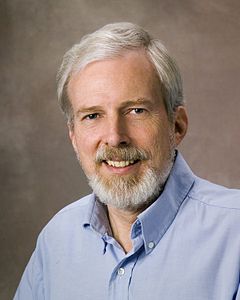
WHO: Presented by Stuart Umpleby, Professor of Management, The George Washington University.
HOW: Please come early to order table service and socialize. Special half-price burgers start at 5:30 p.m. Presentation begins at 6:15 p.m. followed by Q&A. No science background required – only an interest! Café Scientifique is free and open to the public. Registration requested. Register online now.
ABOUT THE TOPIC: In the social sciences it is clear that theories affect the phenomenon being studied. Indeed, we create theories in the hope that they will be accepted, acted upon and the social system will perhaps function better. However, usually scientific research is based on the assumption that the theory does not affect the phenomenon. The result is a gap between our assumptions about social systems and the way we do research. Closing this gap is leading to new methods for both research and practice. Creating a second order science, which includes examining the effects of theories on phenomena, is presently impeded by logical difficulties involving self- reference. This problem can be solved by reinterpreting some parts of mathematics using ideas common in everyday life.
SUPPORT THIS CAFÉ: The Ballston Science and Technology Alliance, a nonprofit organization, is the sponsor of Café Scientifique Arlington. Since April 2006, the goal of Café Scientifique has been to make science more accessible and accountable by featuring speakers whose expertise spans the sciences and who can talk in plain English. Please go to www.arlingtonvirginiausa.com/bsta and contribute. Help keep Café Scientifique open and free to all!
A few weeks back I put my intention out to open a Beacon Collaboratory, or what I called in the blog post a “Superhero School.” As I look around me, I’m seeing a pattern of convergence towards these kinds of live/work/play spaces. As “living labs,” these spaces bring together elements of a tech incubator, an R&D facility, a hackerspace/fablab, a sustainability demonstration site, and it’s all tied to place – with the projects / prototypes / experiments being done there carried out and implemented in the local area, stimulating the economy, creating jobs, and building resilient communities throughout the area and the region.
I’ve been over to the dream property four times now, and each time I go it seems I have a clearer sense of how the whole thing could work.
I can see it as being an innovation hub and retreat center, wrapped in a creative learning culture. Just 90 minutes by train from NYC, a welcome change of scenery for Silicon Alley.
As ‘collaboratory’ is defined as a “center without walls,” it could be a second home to a lot of different change agent organizations. For instance, Hub could have a presence there, COMMON could launch some socially conscious enterprises there, Open Source Ecology might build some equipment there, and a hacker collective could run a bootcamp there. There could be programs for teaching kids to code, mentorships with high school students to guide them from idea incubation to entrepreneurship, and events around any number of topics, like arts and culture, technology, business, sustainability, or spirituality.
At any rate, I wanted to do a bit of a deep dive to find existing examples of these types of things around the world, and was pleasantly surprised to find hundreds.
SwiftRiver Throws a Lifeline to People Drowning in Information
There's a problem that constantly plagues us in this day of information overload, and that is the ability to sift the stream of incoming information into the bits that are valuable from those that aren't. It's a tough issue that we've been working on at Ushahidi for a while now. Our solution is called SwiftRiver.
SwiftRiver is a free and open-source intelligence platform that helps people curate and make sense of large amounts of information in a short amount of time. In practice, SwiftRiver enables the filtering and verification of real-time data from channels such as SMS, email, Twitter and RSS feeds. It's especially useful for organizations that need to sort their data by their unique expectations of authority and accuracy, as opposed to popularity. Such organizations include journalists, community based-groups, PR/marketing, emergency responders, election-monitoring groups, and more.
Phi Beta Iota: This was one of many things the US Intelligence Community was told it needed (by the Advanced Information Processing and Analysis Steering Group (AIPASG). N-GRAMS was a good start, but the various individuals in charge of the respective Directorates did not want to collaboration and were afraid of what they did not understand. The $80 billion a year we waste on secret intelligence will be an excellent bill-payer when the US public finally elects a government that can combine intelligence with integrity.
The classical definition of a darknet is: a private file sharing network. That's a bit outdated (those of you that have been reading Global Guerrillas for a while are already way ahead of the power curve on this). It's time to update/widen the term to accommodate a wider range of modern activity. A darknet:
is a closed, private communications network that isused for purposes not sanctioned by the state (aka illegal).
Darknets can be built in the following ways:
Software. A virtual, encrypted network that runs over public network infrastructure (most of the US government/economy uses this method).
Hardware. A parallel physical infrastructure. This hardware can be fiber optic cables or wireless. Parallel wireless infrastructures (whether for cell phones or Internet access are fairly inexpensive to build and conceal).
IN most cases, we see a mix of the two.
Examples of Darknets:
The Zetas have built a huge wireless darknet (a private, parallel communications network) that connects the majority of Mexico's states. Most of the other cartels also have wireless darknets and there are also lots of local darknets.
Many of us believe that networked resilient communities are the key to the future. These communities are not only a way to survive the current global collapse, they are something more: The next step in social/economic organization. For those of us that are successful (by hook or crook) in building a resilient community, it will be a way of life so productive, vibrant and life affirming that will make our current lives look stagnant, backward, and feudal in comparison.
Currently, our big challenge is to find ways to acclerate the shift to resilient communities as quickly as possible. Why? The ongoing and rapid delcine in the global economic and political environment I've been describing here for the last five years, will make it increasingly more difficult to make a successful shift despite a greater willingness to do so (as in: finally seeing how truly screwed we all are). So, how can we outrun the current collapse into economic depression and political chaos?
One of the fastest ways to a) change behaviors, b) deploy tools, and c) route around bariers (political/economic corruption) is to do it digitally. Digital deployment is the way to get the “networked” portion of “networked resilient communities” rolled out. Let me show you how fast it can be. Here's the rate of deployment and adoption for new technologies over the last Century. The chart from Peter Brimelow that I found on Rob Carlson's site:
Click on Image to Enlarge
Note that with each new product, particularly those with strong network effects, we can see two things:
the lag between discovery and deployment is dropping over time.
the rate of adoption has accelerated over time.
Now that nearly everyone has a computer (either on a desk or in a smart phone), the rate of adoption for new tech has dropped from years to quarters. There's almost no lag between development and deployment, and applications that represent major innovations can roll out to globally significant levels in months. Here's a chart from Asymco that uses the most recent Android data.
Click on Image to Enlarge
Wow. Applications that run on these phones deploy even faster. Given how fast things move now, it's not hard to imagine that a new economic system (better design), decentralized financial wire service, or P2P manufacturing system could sweep the world in months, drawing in tens of millions of people into a ways of creating, trading, and sharing wealth. In short, new digital systems that make the transition to local production within networked resilient communities easier and faster since they can help generate the wealth required to do it without starving/freezing and the vision of the future that motivates people to persist despite setbacks.
Phi Beta Iota: To our great surprise, Brother John does not mention OpenBTS in relation to cell phones, or the Autonomous Internet Roadmap. The forthcoming book from Random House / Evolver Editions, THE OPEN SOURCE EVERYTHING MANIFESTO: Transparency, Truth, & Trust, make one core point over and over again: making anything “open” at “root” creates log of log adoption rates–in other words, if cell phone adoption or smart phone adoption is logrithmic now, making the pieces open will make today's adoption rates logrithmic again–meta-logrithmic. This is why there is a power-shift going on–bottom up common sense is being powered by both digital technology, and the access to one another and to information that digital technology brings to the public.