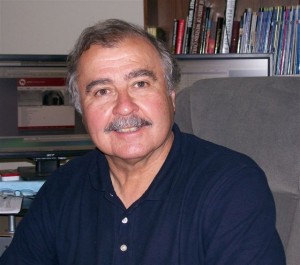
Bruce Schneier: It’s Time to Break Up NSA — Outline of Necessary Intelligence Reforms by Robert Steele

Advanced Cyber/IO, Ethics, Government
Bruce Schneier
Bruce Schneier

It's Time to Break Up NSA

Bruce Schneier

CNN, 20 February 2014

Editor's note: Bruce Schneier is a security technologist and author of Liars and Outliers: Enabling the Trust Society Needs to Thrive.

(CNN) — The NSA has become too big and too powerful. What was supposed to be a single agency with a dual mission — protecting the security of U.S. communications and eavesdropping on the communications of our enemies — has become unbalanced in the post-Cold War, all-terrorism-all-the-time era.

Putting the U.S. Cyber Command, the military's cyberwar wing, in the same location and under the same commander, expanded the NSA's power. The result is an agency that prioritizes intelligence gathering over security, and that's increasingly putting us all at risk. It's time we thought about breaking up the National Security Agency.

Broadly speaking, three types of NSA surveillance programs were exposed by the documents released by Edward Snowden. And while the media tends to lump them together, understanding their differences is critical to understanding how to divide up the NSA's missions.

Continue reading “Bruce Schneier: It's Time to Break Up NSA — Outline of Necessary Intelligence Reforms by Robert Steele”

Berto Jongman: Post-Snowden NSA-Proof Phone?

Advanced Cyber/IO, Commerce, Ethics, IO Secrets, IO Tools, Liberation Technology
Berto Jongman
Berto Jongman

In the post-Snowden world is it time to switch to NSA-proof phone?

Millions of us share our most personal feelings and most potentially damaging data through our smartphones. But isn’t it time to lock them down after last June’s revelations that the NSA collects data from phone calls, texts and emails of people all over the world? The developers of Blackphone, a new privacy-focused smartphone, say ‘yes.’

Toby Weir-Jones, the general manager of Blackphone, says the NSA’s digital surveillance has created a new demand for privacy, Newsweek reports. However, he says, “the wider market was not equipped to look for a solution.” Apple and Android phones, says Weir-Jones, are caught up in a battle over larger screen sizes, higher resolution and faster operating systems, while Blackphone is offering privacy.

Theoretically, experts say, the new device could provide considerable security for users trying to protect themselves from corporate spying and the countries with lesser surveillance programs than the US. Blackphone, which goes on presale February 24,can do texting, video, calling, searching, browsing, file storage and sharing — all shielded from the prying eyes of governments and hackers.

Read full article.

Stephen E. Arnold: Mining [Big] Visual Content [Data]

Advanced Cyber/IO
Stephen E. Arnold
Stephen E. Arnold

Mining Visual Content

Data-mining of social media is moving beyond natural-language processing of Tweets and Posts and into a whole new realm of visual content interfacing to analyze the data available on the heavily-visual social network Tumblr.

Cierra Buck posted “Introducing Tumblr Firehose data on the Pulsar Platform and a whole new interface for mining visual content” on the Pulsar Platform Blog. In the post, Buck notes that Pulsar integrated Tumblr not just as a blogging site, but as a social networking site. But because over 80% of Tumblr content is visual, integration required an entirely new way of presenting data to Pulsar platform users:

“This allows Pulsar to display the actual image and video content rather than a preview end enabling endless scrolling rather than organising the content in pages. This allows for easy browsing of rich media social content which, coupled with advanced filtering using all the metadata we generate, is going to give you a powerful mining tool to uncover visual patterns and trends in your dataset.”

Buck’s post gives a good visual tutorial of how the interface will work and the kinds of data it will analyze from Tumblr. Do the kids on Tumblr realize that everything they post is being mined?

Laura Abrahamsen, February 23, 2014

BUCKY 2.0: Y Worlds at VIMEO [Big Data Cross-Cultural Multi-Disciplinary Visualization with World Brain Educational Potential]

Advanced Cyber/IO, Collaboration Zones, Communities of Practice
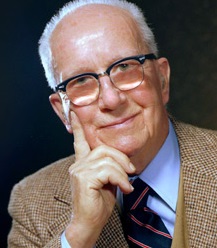
Buckminster Fuller
Buckminster Fuller

Y Worlds – a community in progress organized about ways to better understand, better communicate, and better organize every aspect of our complex lives. This is NOT a tech on tech project. This is totally focused on the humans, on eliciting from each human in the network real-time interaction, and on educating humans one interaction at a time. It is intended to be a change agent system that can be applied one instance at a time, or across multiple instances. It does what Wikipedia, Google, and all other data management systems cannot do — makes sense.

NOTE: 32 offerings.  All of the below times are in minutes and seconds.

Phi Beta Iota Top Picks:

17 2013 Meaning (00:59) – Meaning is what shines.

32 2014 The Art and Science (01:47) – High-level fast introduction.

19 2013 Language-2 (05:03) – Ancient, limited, not up to the challenges of communication and understanding complexities.

31 2014 Proof Process (5:50) – An in-depth look at Y Worlds' Proof Process.

Continue reading “BUCKY 2.0: Y Worlds at VIMEO [Big Data Cross-Cultural Multi-Disciplinary Visualization with World Brain Educational Potential]”

Patrick Meier: Quantifying Information Flow During Emergencies

Advanced Cyber/IO
Patrick Meier
Patrick Meier

Quantifying Information Flow During Emergencies

I was particularly pleased to see this study appear in the top-tier journal, Nature. (Thanks to my colleague Sarah Vieweg for flagging). Earlier studies have shown that “human communications are both temporally & spatially localized following the onset of emergencies, indicating that social propagation is a primary means to propagate situational awareness.” In this new study, the authors analyze crisis events using country-wide mobile phone data. To this end, they also analyze the communication patterns of mobile phone users outside the affected area. So the question driving this study is this: how do the communication patterns of non-affected mobile phone users differ from those affected? Why ask this question? Understanding the communication patterns of mobile phone users outside the affected areas sheds light on how situational awareness spreads during disasters.

Read full post with graphics.

Continue reading “Patrick Meier: Quantifying Information Flow During Emergencies”

Yoda: Self-Organizing Robot Armies Printed in 3D

Advanced Cyber/IO
Got Crowd? BE the Force!

Self-organizing robot armies produced – and all thanks to ingenious termite logic

Harvard ‘brainiacs’ are at it again. Inspired by termites, they have realized their dream of cheap, expendable, self-organizing robots – a construction crew building complex structures at a quick pace, and completely independent of leadership.

The possibilities are vast. The machines can be made to build any three-dimensional structure on their own and with minimal instruction. But what is truly staggering is their ability to adapt to their work environment and to each other; to calculate losses, reorganize efforts and make adjustments. It is already clear that the development will do wonders for humanity in space, hard-to-reach places and other difficult situations.

Looking at huge mounds of soil and the resilience of hordes of termites building them, working for a common cause, while their comrades die, the techies and engineers at the Harvard School of Engineering and Applied Sciences (SEAS) and the Wyss Institute for Biologically Inspired Engineering at Harvard University have created an army of little bots that do just that. And they cooperate and learn with no oversight.

The challenge was – how can one predict “high-level outcomes given low-level rules?” Small, insignificant parts need expert coordination to achieve a seemingly insurmountable task. But the scientists on the project wanted to go a step further and find out exactly what kind of “low-level rules” need to be met to control high-level results. Now, they believe they’ve created a user-specific structure, in which “the system automatically generates low-level rules for independent climbing robots that guarantee production of that structure. Robots use only local sensing and coordinate their activity via the shared environment.”

Read full article.

Reference: Draft Smart Nation Act of 2014

Advanced Cyber/IO, Ethics, Government, IO Deeds of Peace

DOC (1 Page): Draft Smart Nation Act of 2014

Proposed Legislation: The Smart Nation Act of 2014

• Within the Department of State, expands the capabilities for Open Government, Citizen Engagement, Participatory Budgeting, Global Engagement and Whole of Government planning, programming, and budgeting, by providing the Secretary of State with oversight authority of the Open Source Agency (OSA) and the Office of Information Sharing Treaties and Agreements.

• Creates an Open Source Agency (OSA), redirecting the necessary funds on a non-reimbursable basis from Program 50 to Program 150, as a sister-agency to the Broadcasting Board of Governors (BBG), with the same arms-length independence that Congress wisely mandated to assure journalist independence, but in this case, to assure the integrity of public intelligence in the public interest across Whole of Government and in all exchanges with foreign and non-governmental entities. The small Headquarters will be constructed on the South-Central Campus, adjacent to both the U.S. Institute of Peace (USIP), which could serve as a partner in global information peacekeeping, and to George Washington University as well as the John F. Kennedy Center conference and parking facilities. All information obtained by open means will be a public good and a copy also provided as acquired to the Director of National Intelligence (DNI), who shall make no claim on the disposition of original open sources and methods. The OSA will be the national proponent for Open Source Everything (OSE) across the education, intelligence (decision-support) and research sectors.

• Creates an Office of Information Sharing Treaties and Agreements, to negotiate no-cost information sharing treaties with Nations, and no-cost information sharing agreements with non-governmental and private sector organizations including universities world-wide, while also adopting OSE standards facilitating both sharing and semantic web sense-making across all languages (33 initially, 183 at full operating capability).

• Creates a Multinational Warning & Decision-Support Center (MWDC) and related global information-sharing and sense-making network.

• Creates a Multinational Multiagency Conference Center to serve as a foundation for local to global outreach and cross-fertilization across all education, intelligence, and research topics.

• In partnership with academic, civil society, and non-profit organizations, creates the World Brain Institute and the Global Game to foster whole systems true cost economics thinking.

• Creates, in partnership with a university providing accreditation and administrative services, a School of Future-Oriented Hybrid Governance, a Horizons College, and a Multidisciplinary Research Consortium.

• Support the Broadcasting Board of Governors (BBG) with an Internet dissemination capability that offers free universal access to all unclassified information acquired by the OSA, with a robust man-machine translation capability that offers free online education in at least 33 major languages and 12 dialects of Arabic as an important new foundation for public diplomacy and information peacekeeping.

• Supports the roles of the Office of Management and Budget (OMB) and the General Services Administration (GSA) as executive level partners of the Open Source Agency, with priority on decision-support from the OSA in support of all federal needs of common concern.

• Expands and enhances the role of the Congressional Research Service (CRS) and the General Accountability Office (GAO) with direct access to all available information, advanced analytic processing tools, and sufficient personnel to provide each jurisdiction of Congress with unclassified decision-support that can be shared with constituents and the media. –o–


noble gold