U.K. businesses waste billions a year on tech investment
According to new research, small and medium enterprises (SMEs) in the U.K. habitually waste money on IT products and services they don’t need.
IT software provider SolarWinds released a new study today which examines what challenges IT staff face in small and medium businesses this year. Reaching out to 500 firms in the U.K. and Germany, the study found that although IT budgets have remained the same or increased over the last five years in 93 percent of SMEs, over 75 percent of firms are wasting money.
On average, IT employees said that roughly 12 percent of software, once purchased, remained in its box gathering dust. However, in 87 percent of businesses, this figure reached 50 percent. The researchers note that on average, £11,962 is spent on IT management software annually by 4.8 billion U.K. SMEs, and so this can translate into £6.89 billion a year being wasted.
Although the relation of power to knowledge is an often discussed theme, a psychological and sociological scrutiny of the issue is lacking. A new conceptual and theoretical approach to this issue is presented here that distingushes between restrictive and promotive control. Restrictive control is a form of power exertion in which one actor pushes his wishes through against the interests of another actor. In contrast, if an actor influences the other in line with his or her interests, this is called promotive control. Information pathologies, i.e., avoidable failures of distributed information processing, are introduced as an inverse measure for the quality and quantity of knowledge production. It is hypothesized that restrictive control has negative consequences for the production of new or better knowledge, because it induces information pathologies that in turn lower the effectiveness of joint action. These two hypotheses are tested in a study on 21 successful and 21 unsuccessful innovations with a dual qualitative and quantitative approach. The interpretive analysis of interviews with the main actors of each innovation case as well as the statistical analysis of questionnaire responses by the same actors strongly corroborate both hypotheses. Methodological problems, theoretical perspectives, and practical consequences are discussed. The second half of this century has seen the transition from industrial to informational societies.
The coming century will see communication and information processing becoming even more important for the handling of any issue in politics, in the economy, or in private affairs. The amount of information produced is I want to thank Irene H. Frieze and the anonymous reviewers for their many helpful comments as well as Iain S. Glen for improving my German English.
*Correspondence concerning this article should be addressed to Wolfgang Scholl, Institute of Psychology, Humboldt-University, Oranienburger Str. 18, D-10178 Berlin, Germany [e-mail: wscholl@psychologie.hu-berlin.de].
Facebook bans Gandhi quote as part of revisionist history purge
(NaturalNews) The reports are absolutely true. Facebook suspended the Natural News account earlier today after we posted an historical quote from Mohandas Gandhi. The quote reads:
“Among the many misdeeds of British rule in India, history will look upon the Act depriving a whole nation of arms as the blackest.” – Mohandas Gandhi, an Autobiography, page 446.
This historical quote was apparently too much for Facebook's censors to bear. They suspended our account and gave us a “final warning” that one more violation of their so-called “community guidelines” would result in our account being permanently deactivated.
Click on Image to Enlarge
They then demanded we send them a color copy of a “government issued identification” in order to reactivate our account. Our account was removed from suspension just minutes before InfoWars posted its article on this Facebook censorship, and the Facebook page is now functioning at: www.Facebook.com/NaturalNews
This is a separate account from our primary Facebook account, which has nearly 250,000 followers at: www.Facebook.com/NaturalNews
Logic is an enemy and history is a menace
. . . . . .
InfoWars.com is also now reporting that Facebook is running an across-the-board PURGE of pro-gun accounts. A huge number of accounts are all being systematically disabled or suspended, with all content being wiped clean.
The below report in The Economist highlights the controversies overtaking the consensus position on human-induced global warming in climate science.
IMO, it is balanced; indeed, in many ways, it might even be construed as being slightly biased toward the consensus pro-warming position. This report does not, for example, disucss the cosmic ray hypothesis of the Danish physicist, Hans Svensmark (explained here with a link to Svensmark's very important paper), even though that hypothesis is gaining some experimental support; nor does this report address the well-known problems of instrumental temperature measurements (resulting in adjustments that have the analytically convenient effect of increasing the degree of warming over time) or the poorly understood reliabilities of proxies (e.g., tree rings, ice cores, etc) for measuring long term baselines.
What makes this report and its accompanying editorial (here) interesting is not only its balance but the fact that, to date, The Economist has leaned toward the “pro-warming” side of the climate science debate; so, this report indicates a shift to a more ambivalent position.
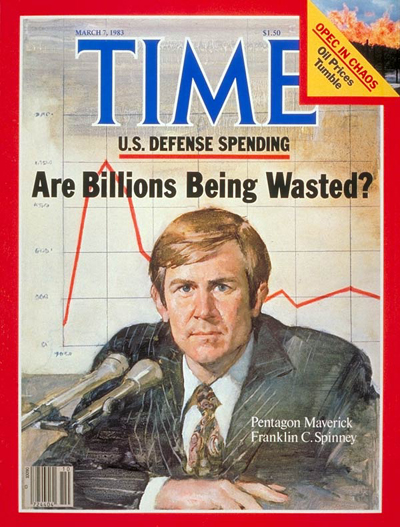
All in all, I think The Economist has introduced a sound dose of sanity to what has become a totured unscientific emotional debate, reminiscent of those I saw repeatedly in the Pentagon's politically motivated uses of science to support weapons advocacy.
The climate may be heating up less in response to greenhouse-gas emissions than was once thought. But that does not mean the problem is going away
Mar 30th 2013
OVER the past 15 years air temperatures at the Earth’s surface have been flat while greenhouse-gas emissions have continued to soar. The world added roughly 100 billion tonnes of carbon to the atmosphere between 2000 and 2010. That is about a quarter of all the CO₂ put there by humanity since 1750. And yet, as James Hansen, the head of NASA’s Goddard Institute for Space Studies, observes, “the five-year mean global temperature has been flat for a decade.”
Three men arrested by the Egyptian army for ‘cutting undersea cable'
If the bid was successful it could have taken an ‘entire continent offline'
It comes after one of the biggest cyber-attacks ever launched
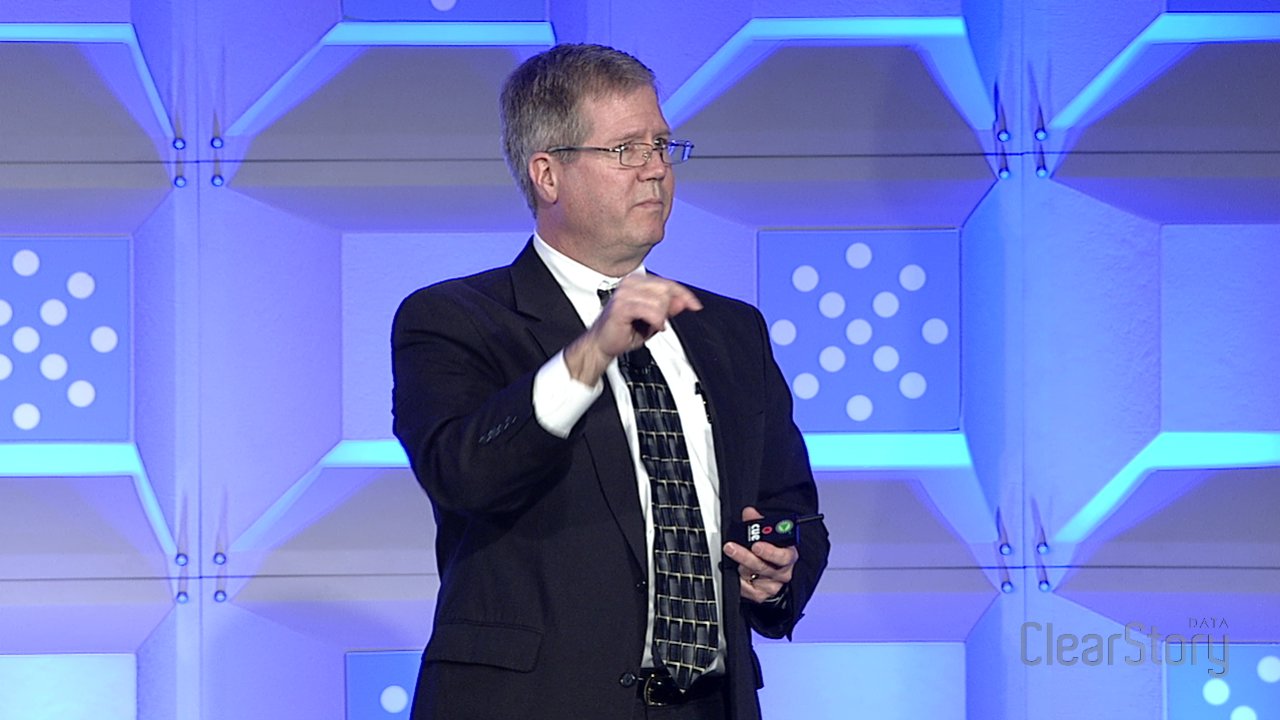
Speaking before a crowd of tech geeks at GigaOM's Structure:Data conference in New York City, CTO Ira “Gus” Hunt said that the world is increasingly awash in information from text messages, tweets, and videos — and that the agency wants all of it.
“The value of any piece of information is only known when you can connect it with something else that arrives at a future point in time,” Hunt said. “Since you can't connect dots you don't have, it drives us into a mode of, we fundamentally try to collect everything and hang onto it forever.”
CIA CTO Gus Hunt
Hunt's comments come two days after Federal Computer Week reported that the CIA has committed to a massive, $600 million, 10-year deal with Amazon for cloud computing services. The agency has not commented on that report, but Hunt's speech, which included multiple references to cloud computing, indicates that it does indeed have interest in storage and analysis capabilities on a massive scale.
The CIA is keenly interested in capabilities for so-called “big data” — the increasingly massive data sets created by digital technology. The agency even has a page on its website pitching big data jobs to prospective employees.
Hunt acknowleded that at some scale, data storage becomes impractical, adding that he meant “forever being in quotes” when he said the agency wants to keep data “forever.” But he also indicated that he was interested in computing capabilities like 1 petabyte of RAM, a massive capacity for on-the-fly calculations that has heretofore been seen only in computers that simulate nuclear explosions.
He referenced the failure to “connect the dots” in the case of Umar Farouk Abdulmutallab, the “underwear bomber” who was able to board a plan with an explosive device despite repeated warnings of his intentions. In that case, a White House review found that the CIA had all of the data it needed to identify the would-be bomber, but still failed to stop him. Nevertheless, the agency does not seem to have curbed its ambitions for an endless amount of data.
“It is really very nearly within our [NSA's] grasp to be able to compute on all human generated [digital] information,” Hunt said. After that mark is reached, Hunt said, the agency would also like to be able to save and analyze all of the digital breadcrumbs people don't even know they are creating.
“You're already a walking sensor platform,” he said, nothing that mobiles, smartphones and iPads come with cameras, accelerometers, light detectors and geolocation capabilities.
“You are aware of the fact that somebody can know where you are at all times, because you carry a mobile device, even if that mobile device is turned off,” he said. “You know this, I hope? Yes? Well, you should.”
Hunt also spoke of mobile apps that will be able to control pacemakers — even involuntarily — and joked about a “dystopian” future where self-driving cars force people to go to the grocery store to pick up milk for their spouses.
Hunt's speech barely touched on privacy concerns. But he did acknowledge that they exist.
“Technology in this world is moving faster than government or law can keep up,” he said. “It's moving faster I would argue than you can keep up: You should be asking the question of what are your rights and who owns your data.”
By Joe McKendrick | March 19, 2013, 4:00 AM PDT
0Comments
Businesses may be seeking to compete on analytics, but it’s often difficult for business decision-makers to get their heads around data.
I recently had the opportunity to chat with Tom Davenport, visiting professor at Harvard University and co-author of the seminal work Competing on Analytics: The New Science of Winning, about the difficulties of converting to an analytics-driven culture. Davenport, who is also co-founder and research director of the International Institute for Analytics, and a senior advisor to Deloitte Analytics, is working on a new book, dicussing on how analytics need to be better communicated to business decision-makers. He shared some of the thinking behind his forthcoming work:
Q: BI and analytics vendors have been coming out with all sorts of graphic tools — dashboards, balanced scorecards and so on — for years. Do we need more than a nice splashy presentation on the tool to communicate analytics?
TD: We’ve all grown up on pie charts and bar charts or whatever, but there are probably at least tens, if not hundreds of alternative approaches to visual analytics. Narratives are a pretty good way to convey information in the past, so maybe we should be converting our data and analysis into stories. People are starting to do that more. Most analysts were unfortunately not trained in how you communicate effectively about analytics, so we’ve got a long way to go in terms of doing a better job of that.
Q: More and more data is flowing through enterprises. Is it a challenge to get C-level executives interested in turning this data into analytics?
TD: Not for all applications. Because increasingly people are feeding data into computers and the results go into another computer, and the decisions are getting more automated. Any time you have a human involved, it’s important to try to help them extricate the meaning of the data and analysis. And there a variety of ways to do that. Historically, we haven’t been too terribly good at it, the quantitative people among us.

 U.K. businesses waste billions a year on tech investment