The Spiritual Heart — is in a way a little like a smart phone, invisibly connecting us to a large network of information. It is through an unseen energy that the heart emits that humans are profoundly connected to all living things. The energy of the heart literally links us to each other. Every person's heart contributes to a ‘collective field environment.' This short video explains the importance of this connection and how we each add to this collective energy field. The energetic field of the heart even connects us with the earth itself.
The Institute of HeartMath (http://www.heartmath.org) is helping provide a more comprehensive picture of this connection between all living things through a special science-based project called the Global Coherence Initiative (http:///www.glcoherence.org.) They hope to help explain the mysteries of this connection between people and the earth…and even the sun.
Scientists at the Institute of HeartMath (IHM) have already conducted extensive research on the power of heart, the heart/brain connection, heart intelligence and practical intuition.
Whether personal relationships, social connections, or even the global community – we are all connected through a field of electromagnetic energy. Increasing individual awareness of what we bring to this field environment could be the key to creating a sustainable future, a future that we can be proud to have helped create. Learn more about this research, http://www.heartmath.org/heart-intell…, scroll to bottom of the page.
This is the story of two competing worldviews, of conscience vs. court, of fantasy vs. reality, of history vs. the future.
The Prophets of Oak Ridge
Dan Zak
Washington Post, 30 April 2013
Click on Image to Enlarge
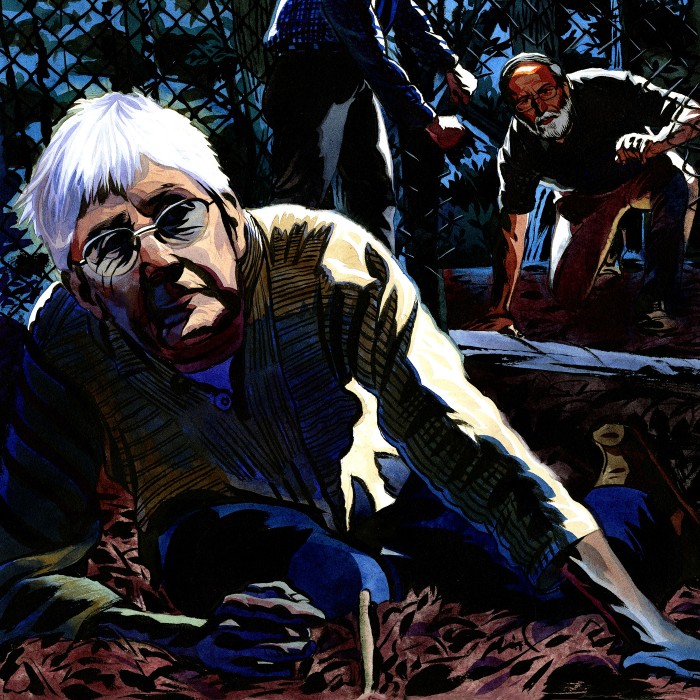
Last summer, in the dead of night, three peace activists penetrated the exterior of Y-12 in Tennessee, supposedly one of the most secure nuclear-weapons facilities in the United States. A drifter, an 82-year-old nun and a house painter. They face trial next week on charges that fall under the sabotage section of the U.S. criminal code. And if they had been terrorists armed with explosives, intent on mass destruction? That nightmare scenario underlies the government’s response to the intrusion. This is the story of two competing worldviews, of conscience vs. court, of fantasy vs. reality, of history vs. the future.
“It’s idolatry, putting trust in weapons. And weapons are made like gods. … Weapons are always false gods because they make money. It’s profiteering.”Sister Megan Rice
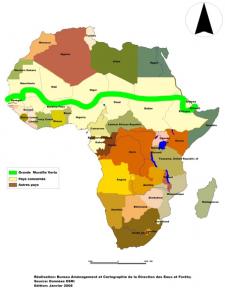
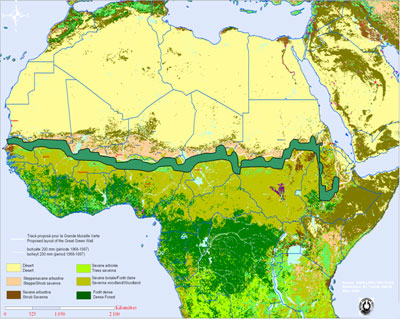
One of the most unique large-scale international climate change projects is underway in Africa. A 4,000 mile “wall of trees” is being constructed across the east-west axis of the continent as a defense against rapid, expanding desertification of the Sahara.
11 nations — Mauritania, Senegal, Mali, Burkina Faso, Niger, Nigeria, Chad, Sudan, Ethiopia, Eritrea, and Djibouti — have agreed to participate in The Great Green Wall initiative (GGW), planting a contiguous “wall of trees” stretching 4,300 miles long and 9 miles wide, across the entire width of the African continent from Djibouti in the east to Senegal on the west.
The project was approved by the African Union in 2007, under the umbrella of the Community of the Sahel-Saharan States (CEN-SAD). In 2008, the first trees were planted along the wall’s path.
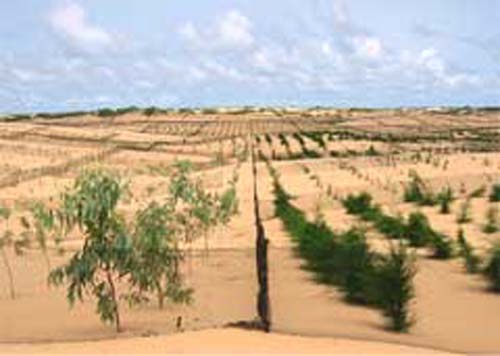
Progress (and reporting) currently varies from nation to nation; the process is still in its infancy and will take several years to complete. Nevertheless, the project is already showing some success: a World Food Program (WFP) report from Senegal details how villages in Widou Thiengoli are now harvesting fresh fruits and vegetables from the dry desert sands, a by-product of the Wall initiative. Some 50,000 acres of trees have already been planted in Senegal, according to press reports.
Desertification has emerged as a “major planetary threat” with particularly daunting challenges for Africa. Climate change has led to prolonged periods of drought and other symptoms of desertification, which are being experienced by a growing number of countries. The UN Food and Agriculture Organization (FAO) reports that two-thirds of the African continent is classified as desert or dry lands. Rainy seasons and other weather patterns — long consistent – are now changing across the region. In Senegal, for example, the rainy season now begins in September — it traditionally started in July.
Click on Image to Enlarge
The UN estimates that two-thirds of Africa’s arable land could be lost by 2025 if this trend continues.
According to the Great Green Wall website, the goal is to help mitigate the environmental effects of climate change, including the expansion of desertification. The trees will act as a barrier against desert winds, help to hold moisture in the air and soil, reduce erosion, enhance biodiversity, provide new grazing land and be a source of vegetation. The project is also recognized for the role it will play in local agriculture and employment.
“People used to go to towns to seek paid work during the lean season, but since the project started, that has changed,” says Papa Sarr, Technical Director of the Senegal National Agency of the Great Green Wall.
Click on Image to Enlarge
The Great Green Wall initiative is supported by the UN Environment Programme (UNEP), the World Food Programme, the UN Convention to Combat Desertification (UNCCD) and the UN-backed Global Environment Facility (GEF) – the largest public funder of UN environmental projects.
The Great Green Wall has received a total of $1.8 billion dollars from the World Bank and another $108 million from the Global Environment Facility.
Ulrich Apel, a forestry expert with GEF, said the program could serve as a model for similar projects around the world in areas, such as central Asia, which face similar challenges in adapting to a rapidly changing climate.
The Green Wall, said Apel, “is off to a promising start.” Standing near a row of waist-high trees in Widou village – one of Senegal’s Green Wall locations — he said: ”In 10 to 15 years this will be a forest. The trees will be big and this region will be completely transformed.”
Our spending practices, as a country, are completely upside down. We spend endless billions on war instead of what it will take to keep the U.S. functioning as a country, as this report makes clear. Think about what is being said here, just in reference to your own area.
This is an excellent essay on the power of data. Big data. It describes the first stages of the emerging Metaview Trend, which is going to change our lives. And has the potential to recreate democracy in an electronic age.
The Rise of Big Data KENNETH NEIL CUKIER and VIKTOR MAYER-SCHOENBERGER, Data Editor of The Economist and Professor of Internet Governance and Regulation at the Oxford U. – Foreign Affairs
Although you may never have heard of him, Joe Bageant was perhaps the preeminent gonzo-journalist and moral-voice of his generation. Author of Deer Hunting With Jesus and Rainbow Pie, Joe quietly led one of the most experience-rich lives you could imagine. He grew up in the hard-knocks region of West Virginia; he joined the Navy as an under-age teenager during wartime; he lived in Colorado during the 1960s in a broke-down bus, worked as a beat-writer, and kept company with some of the greatest counter-cultural American icons including Hunter S Thompson and Timothy Leary.
Not only this, he was one of the most thoughtful, sober, and brutally honest chroniclers of the United States' descent into a consumerist/corporatist police-state. The video linked below is only a brief sampling of some of Joe's thoughts/feelings on what America has become since WWII, and the challenges that stand before us in saving our collective futures.
Joe passed away two years and one month ago from cancer. His website lives on. Here is one audio with him on mutated consciousness and willing prisoners of predatory (extractive) capitalism.
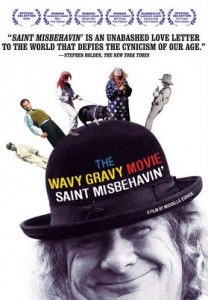
Born in 1936, Hugh Romney was an improvisational actor and standup comic who befriended Lenny Bruce and Bob Dylan when he settled in New York's Greenwich Village in the early '60s. Romney's career took him to the West Coast in the mid-'60s, where he fell in with Ken Kesey's Merry Pranksters and became a key figure in the early days of the hippie movement. Adopting the nickname “Wavy Gravy,” he embraced the persona of a playful clown, in part because he observed that hippies got arrested at protest marches, but clowns in parades did not. Wavy Gravy and his wife formed a commune in Berkley, CA, called the Hog Farm, and members of the group were hired to help with security at the Woodstock rock festival in 1969, with Romney dubbing his group “The Please Force.” Wavy Gravy became one of the more visible figures in the '60s counterculture scene, but unlike some of his peers, he never lost track of the ideals that came to symbolize the decade; well into his seventies, Wavy Gravy still works on behalf of environmental concerns, operates a camp (Camp Winnarainbow) that teaches clowning to homeless and underprivileged children, helps run a charitable organization (the Seva Foundation) that funds eye care for the poor in the Third World, and works with children living with brain injuries. Described by his friend Paul Krasner as “the illegitimate son of Harpo Marx and Mother Theresa,” Hugh Romney's remarkable life story is brought to the screen by filmmaker Michelle Esrick in the documentary Saint Misbehavin': The Wavy Gravy Movie. The film had its world premiere at the 2009 South by Southwest Film Festival.
Tucked behind your professional, yet pretty, profile picture, the descriptions of all your past jobs, and that column of “People You May Know” is a section of LinkedIn that most people have never heard of, let alone seen. And yet it’s the real reason why you should actually care about sprucing up your LinkedIn profile and network.
Dubbed LinkedIn Recruiter, it’s the company’s flagship product and the core of the professional social network’s Talent Solutions. Talent Solutions drive just over half of LinkedIn’s revenue, $161 million in the last quarter. While any LinkedIn user can see jobs and the pages companies build for themselves, Recruiter is only visible to companies that pay to use LinkedIn as a candidate sourcing and hiring tool.
Recruiter is a bit like a two-way mirror where companies and recruiters can see all of your profile information, without you knowing they’re checking you out. For example, recruiters can search for people with specific skill sets, flag them and add a dossier to their profile — all without that person knowing. They can all of the jobs they’ve listed and people they’re watching. Sure, there is a “Who’s Viewed Your Profile,” but those using LinkedIn Recruiter can make themselves anonymous (as can paying LinkedIn premium account members).
LinkedIn wants to make sure those well-paying recruiters and companies have the best possible experience so that they stick around, maybe even tell their HR buddies. To that end, LinkedIn recently unveiled a refreshed Recruiter home page more in line with its consumer-facing products.