Sepp Hasslberger: Solar Antennas 3-4 Times Leap Forward

05 Energy
Sepp Hasslberger
Sepp Hasslberger

This is a quantum leap over our current solar photovoltaic technology … if it does come into maturity and production, it might boost efficiency of solar energy capture by three or four times!

Solar Rectenna by Brian Willis

Compiled by Sterling D. Allan
Pure Energy Systems News
March 8, 2013

Solar Power Today made the following announcement on February 6, 2013:

If it’s up to Brian Willis, we will soon quite literally be tuning in to the sun. The University of Connecticut professor has patented a technique to manufacture nanosized antenna arrays that have the capability to efficiently convert sunlight into usable electric power.
In theory, these very small antenna arrays can harvest over 70 percent of the sun’s electromagnetic radiation and convert it into electric power. These are called “rectennas” due to their ability to absorb the alternating current induced by sunlight and directly rectify it to direct current. In contrast to existing solar silicon solar panels which mainly work within a specified band gap, rectennas can be tuned to harvest sunlight in the whole solar spectrum which makes it very efficient.
Brian Willis, a University of Connecticut engineering professor, was able to discover a way to manufacture a working rectenna device. The process is called selective area atomic layer deposition (ALD) and it can precisely coat the tip of the device with layers of individual copper atoms to achieve a gap of about 1.5 nanometers, a critical size because this creates an ultra-fast tunnel that enables the maximum transfer of electricity.


Read full article.

John Maguire: Japanese Car Fueled by Water

05 Energy

maguireThe oil cartels are operating on borrowed time. Unfortunately the CEO appears to be mired in an antiquated belief system that views the traditional/corrupt patent process as legitimate. Generally speaking the public patent office is where great inventions go to die.

HUGE PLUS is that the fuel is ANY kind of water AND therefore does not require gas stations, fuel storage, or any other kind of infrastructure investment.


John Maguire: Asymmetric Electromagnetic Machines

05 Energy

maguireUFOPolitics is an engineer, open-source advocate, and new-energy pioneer. He has built a number of Asymmetrical Electric Motors that operate at COP > 1.0 (Coefficient of Performance). This blatently contradicts what most consider to be immutable “laws” of thermodynamics. The magic behind these motors is that they eliminate what's known as the Back-EMF, and make use of this otherwise wasted energy to add extra power/efficiency to the loads.

Posted below are three links. The first is a highly informative video that explains why Asymmetry and Back-EMF are relevant in achieving over-unity output, and why symmetric motors today are quite literally built-to-fail. Second is a video demonstration of a working model that achieves “unnatural” output and torque. Lastly, I have provided a link to an ongoing discussion thread at energeticforum.com about UFO's pioneering work. Open-Source Science at its best. Enjoy.

http://www.youtube.com/watch?v=Mj4rV0AoI-Q

http://www.youtube.com/watch?v=zGxZr2DI2Ms&feature=youtu.be

http://www.energeticforum.com/renewable-energy/11885-my-asymmetric-electrodynamic-machines.html

From Quincy Robinson at Google+:

Taking nothing from the engineer or his works, this material reads much like what can be found at Tom Bearden's site.

Bearden and Naudin have been in correspondence for some years.

Ho Ho Ho: Unhappy Neighbors — South China Sea as Flash Point, Indonesia and Viet-Nam Seek Solutions — China’s U-Shaped Line and String of Pearls

02 China, 02 Diplomacy, 03 India, 04 Inter-State Conflict, 05 Energy, 08 Wild Cards, Government, Military
Ho Chi Minh
Ho Chi Minh

Unhappy Neighbors

Ngo Vinh Long

The Cairo Review of Foreign Affairs, February 10, 2013

Speaking to diplomats, businessmen and journalists at the British Foreign Office in November, President Susilo Bambang Yudhoyono of Indonesia emphasized the need for “norms and principles” in resolving disputes in the South China Sea. Why did President Yudhoyono, who was spending a week in London at the invitation of Queen Elizabeth II as the first leader to visit Britain during the year of her Diamond Jubilee, feel that he had to bring up the South China Sea disputes at such a time?

After a member of the audience asked what Indonesia, the leading nation in the Association of Southeast Asian Nations (ASEAN) could do if China did not share his views, President Yudhoyono recalled what he had said to Chinese Premier Wen Jiabao at a summit conference in Bali and again to Chinese President Hu Jintao at a meeting in Beijing: without forward movement on a Code of Conduct (CoC) for the South China Sea, the whole region could “easily become a flashpoint.” He added that the two Chinese leaders had concurred with his assessment.

President Yudhoyono added, however, that he had become quite concerned after ASEAN foreign ministers failed to reach a CoC agreement at a meeting in Cambodia in July 2012. He did not mention the role played by China in getting the Cambodian government to sabotage the pact. He only said that since then, Indonesia has done its utmost to bring about a consensus among ASEAN nations on the issue. He also did not mention the fact that at an international conference on “Peace and Stability in the South China Sea and the Asia Pacific Region” held in Jakarta in September, most of the participants expressed pessimism as long as China continued to exert military and economic power in area within the U-shape line demarcating its self-declared zone of sovereignty.

Continue reading “Ho Ho Ho: Unhappy Neighbors — South China Sea as Flash Point, Indonesia and Viet-Nam Seek Solutions — China's U-Shaped Line and String of Pearls”

John Steiner: Department of State Betrays Public Trust, Lies on Keystone — Bill McKibben Organizing National Confrontation

05 Energy, 11 Society, Corruption, Government
John Steiner
John Steiner

From: “Bill McKibben
Reply-To: <organizers@350.org>
Date: Fri, 01 Mar 2013
Subject: Breaking news on Keystone XL

Friends,

Yesterday Time Magazine declared that Keystone had become the Stonewall and the Selma of the climate movement — and today we got a reminder of just how tough those fights were, and how tough this one will be.

On a Friday afternoon, with Secretary of State John Kerry half a world away and D.C. focused on the budget fight, the State Department released a new environmental impact statement for the pipeline. Like the last such report, it found that approving a 800,000 barrel-a-day fuse to one of the planet¹s biggest carbon bombs was ³unlikely to have a substantial impact² on the tar sands or the climate.

That, in a word, is nonsense — some of our most important climate scientists in the U.S. have written the State Department to explain exactly how dangerous Keystone is. Just yesterday Europe¹s top climate diplomat
pointed out that it would send a truly terrible signal to the rest of the world.

Continue reading “John Steiner: Department of State Betrays Public Trust, Lies on Keystone — Bill McKibben Organizing National Confrontation”

John Robb: Local Energy, Local Investments

05 Energy

A Smart Way to Finance Local Energy Abundance

By John Robb

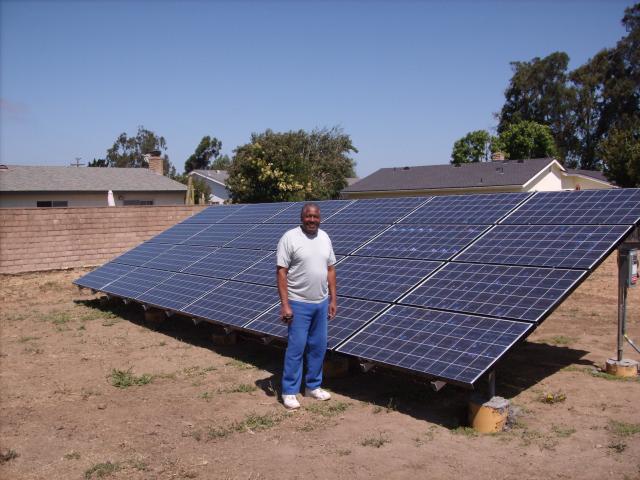
This is a picture of all of the electricity a family will need for the next twenty years:

Click on Image to Enlarge

Doesn't seem like much, does it?

It gets even better.

If every family in a community had an installation like this, the community would be close to never experiencing a blackout again.

On top of that, the community would be exporting energy.  Wealth would be flowing into the community and not out of it.

Amazing, isn't it.

So, why doesn't everyone have an installation like this?

Until recently, even with government subsidies, it didn't make economic or technological sense except in extreme situations.

That's changed.  DIY solar energy is now ready for prime time (I'm currently working on a Solar Energy report that blows the lid off of this — stay tuned).

Despite that, many people still don't have the upfront money needed to make it happen.

Here's an innovative way to solve that problem:  Community Financing.

Continue reading “John Robb: Local Energy, Local Investments”

Sepp Hasslberger: Graphene Supercapacitor – The ‘Scientific Accident That May Change The World’

05 Energy
Sepp Hasslberger
Sepp Hasslberger

After a year's additional work, their fabrication process just got simpler and more efficient – to the point where industrial scale manufacturing of a very efficient battery replacement comes within reach.

Graphene, a very simple carbon polymer, can be used as the basic component of a “supercapacitor” — an electrical power storage device that charges far more rapidly than chemical batteries.

Click on Image to Enlarge

Unlike other supercapacitors, though, graphene's structure also offers a high “energy density,” — it can hold a lot of electrons, meaning that it could conceivably rival or outperform batteries in the amount of charge it can hold.

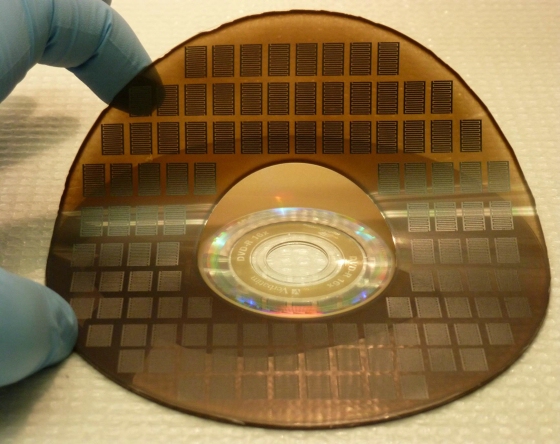
Kaner Lab researcher Maher El-Kady found a way to create sheets of graphene a single carbon atom thick by covering a plastic surface with graphite oxide solution and bombarding it with precisely controlled laser light.

English translation: He painted a DVD with a liquid carbon solution and stuck it into a standard-issue DVD burner.

The result: Absurdly cheap graphene sheets one atom thick, which held a surprising amount of charge without further modification.

Read full article.

noble gold