Jennifer Smith Has the Substance, Here Are Some More Books
July 8, 2007
Theodore Dalrymple
I voted for Jennifer Smith's review, and I believe it captures the essence very nicely. However, the author, who cannot be faulted for protraying the reality as it is, is best understood in the context of a few other books–if you don't wish to buy them, just read my summative reviews:
I have put this book second in my list for terrorism, it is easier to read that Ralph Peters, but both books will make your blood boil. My own two books helpful to the public are available free at OSS.Net, but much more fun if you buy them in book form from Amazon:
There are other excellent reviews, so I just want to add that this book as well as his non-fiction book Against All Enemies: Inside America's War on Terror is on my list of top 40 books on Earth Threat #9: Terrorism.
Also, Winn Schwartau was there first, see the following books from the 1990's; Winn, Peter Black, and I were among the first to talk about taking down America in 24 hours; Winn testified to Congress, and as they did with Peak Oil and the thermite evidence from 9-11, they ignored reality.
Does the Job–We All Need to “See” This Book's Pages
July 4, 2007
James Allen
There are enough reviews here so that my summative review is not necessary. I will only say that this is a powerful book, and it reminded me of General Eisenhower's order that all those living in the vicinity of the death camps be marched past the stacked bodies so they could see what their abdication of morality had allowed to happen.
This is mostly a book of photographs. If you want deeper text, including a spectacular (unintended pun)chapter on “Looking” and how it was the crowds that validated “spectacle lynching,” then you must also buy Imagery of Lynching: Black Men, White Women, and the Mob. The title is misleading, but the content of that book is not–that is the deep academic and psychological review that complements this book.
If yoy only wish to buy one book, of lasting value for generations, buy this one. If you can afford two and want to study the underlying social and psychological environments that allowed whites to treat blacks as if they were animals, buy both.
I buy books from three sources: Amazon online (80%), airport bookstores (15%), and selected university bookstores (5%). This one came to me from a visit to the University of Colorado bookstore, where I was quite impressed by the breadth and depth of the selection across all topics.
I bought this book because the table of contents is one of the very best I have seen, and even if only the table of contents were memoized, one would be well-prepared for a senior undergraduate or master's degree final examination.
While grotesquely over-priced, as most textbooks are (it cost the publisher $5.70, at most, to print this book, a penny a page), I will leave that to the side, but it is a factor in the loss of one star.
This book could and should be completely re-designed to add more white space, dramatically improve the coverage of the ten threats, twelve policies, and eight challenges, dramatically improve the coverage of decision-support both secret and non-secret, and introduce a complete new section on national, regional, and global budgets as they represent our actual priorities, together with a completely new section on sub-state (vice non-governmental) tribes, clans, families, and neighborhoods. In my view, this book has the potential to be a “keeper” for every student that buys it, and I would design it–and price it–accordingly.
The books lacks a more revisionist appreciation of the damage that the United Kingdom and the USA have done in their combined two centuries of colonialism, unilateral militarism including horrendous war crimes against most indigenous cultures, and predatory capitalism (not ignoring the same crimes by Spain and Portugal, France, Germany, and Russia).
Were I teaching today, I would lean toward assigning this as the text to one third of the class, with the two books below being assigned to the other two thirds of the class, and everyone having to also buy the third book. See my comment for a URL where anyone can receive, for free, a weekly report, “GLOBAL REALITY: The Week in Review,” covering in less than 8 pages, the ten threats, twelve policies, and eight major players other than the EU and US.
The two books below are better than this book, but this book is most definitely in my top three. See my lists for many other books regarding the information society, intelligence, emerging threats, strategy & force structure, anti-Americanism, blowback, and dissent, and the negative impact of domestic politics on sound foreign policy.
This is a World-Class Book and DVD for Serious People
June 30, 2007
Robert Christopherson
Edit of 5 Feb 08 to add emphasis comment and links.
Coment of 5 Feb 08: This amazing professional product has pride of place in my 3000 volum library. It is the permanet owner of the teacher's lecturn, always open to chapter. I include an image aboe to emphasize this point. This book and its author, are GOLD STANDARD.
This is the only DVD I watch weekly on background, stopping my work at each song. This is an incrediblly gifted rendition and integraration of reality art, technology, and directoriaq craft. Wow, wow, wow.
I picked this gem up at the University of Colorado bookstore. I do not have the time for a third graduate degree, but if I did, it would be in Environmental Science.
Unlike most textbooks, this hardcover version is worth every penny, and the paperback is a bargain. This is a large book, 8.5 x 11, crammed with photos, extraordinarily well organized, illustrated, and presented, and it includes a CD ROM that the previous owner never opened that I find to be priceless: a series of illustrations and animations keyed to every chapter, with a non-punitive self-test. Also provided free are an online study guide. Supporting materials include a Student Study Guide and a Student Lecture Notebook that provides illustrations and diagrams to be integrated into the class binder. All are identified by ISBNs, but if you miss page xviii, which outlines “the package,” you will be unaware of the other resources.
Each chapter has the base material, a focus study, a news item, and more often than not, a career link. Each chapter ends with self-study questions. My bottom line: this book, taken seriously, *is* a self-taught graduate program in Geosystems.
The only think I do not see in the book, and it may be in the study guide, is “Recommended Reading.” BUT a complete array of current sources are fully cited as easily visible footnotes on most pages.
The only gap in this book, and it could probably be quickly developed as a supplementary paperback guide and CD, is the avoidance of an integrated discussion of costs and consequences. The entire study of Geosystems is irrelevant unless it can be explained to people in “true cost” terms. While the book excels, for example, at showing the severe drop in aquifers across specific places, it does not provide a guide to calculating current and future costs to society for ignoring these problems and allowing corporations and individuals to continue to externalize to the public and to future generations, the costs of being stupid and greedy today.
First rate book. One of the most serious textbooks, one of the best illustrated, explained, supported, and presented, I have every seen. For serious adults and emerging adults only–this is not a book, nor a class, for dolts just trying to meet a requirement for graduation.
Lacking Costs & Decision-Support,, Brilliant in All Other Respects
June 30, 2007
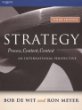
Bob de Wit
I have left this book at five stars despite its lack of a focus on the totality of the costs picture, and the urgency of decision-support, because I want to cross-fertilize this book into the national, military, and law enforcement strategic regimes (largely non-existent, hence the need), and I consider it to be world-class in all that it presents.
First the gaps: neither “costs” nor “intelligence” (nor “decision-support” appear in the index to this book, which is both a commentary on the content, and a commentary on the index, since I do see the words elsewhere in the book.
“True costs” or “natural capitalism” is emerging as the single most important strategic concept for both political and business leaders. Up to this point corporations have been allowed to privatize profit and externalize the bulk of their “true costs” to the individual taxpayer. That is coming to an end. The public now has a digital memory, the World Index of Social and Environmental Responsibility (WISER) is calculating and posting the true cost of everything (e.g. a T-Shirt from Bangladesh has 4,000 liters of virtual water they do not have to export), and Amazon is positioning itself to provide point of sale “true cost” to the individual buyer via cell phone scan back on the bar code: water, fuel, sweatshop, and tax avoidance content at the point of sale. Revolutionary. It will change the marketplace and who wins, who loses in business, nearly overnight (ten years).
On decision-support, other than refer to my short list of a handful of really important commercial intelligence guides, I will simply note that Ben Gilad, one of perhaps ten really great international commercial intelligence practitioners, says in his first seminal work, “Business Blindspots: Replacing Myths, Beliefs, and Assumptions with Market Realities (Infonortics UK, 1996) that:
“Top managers' information is invariably either biased, subjective, filtered, or late.”
This tallies nicely with my own findings over a 30 year career in national and military intelligence: Washinton, certainly, London, Paris, Beijing, and other capitals probably, are operating on 2% of the relevant information. They are ignoring 95% of the information that is not secret, not online, not in their language, and not being collected by either their intelligence agencies or their Cabinet departments, which specialize in staffing stakeholder policies divorced from reality and focused on grabbing budget share.
It merits comment that this book comes to us from The Netherlands, the unheralded owner of much of US real-estate and much of the world's structured knowledge. Consequently, the authors are not suffering from American naivete, they have avoided the traditional shortcomings of most textbooks in English (myopia, avoidance of complexity, generic presentation from one author) *and* they fully int3egrate the vital importance of understanding cross-cultural differences, the international context, and the value of international cases that do NOT follow normal US “rules of the game” including authorized “reasonable dishonesty.”
This book a monster at 950+ pages, is of great value to non-business strategists, the few that are emergent, and below I list some other relevant books from the national side that may be helpful to business leaders and academic theorist-practioners.
I am creating and loading an image of their Figure 1.6 on Strategy topics, paradoxes, and perspectives because in that one image they capture the enormous value of their book and their process. For that image, and the first half of the book on the process, this is a very high value acquisition worthy of deep study.
Unforutnately, some of the best books, such as “The Art and Practice of Military Strategy” edited by George Thibault, are published by the National Defense University in limited edition and not listed on Amazon nor available for purchase via normal channels. This is a useful illustration of the concept of “gray literature”: very often the most important information is freely available, but not through the traditional channels. The height of strategy, apart from knowing yourself and not wearing blinders, is to know all that can be known about your environment and the other players, not just that which is convenient to know, or that your generally self-preserving subordinates want you to know.

 Jennifer Smith Has the Substance, Here Are Some More Books