Excellent Overview with Plenty of Useful Information,
November 11, 2000
Ruthann Quindlen
I've been down this road, including competive selection to present my company and vision to three venture capital fairs. This book, which was bought as a quick-read airplane book, has become a fundamental reference. It is heavily marked up, has three paper clips (very unusual) as I look at it, and has had a very constructive impact on both my thinking and my attitude. This book has not only helped me refine our business plan, but when I feel like we are straying, I can pull it down and do a quick revisitation of “the fundamentals”. This is a serious helpful book–do not be put off by shallow reviews.
A Gem of Lasting Value, Especially Relevant Today,
November 11, 2000
James F. Jr. Hoge
This compilation of the “best of the best” articles from the journal Foreign Affairs is a real gem that is especially relevant today as America continues to neglect its international responsibilities and certain Senators and Congressman have the ignorant temerity to brag that they don't own nor need an American passport. The conclusion of the July 1932 article by Edwin F. Gay, “The Great Depression”, is instructive: “The world war affirmed the international political responsibilities of the United States; the world depression demonstrates the economic interdependence of the United States with other states. It cannot be a hermit nation.” With four seminal articles from each decade (1920's forward), including just about every great name in the international discussions of the century, this book is a fundamental reference point for those who would dare to craft a vibrant foreign policy for the United States in the 21st Century. The book ends with several thoughtful pieces including, most fittingly, an interview with Lee Kuan Yew of Singapore on culture as destiny, an article whose subtitle might have been “How extended families and the collective good still matter.”
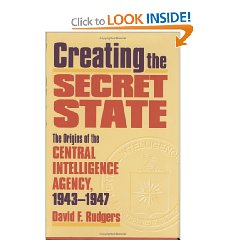
This is an admirable and unusual work, of doctoral-level quality in its sources and methods, while also reflecting the professional intelligence career status of the author. It complements Amy Zegart's broader book, Flawed By Design, in an excellent manner. This book, focusing as it does on the CIA alone, and on internal sources not readily available to Zegart, fills a major gap in our understanding of the CIA's origins. The author excels at demonstrating both the actual as opposed to the mythical origins of the agency, and pays particular heed to the role of the Bureau of the Budget and that Bureau's biases and intentions. At the end of it all, the author notes that the agency was moving in controversial directions within four years of its birth, quickly disturbing Harry Truman, who is quoted as saying, twenty-years after the fact (in 1963), “For some time I have been distributed by the way CIA has been diverted from its original assignment. It has become an operational arm and at times a policy-making arm of Government….I never had any thought when I set up the CIA that it would be injected into peacetime cloak-and-dagger operations.” The author himself goes on to conclude that “the nature of the new threats and the revolution in information acquisition and dissemination have thrown traditional ways of intelligence organization, collection, evaluation, and distribution into question. … CIA has entered the second half-century of its existence striving to avoid the fate of its OSS parent. In the process, it is groping for new missions and purposes while blighted by the legacy of its past derelictions, and while operating amid a rapidly changing global environment and technological revolution that are rendering its sources, methods, organizations, and mystique obsolete.” I would hasten to add, as my own book documents, that we will always have hidden evil in the world and will always needs spies and secret methods to some extent, but this book, combining academic rigor with insider access, must surely give the most intelligent of our policy, legislative, and intelligence managers pause, for it very carefully documents the possibility that 75% of what we are doing today with secret sources and methods need not and should not be done. This book has much to offer those who would learn from history.
I wish every doctoral dissertation were this useful. Under the guidance of Stephen E. Ambrose, well known for his books on the citizen-soldiers of World War II, the author has produced a very readable and moving book about one brilliant caustic citizen's forgotten contributions to World War II. Two aspects of this book jump out at the reader: the first is that Americans are capable of anything when motivated. Andrew Jackson Higgins and his employees, most trained overnight for jobs they never thought to have, was able to create an assembly line producing one ship a day. He was able to design, build and test gun boats and landing craft on an overnight basis. He is remembered by Marines, and especially General Victor Krulak, for having given America the one missing ingredient necessary for successful amphibious landings-in this way, he may well have changed the course of the war and the history of our Nation. The second aspect that jumps out at the reader is that of bureaucratic pettiness to the point of selfishly undermining the war effort within the Department of the Navy and the Bureau of Boats. In careful and measured detail, the author lays out the history of competition between trained naval architects with closed minds, and the relatively under-trained Higgins team with new ideas, and shows how the bureaucracy often conspired to block and demean Higgins at the expense of the Marines and the sailors on the front line. There is less of that sort of thing these days, but it is still with us, as we contemplate the need for a 450-ship Navy that is fully capable for Operations Other Than War (OOTW). This book should be included on the Commandant of the Marine Corps and the Chief of Naval Operations lists of recommended professional readings, and it should be studied by anyone contemplating the hidden dangers of bureaucratic interests that often override the public interest and undermine our national security.
Graciously, and with wicked clarity, the author knocks the so-called Revolution in Military Affairs flat on its back, and then helps it to one knee. His introductory review of the RMA schools of thought (system of systems, dominant battlespace knowledge, global reach, and vulnerability or anti-access or asymmetric), with appropriate notes, is helpful to any adult student. The heart of his book can be distilled down to one chart showing the expected rates of advance in the various technical domains relevant to military operations. Of 29 distinct technical groups across sensors, computers and communications; projectiles, propulsion, and platforms; and other weapons, he finds only two technology areas-computer hardware and computer software-capable of revolutionary change in the foreseeable future. Eight others-chemical sensors, biological sensors, radio communications, laser communications, radio-frequency weapons, nonlethal weapons, and biological weapons-are judged capable of high but not revolutionary advances. All other technical areas, namely those associated with mobility platforms and weaponry itself, are unlikely to develop at anything above a moderate pace. In the course of his discussion of each of these he brings forth the basics of physics and real-world constraints and points out that even the best of our sensors are frustrated by heavy rain and other man-made countermeasures. He correctly evaluates the inability of our existing and planned Intelligence, Surveillance, and Reconnaissance (ISR) to keep up with targeting needs, particularly in urban and heavy canopy terrain. He also notes in passing that human intelligence may well prove to be the sustaining element in finding individual people, and that there has been no significant change since World War II in the numbers of troops needed per 1,000 inhabitants-infantry is still the core force. He systematically dismisses a variety of RMA claims, among the most dangerous being that we can afford to stand down many of our forward bases, by pointing out that combat aircraft continue to have short ranges, ground forces continue to require heavy logistics sustainment, ships remain slow to cross oceans, and it continues to be extremely difficult to seize ports and other fixed infrastructure. He concludes the book with a number of budgeting recommendations, both for the USA and for its allies. For the USA he would emphasize communications and computing, the one area truly open to an RMA in the near term. Other areas meriting immediate investments include strategic sea and air lift, the rapid development of a lighter tank and a mine-resistant infantry vehicle, and improvements in naval mine warfare. He supports the National Missile Defense and would sustain more robust RDT&E experimentation. For a major US ally, with a fraction of our funding, he recommends a $15 billion total investment over several years to acquire a thoughtful mix of advanced C4I enhancements including ground stations, a fleet of Unmanned Aerial Vehicles (UAV), 1000 cruise missiles, 5000 short-range munitions, 500 advanced air to air missiles, a squadron of stealth aircraft, and several batteries of theater missile defense radars and missiles. A very nice listing of major Pentagon acquisition programs supports his recommendation that we economize on major weapons platforms and pursue a high-low mixed strategy, limiting, for example, our procurement of the F-22 and joint strike fighters so as to afford more F-15s and F-16s. Overall this book fulfills its mission of reviewing technologies in relation to the future of warfare, and it provides the reader with a very strong stepping stone for venturing into the literature of defense transformation. Those who would criticize this work for failing to consider the competition or the metrics of evaluation have a point, but only a point-the book does what it set out to do. It evaluates specific technologies in relation to the inflated and often delusional claims of the proponents of the RMA. One book cannot solve all our problems, but it can, as this book does, blow away some of the foggy thinking emanating from the Pentagon and other places where a number of flag officers and their staffs have lost sight of ground truth.
Adapt Our Strategy Now, Or Suffer Adjustment Failure Later,
October 8, 2000
Charles A. Kupchan
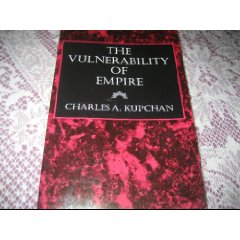
This book is extremely relevant to the forthcoming 2001 debate over alternative national security strategies. The author studies a number of cases of “adjustment failure” where great powers, at the height of their strength, engaged in self-defeating behavior-either overly cooperative behavior that resulted in strategic exposure, or overly competitive behavior that resulted in self-encirclement or over-extension. The author pays special attention to the inter-relationship between economic versus military resources (means) and international commitments (ends). Strategic culture is defined and discussed in an integrative fashion, in relation to the three levels of analysis (system, state, and individual), and is found to be the critical factor that constrains elites by trapping them in a strategic paradigm of their own making-one used to justify major expenditures that are now counterproductive, but whose abandonment would exact too high a domestic political price if reversed (such as a Revolution in Military Affairs?) The author finds that strategic culture, unlike individual strategic beliefs, is resistant to incoming information and to change. States that are in decline and states that are rising tend to fall prey to “adjustment failure” and consequently to present other states with instability issues. In both cases elites tend to utilize national propaganda and education to inculcate a mass understanding may support their intermediate objectives but ultimately frustrates strategic adjustment when they realize that what they are doing is only increasing their vulnerability. Most interestingly for the United States of America, the author finds that it is only when a state is truly in a position of strength, that it can best recognize and adapt to radical changes in the external environment-in other words, now is the time to dump the 2+ Major Theater War strategy and adopt a competing strategy that more properly integrates economic and military means to achieve our national security ends. The author concludes with several specific prescriptions that clearly pertinent to forthcoming Presidential and Congressional decisions at the dawn of the 21st Century and that must be appreciated if we are to have an effective national security policy in the next decade or two. First, the author is at one with Donald Kegan and Colin Gray in noting that the dissolution of the Soviet Union does not mean the end of U.S. strategic responsibilities in Europe; second, that at a time when there are many rising states emerging from the dissolution of the Soviet Union (as well as the fragmentation of larger states elsewhere) it is vital that these states be buffered against economic shock so as to avoid the instability conducive to the rise of aggressor governments; third, that there must be deliberate international programs in place to suppress or eliminate domestic pathologies that lead to aggressive behavior, and these must be progressively strong, beginning with economic assistance to eliminate the root causes of the instability; to sanctions and information operations as well as military preparations; and finally to outright military intervention with overwhelming force. The author explicitly notes that the international community must exercise great care to identify and decisively stop emerging aggressors before they can become full-blown aggressor states-history as documented in the case studies contained in the book suggests that when confronted by a full-blown aggressor state, members of the international community will tend toward strategic accommodations policies and tolerance of aggression rather than the decisive interventionist action easiest to adopt at an earlier stage. Finally, the author offers a prescription for avoiding surprise and confrontation, recommending that some form of international body be used to monitor and sanction any use of nationalist propaganda (such as generally precedes genocidal campaigns), and that this monitoring range from normal public sources down to educational materials used in the schools as well as government archives. By intention, the book focuses only on Europe and only on relations between states–there is much that could be done to broaden these useful insights to inform our strategy toward Asia, the Third World, specific failed states and “states of concern”, and non-state groups.
If you're the type of person that does not have the time to read Laurie Garrett's BETRAYAL OF TRUST: The Collapse of Global Public Health (Hyperion, 2000), at 754 pages a real challenge, then this book, and the other books in the series, are a very worthwhile means of exploring real truths in an engrossing manner. The fact of the matter is that we are creating an increasingly dangerous environment for ourselves, with cross-contamination, increasingly resistant strains of difficult to diagnose diseases, and so on. The naive will lambast the book for scare-mongering, and they will be wrong–if this book gets you through an airline flight, or an afternoon, and causes you to think just a tiny bit about the reality that we can no longer trust our government to protect the food supply and preparation process, and to think just a tiny bit about how you might protect your children from inadequate “due diligence” by the food service industry, then you will be richly rewarded. The author himself recommends the non-fiction book by Nicols Fox, SPOILED: What is Happening to Our Food Supply and Why We Are Increasingly at Risk (Basic Books, 1997 or Penguin, 1998). The bottom line is that this novel is for serious people, and chillingly worthwhile for those who like to learn while being entertained.