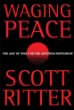
Review: Waging Peace–The Art of War for the Antiwar Movement

5 Star, Iraq, Misinformation & Propaganda, Peace, Poverty, & Middle Class

Wagin PeaceClever Not Pretentious, Useful and Focused–Valuable to All

June 20, 2007

Scott Ritter

This is a clever useful book. I *like* it. It is not pretentious nor is it convoluted. It does a very fine job of explaining to the non-military average activist or leader of activists the utility of Sun Tzu, Clausewitz, and John Boyd in developing a national and global strategy, national and global campaign plans, and local discrete tactical “events” that can achieve impact *only* if done in the context of a strategy and a campaign plan.

The author does a fine job of gently and respectfully pointing out that the current anti-war and pro-environment movements, projects, and individuals have a severe handicap in not understanding the connection between a strategy, and operational campaign, and tactical events planned and executed in the larger context.

The author does a tremendous job of clearly and concisely describing how the extreme right has managed to define its ideological war plan as “Guns, God, and Gays,” while none of the thoughtful but complex, lengthy and somewhat disjointed progressive messages stand a chance.

The author understand that the war for the soul of America and for the stability of the rest of the world is about belief systems, and about capturing as many individual minds and hearts as possible. The extreme right is winning with ideological fantasy while the extreme left is losing in detail for lack of a message that can be adopted by the mainstream, which remains largely apathetic.

The author goes on to articulate a distress that I myself have experienced, politely pointing out that most progressive movements have too many self-named leaders, not enough disciplined followers (for lack of a strategy and campaign plan), and are generally too focused on feel good events or actions. I myself respect all these people, but think of them as the huggy huggy tea party set. They don't know how to bring an enemy system–a domestic enemy system–to a screeching halt in a showdown over time and space.

The author is brilliant–utterly brilliant–in pointing out that there is only one message that can win over the mainstream and the apathetic middle, and that message is “uphold the Constitution and the sovereign power of We the People, with liberty and justice for all.” He *nails* it. I am moved by this book. It is *not* a clever marketing book to add to anyone's financial kitty, this is a book by a patriot, for patriots, and it is useful–actionable–and therefore priceless in value to all of us.

In the middle part of the book, after describing Intelligence Preparation of the Battlefield (IPB), an Army standard, but not discussing the intelligence cycle, the author emphasizes the importance of both psychology, and intelligence: the progressives must “be able to accurately track what an opponent is doing on the battlefield.” I tried to explain this to Howard Dean's staff back in the day, and could not get anyone to listen. Our politicians running for President are not only not qualified to be President, they are not even staffed to offer the voters a coherent range of policies within a balanced sustainable budget. All they can do with all their tens of millions is fire broadsides of platitudes at one another. This is one reason I created the Earth Intelligence Network, in order to both teach the progressives how to create intelligence and policy matrices (the ten threats, twelve policies, and eight challengers) and to do so in a very compelling manner using serious games with embedded reality-based budgets. All this is free, so please; do not interpret this as advertising for profit.

The author draws to a close with three hugely important points:

1) The only message that will resonate with *all* of us is upholding the Constitution (Romney, to his eternal disgrace, has refused to sign the pledge to uphold the Constitution–all others need to be pressed on this point).

2) The progressives need training in both leadership and followership, and I am hugely impressed by the author's provisions on pages 75-77 of specific URLs for specific Incident Command System (ICS) training courses as well as leadership courses. He is very complementary of these materials provided by the Federal Emergency Management Agency (FEMA) and the National Wildlife Coordination Group (funded by taxpayers, naturally, but not now in the active service of taxpayers).

3) The author's third important point in closing is that activism must be global, not just local or national. Most activists understand this intuitively, but the *only* group to actually do something along these lines is the World Index of Environmental and Social Responsibility (WISER) under the conceptual leadership of Paul Hawkin and the technical leadership of Peggy Duvette. Indeed, combining the author's advice and concept of organization with my own vision for the “six bubbles” (see image) of the Earth Intelligence Network is in my mind a useful starting point for the yet to be developed WISER (Self) Government module.

The author offers other useful tidbits in passing, including a definition of how the progressives could organize administrative, intelligence, operational, planning, logistics, communications, and public relations teams with proper training and recognized leadership. He may not be familiar with all the training that is being done along these lines by some, for example those taking on the World Trade Organization, but in general his observations are helpful.

The book ends with two appendices, the U.S. Constitution and the United Nations charter. The author is NOT Jane Fonda on steroids. He sees, quite clearly, that the Republic is in the battle of all time for the soul of democracy and the soul of (moral) capitalism. He understands that the center of gravity is the huge disengaged apathetic “middle” and that until that middle understands that what is being done in our name by the U.S. Government is illegitimate, illegal, immoral, and imprudent, we will not be able to mobilize effectively.

This is a truly fine book, of, by, and for We the People.

See also:
Democracy's Edge: Choosing to Save Our Country by Bringing Democracy to Life
Escaping the Matrix: How We the People can change the world
Society's Breakthrough!: Releasing Essential Wisdom and Virtue in All the People
All Rise: Somebodies, Nobodies, and the Politics of Dignity (Bk Currents)
The Tao of Democracy: Using Co-Intelligence to Create a World That Works for All
The New Craft of Intelligence: Personal, Public, & Political–Citizen's Action Handbook for Fighting Terrorism, Genocide, Disease, Toxic Bombs, & Corruption
THE SMART NATION ACT: Public Intelligence in the Public Interest

Vote on Review
Vote on Review

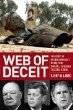
Review: Web of Deceit: The History of Western Complicity in Iraq, from Churchill to Kennedy to George W. Bush

5 Star, Diplomacy, Empire, Sorrows, Hubris, Blowback, Intelligence (Government/Secret), Iraq

Web of DeceitThe One Book No US Politician Will Read, That You SHOULD Read

June 18, 2007

Barry M. Lando

This is one of two books that I have read together, both documenting the decades of deceit by both the US and UK governments, and to a much lesser degree, by France, Germany, and Russia, among others.

The two compelling facts that stay with me as I put the book down, are two:

1) From Churchill to Kennedy to Bush (Cheney), all of our Presidents in the US, but most especially Reagan, Bush, Clinton (Brzezinski), and the current and failed crew of neo conservatives that use Bush Junior as a talking doll, have been complicit–let me spell that again–complicit in the mass murders, the massacres, the torture that we first condoned and now practice ourselves. The US White House denizens are all long overdue for formal indictment, at least by a Truth and Reconciliation Commission. The author documents, very ably, a long string of broken promises (e.g. to the Bedouin leader for a free Arab state in return for help in WWI, to the Kurds, etc.) and complicity in mass murder. In the author's views, the sanctions are a war crime against the children, women, and elderly of Iraq, a war crime that lasted thirteen years.

2) Salaam Hussein was a creature spawned in large part by the CIA. Although I have spent 30 years in the intelligence business, it was not until I embarked on my broad non-fiction reading program that I have been able to understand that the CIA specifically, but all the rest of the classified intelligence community, is complicit in mass murders, genocides, running cocaine into the US to wipe out poor communities now addicted to crack, made affordable by the CIA's drug runners, and made politically kosher because Wall Street demands drug money–laundered drug money–for its liquidity.

I join Lee Iacocca in asking, “Where is the outrage?” There is not a candidate for President today, not even Ron Paul, who can outline in chapter and verse, as I now can on the shoulders of the 900+ authors whose hard-earned insights I have absorbed these past six years, the evil that Lionel Tiger and others show is inherent in industrialization and the centralization of power. We need to destroy the current corrupt elections process, implement electoral reform across the board, and start putting bright honorable people in office, instead of these nakedly immoral and profoundly evil creatures who will inflict any sacrifice, impose any burden, on We the People so that they may profit.

A few of the many gems from this superb work:

1) All our Presidents in recent time have lied to us, and the most humiliating of all of these lies was not the weapons of mass destruction, but the abandonment of the Kurds and the refusal to listen when Iraqi generals approached Iraqi dissidents who in turn came to the Department of State only to be shunned away. Salaam Hussein promised to leave Kuwait, but US wanted to destroy his army, and refused to hold off on what proved to be 40 hours of pure slaughter. Gulf II was not only more lies, but the active suppression of facts and dissident views, not least of which were General Tony Zinni's views–he was called a traitor by Condolezza Rice, who appears to know nothing of honor, decency, and truthfulness.

2) CIA is creating more long-term havoc than it is worth. I am finally persuaded, with absolute certainty, that we need to get out of the covert action business. CIA should become the National Analysis Agency, and the small clandestine arm should be limited to multinational operations against transnational crime and terrorism, with an Inspector General in every Station.

3) Jimmy Carter, advised by Zbig Brzezinski, comes out of this book looking both more ignorant and more unscrupulous than Reagan or either of the Bushies. Brzezinski not only masterminded the tacit okay for Pakistani development of nuclear weapons in return for aid in Afghanistan, he also began the process of helping Salaam Hussein acquire, develop, and utilize weapons of mass destruction, and I hold Brzezinski directly accountable for the mass murder of Kurds, Iraqi Shiites, and Iranians.

There are many other notes from this book that I have, but rather than lay them out here I am going to simply say that this book moves to the top of my list of books on evaluating the Iraq misadventure that has given us a $2 trillion debt and 75,000 amputees whose lives are forever shattered ***for no good reason***

The betrayal of the public trust by both the Executive and Congress, by both politicians and senior civil servants and military flag officers, has been outrageous. The author uses the words ignorance, arrogance, incompetence, amorality, illegality, hypocrisy, and cynicism sparingly. This is not a vendetta book. This is a reasons indictment and joins a host of other books that demand the immediate impeachment not only of the sitting President and Vice President, but also of the Republican ***and*** Democratic leadership in the Senate and the House of Representatives.

I am ashamed of our Republic and what these amoral thieves have done “in our name.” I am disheartened by the knowledge that all of our brave troops have died, been disabled, and suffered for ***no good reason.*** This makes me very angry. Angry enough to begin speaking out, pleading with America to wake up and find within itself the means for a non-violent restoration of the Constitution and We the People as individuals with liberty for all, lest America be disgraced, and our children's' futures sacrificed, forevermore. Shame, shame, shame.

Devil's Game: How the United States Helped Unleash Fundamentalist Islam (American Empire Project) (American Empire Project)
Unintended Consequences: The United States at War
The Sorrows of Empire: Militarism, Secrecy, and the End of the Republic (The American Empire Project)
Manufacture of Evil: Ethics, Evolution, and the Industrial System
Sleeping with the Devil: How Washington Sold Our Soul for Saudi Crude
Vice: Dick Cheney and the Hijacking of the American Presidency
Statecraft as Soulcraft
Why the Rest Hates the West: Understanding the Roots of Global Rage
The Unconquerable World: Power, Nonviolence, and the Will of the People
Breaking the Real Axis of Evil: How to Oust the World's Last Dictators by 2025

Vote on Review
Vote on Review

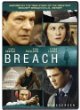
Review DVD: Breach (Widescreen Edition)

5 Star, Intelligence (Government/Secret), Reviews (DVD Only)

DVD BreachFormer Spy Rates This Movie Superb

June 18, 2007

Chris Cooper

I served as a spy for CIA on three clandestine tours, and one of my headquarters tours was in counterintelligence, where I got to know just how un-seriously CIA takes that topic. The dirty little secret at CIA is that Ames was not the only traitor, a brand new career trainee gave up ten or so of our Soviet agents in place, all killed. In this movie, the damage that Hansen did is severely over-stated, and the facts of the matter are not as they should be, but I still give this a five star rating because the movies is absolutely top notch on the personality details.

This movie is much superior to The Good Shepard. The only other spy movies that really come close are those featuring Alec Guiness as George Smiley.

The reviewers that cannot understand motive will never understand spys and traitors. One line in this movie really grabbed me–in it, Hansen talks about how “the US can be likened to a powerfully built but retarded child.” Throughout the movie, Hansen is cast as a devout even obsessive Catholic who cannot get people inside the FBI to realize how vulnerable they are, and ultimately I would conclude from the movie that the motivation may have started as a desire to prove a point, then a slow burn into addiction–making fools of those that would not listen.

The movie misrepresents the clerk as counter-spy. The FBI actually caught Hansen by going through his trash and finding the one note that he failed to destroy. Still and all the individual depictions, from the hardened solitary female senior special agent with no one in her life, not even a cat, to various others, are excellent. Especially meaningful to me is the depiction of the loving wife that becomes suspicious and then unloving because she confuses her husband's loyalty to duty and secrecy with inattention and being scorned, and of course that is rarely the case. Spies need loving trusting wives.

This and “The Falcon and the Snowman” are first rate. Anything with Alec Guiness as George Smiley is first rate. For amusement I like the more recent James Bond films, the Smiths, and True Lies.

Smiley's People (3pc) (Coll)
Tinker Tailor Soldier Spy
The Falcon and the Snowman
Mr. & Mrs. Smith (Widescreen Edition)
Casino Royale (Two-Disc Widescreen Edition)
True Lies

Wedge: From Pearl Harbor to 9/11–How the Secret War between the FBI and CIA Has Endangered National Security
Legacy of Ashes: The History of the CIA
Deep Cover: The Inside Story of How DEA Infighting, Incompetence and Subterfuge Lost Us the Biggest Battle of the Drug War
Lost History: Contras, Cocaine, the Press & ‘Project Truth'

Vote on Review
Vote on Review

Review: Interventions

5 Star, Empire, Sorrows, Hubris, Blowback

InterventionsGems of Tough Love, Hope & Inspiration

June 15, 2007

Noam Chomsky

Other speakers have pointed out, as the book's foreword does as well, that most of Chomsky's Op Eds are widely published overseas but not in the US. I completely agree with the general view among intelligent people that the mainstream print and broadcast media, including NPR which now works for Otto Reich, Karl Rove's best post-Nazi pal, are worthless. As Joe Trippi says, “the revolution will not be televised,” nor will it be discovered by any “news hole” reporter whose column inches are subordinate to advertising and info-mercials from the powers that be. I recall with anger that $100,000 full page ads, cash offered up front, were REFUSED by the NYT, Los Angeles Times, and Washington Post. Shame!

As I usually do with Chomsky's works, I start with the last item, and then go back to the beginning. The heart of this book in my view is two-fold:

1) American intellectuals on both left and right, are timid, ignorant, lazy, and generally a pitiful mess. They have all fallen prey to ideological fantasy or agnostic oblivion. Absent Chomsky, Sy Hersh, and a few others (not counting authors like Francis Moore Lappe and others in the transpartisan mode), our media–broadcast, print, and web–is completely lacking and totally distorted in its failure to be a responsible fourth estate.

2) We the People have the power to change all this. Interestingly (at least to me), as Chompsky's book arrived via UPS I was reading the introduction by Lawrence Goodwyn to “The Populist Movement: A Short History of the Agrarian Revolt in America” (Oxford, 1979). Both Chomsky and Goodwyn see clearly that there is a corporate dominance of “the national interest” that is completely at variance, 180 degrees contrary to “the public interest.” This may well be the single most significant political concept we must communicate to every American eligible to vote in 2008.

Chomsky makes much–and in my mind very properly so–of how the people and the varied organizations subordinate to the banks, corporations, and puppet government (both federal and state) have been “domesticated” to believe that the existing system is “as good as it gets” and that nothing can come of a popular revolt. However, and here I draw on Goodwyn, it is clear that the people can reach a breaking points, a point beyond which their suffering cannot be explained by “hard times” or “genetic sloth” or any of the other propaganda terms used to try to keep the 90% that do all the work still for their screwing by CEOs and Wall Street and the Federal Reserve.

Reading Chomsky is like a bracing splash of cold water. Early on in the book, an item dated 1 November 2002 (the dates for each Op-Ed are always present and much appreciated), he offers a modest proposal: that if the US insists on toppling Hussein, that it simply commission Iran to do so, and offer all the support it previously offered to Iraq against Iran. What an insane idea, he points out at the end, only to pointedly suggest that the only idea MORE insane is for the US to go it alone and lightly.

This morning I was re-reading Adda Bozeman's introduction to her brilliant work, “Strategic Intelligence & Statecraft,” and recalling how in 1992 (the same year that I tried to get the USG to take open sources of information seriously) she was very pointedly stating that the heart of strategic intelligence lay in understanding the cultural and religious values of others. Not something CIA has a clue about, especially today when 4 out of 5 “analysts” (more like junior butts in seats) have less than five years experience.

Chomsky is gifted at speaking truth to power, and it is significant that more and more people are reading what he writes–just as more and more people are reading my non-fiction reviews–the American public is now “engaged” and emergent from its slumber. Sadly, when other try to replicate his truth-telling, citing chapter and verse from “Sorrows of Empire,” or “War is a Racket” or “The Fifty Year Would,” or “Why the Rest Hate the West,” we get slammed down. Just yesterday I was told that a superb monograph on Intelligence & Information Operations (I2O) would be published officially, but only if I took out all the “conspiracy theory” quotes. The first one, on page 3, quoted General Smedley Butler, the most decorated Marine of his era, saying he did not like being an enforcer for corporations. So much for speaking the truth in Pentagon circles (where I usually get fairly free rein, to their credit).

Chomsky's other oft-repeated theme, but with all new words in all new Op-Eds tailored to the post 9/11 era, is that it is America that is the global terrorist, America that is the evil-doer. Let me be among those who stand with Chomsky. I declare, as the #1 Amazon reviewer for non-fiction; as a former Marine Corps infantry officer, clandestine spy for the CIA, founder of the Marine Corps Intelligence Command, and devoted citizen and father with roots in the Commonwealth of Virginia, Chomsky is correct. We are losing the global war of belief systems because we refuse to recognize our grotesque migration from a free people to an evil empire in which the people have no say over what is being done “in their name.” Sun Tzu knew that only those who know BOTH themselves, AND their enemy, will be victories. We know NEITHER ourselves nor our enemies, most of them of our own making. There are reasons for this, but the most important reason lies with our own failing as a public willing to demand the public interest in lieu of special interests.

No one need fear Chomsky, who loves America as much as I do. We need to fear only our inertia as disciplining those who have committed high crimes and misdemeanors, relying on our apathy. The list is long.

War Is a Racket: The Anti-War Classic by America's Most Decorated General, Two Other Anti=Interventionist Tracts, and Photographs from the Horror of It
The Sorrows of Empire: Militarism, Secrecy, and the End of the Republic (The American Empire Project)
The Fifty-Year Wound: How America's Cold War Victory Has Shaped Our World
The Eagle's Shadow: Why America Fascinates and Infuriates the World
Rogue Nation: American Unilateralism and the Failure of Good Intentions
Weapons of Mass Deception: The Uses of Propaganda in Bush's War on Iraq
Embedded: Weapons of Mass Deception : How the Media Failed to Cover the War on Iraq
Vice: Dick Cheney and the Hijacking of the American Presidency
Bush's BrainWhy We Fight

Vote on Review
Vote on Review

Review: International Marine’s Weather Predicting Simplified: How to Read Weather Charts and Satellite Images

5 Star, Nature, Diet, Memetics, Design, Sailing

International WeatherGreat Book, NOT a Substitute for the Five Day Course

June 14, 2007

Michael Carr

This is one of four weather books I recommend, the other three are hot-linked below. It is a truly great book with both white space and color images, easy to read font, and a sensible easy to understand roadmap for integrating satellite imagery, upper air (500 milibar) and surface forecasts and sea state charts.

After I finished the five day course in Advanced Meterology, I created a short guide for myself that I could share with others, and this book was very helpful as a reference to complement the binder that I received with the course.

See also my list of books in my sailing library.

Mariner's Weather
Understanding Weatherfax
The Weather Wizard's Cloud Book: A Unique Way to Predict the Weather Accurately and Easily by Reading the Clouds

Vote on Review
Vote on Review

Review: Mariner’s Weather

5 Star, Nature, Diet, Memetics, Design, Sailing

Marine WeatherGreat Book, for Weather One is Not Enough

June 14, 2007

William P. Crawford

I buy books in pairs or triples, but in the case of weather, both in preparation for the 35-hour Advanced Meterology Course and as a reference library after the fact, I bought four, the other three hot-linked below.

Weather extremes are getting worse, NOAA is under-funded and has trouble getting one 96 hour forecast out, the bottom line is that we are largely on our own where the boat meets the wave offshore.

This book is packed with more detail, including very specific guidance on what to do in relation to specific situations, and absolutely great multiple choice quesitons at the end of each chapter.

This is “the” textbook, but I don't believe in just one book, so I like all four together.

See also my list of books in my sailing library.

Understanding Weatherfax
The Weather Wizard's Cloud Book: A Unique Way to Predict the Weather Accurately and Easily by Reading the Clouds
International Marine's Weather Predicting Simplified: How to Read Weather Charts and Satellite Images

Vote on Review
Vote on Review

Review: Nation of Secrets–The Threat to Democracy and the American Way of Life

5 Star, Intelligence (Government/Secret), Secrecy & Politics of Secrecy

Nation SecretsOur Era's Tom Paine on Common Sense, June 12, 2007

Ted Gup

As one of those who testified to the Moynihan Commission on Secrecy, and to earlier Presidential Commissions of excessive government classification, I consider this book to be a treasure. The reviewer that defends government secrecy to protect “sources and methods” knows nothing of them. I was a spy, I helped steal codebooks and program imagery satellites, and I stood up the Marine Corps Intelligence Command.

The author has rendered the Republic an extraordinary service, and from somewhere in heaven Daniel Patrick Moynihan is smiling upon this superb public service.

The author opens the book with an extraordinary snapshot of a single day, Thursday, February 2, 2006, and a stunning array of secret sessions and practices spanning the entire Nation and all of its domains (academic, business, government, law enforcement, religious).

This is a book of case studies, and a book with a constant theme that we must all note: secrecy breeds contempt and distrust, and secrecy blocks the collective intelligence of the people from playing a role in self-governance.

The author excels at discussion not just excessive national security secrecy, but how secrecy is now pervasive, from agricultural contamination and recalls being concealed from the public, to energy policy (Dick Cheney is the first in history to destroy all records of all his guests).

The author reminds us that Thomas Jefferson stated that “Information is the currency of democracy,” and in all that he writes, he shows how secrecy is pathologically altering the relationship between the government and the governed, as well as between all forms of organization and their clients, members, or adherents.

From the security clearance backlog to CIA abuses against its own employees to enlisted men being forbidden to discuss severe deficiencies in their body armor to the concealment of government negligence resulting in wrongful death to the concealment of corporate product deficiencies that kill to the silencing of valid *internal* critics of policies of torture and rendition to the obsessive *reclassification* of information long declassified, the author has written the definitive treatise on how the US Government and all elements of the US (academia, commerce) etc. have forsaken the principles and values of our Founding Fathers.

The author states that secrecy produces errors in judgment and frees government from the fear of being contradicted by the facts.

I admire this book, and this author, very much. This is a book that every citizen voter and citizen consumer should read. We must eradicate 90% of the secrecy in America, and we must redirect 75% of both the military and the intelligence budgets toward waging peace and open source intelligence, including free online and on demand education in 183 languages.

I can best support this author and this book by offering several quotes that he missed and that completely support his presentation:

Amilcar Cabral, African freedom fighter (1924-1973)

Hide nothing from the masses of our people. Tell no lies. Expose lies whenever they are told. Mask no difficulties, mistakes, failures. Claim no easy victories. … Our experience has shown us that in the general framework of daily struggle, this battle against ourselves, this struggle against our own weaknesses … is the most difficult of all. [0}

Daniel Ellsberg speaking to Henry Kissinger:

The danger is, you'll become like a moron. You'll become incapable of learning from most people in the world, no matter how much experience they have in their particular areas that may be much greater than yours” [because of your blind faith in the value of your narrow and often incorrect secret information]. [1]

Rodney McDaniel speaking at Harvard University:

Everybody who's a real practitioner, and I'm sure you're not all naĆÆve in this regard, realizes that there are two uses to which security classification is put: the legitimate desire to protect secrets, and the protection of bureaucratic turf. As a practitioner of the real world, it's about 90 bureaucratic turf; 10 legitimate protection of secrets as far as I am concerned. [2]

Ted Shackley in his Memoirs:

In short, the collapse of the communist system in Central Europe has created a new situation for intelligence collectors. I estimate, based in part on my commercial discussions since 1990 in East Germany, Poland, Albania, Czechoslovakia, and Hungary, that 80 percent of what is on any intelligence agency's wish list for this area as of 1991 is now available overtly. [3]

General Tony Zinni speaking to a senior national security manager:

80% of what I needed to know as CINCENT I got from open sources rather than classified reporting. And within the remaining 20%, if I knew what to look for, I found another 16%. At the end of it all, classified intelligence provided me, at best, with 4% of my command knowledge. [4]

Robert Steele, in varied speeches and publications:

Do not send a spy where a schoolboy can go.

The problem with spies is they only know secrets.

OSINT changes the rules of the game by making everyone in the audience a player with a legitimate right to collect, produce, and consume public intelligence.

Today, U.S. “intelligence” is upside down and inside out. It is upside down because it relies on satellites in outer space rather than human eyes on the ground. It is inside out because it tries to divine intelligence unilaterally, without first asking anyone else what information they might provide. [5]

Footnotes:
[0] Received in email from an associate.
[1] Daniel Ellsberg, SECRETS: A Memoir of Vietnam and the Pentagon Papers (Viking, 2002).
[2] Rodney McDaniel, then Executive Secretary of the National Security Council, to a Harvard University seminar, as cited in Thomas P. Croakley (ed), C3I: Issues of Command and Control (National Defense University, 1991). Page 68.
[3] Ted Shackley, SPYMASTER: My Life in the CIA (Potomac, 2006). Page 282
[4] General Tony Zinni, USMC (Ret.), former Commander-in-Chief, U.S. Central Command (CINCCENT), as recounted to the author on 4 April 2006.
[5] Forbes.com, within “Blank Slate,” as Edited By David M. Ewalt and Michael Noer and published 04-18-06.

Secrets: A Memoir of Vietnam and the Pentagon Papers
C3I: Issues of Command and Control
Spymaster: My Life in the CIA
The Battle for Peace: A Frontline Vision of America's Power and Purpose
Battle Ready (Tom Clancy Commanders)
On Intelligence : Spies and Secrecy in an Open World
The New Craft of Intelligence: Personal, Public, & Political–Citizen's Action Handbook for Fighting Terrorism, Genocide, Disease, Toxic Bombs, & Corruption
Information Operations: All Information, All Languages, All the Time
THE SMART NATION ACT: Public Intelligence in the Public Interest
See my comment for URL to 16 pages of testimony in 1993 on this topic.

noble gold