
Graphic: Five Common Myths About Open Source
Graphics, ICT-IT
The truth at any cost lowers all other costs — curated by former US spy Robert David Steele.

Reciprocity, Not Reward, Drives Decision to Cooperate
A new study suggests the decision to cooperate with others comes from someone's mood and his or her history of cooperation.
Via Nicholas Ripley
Phi Beta Iota: Cultural context, not organizational design, is the key factor.

In this very informative essay, Nicolas Pelham describes how King Mohammad of Morocco and his apparat finessed the Arab Spring, even though Morocco’s poverty is far worse than Tunisia’s and the oppression of its poor by his apparat is nearly as bad as President Ben Ali’s in Tunisia.
Whether or not Mohammad dodged the revolutionary bullet or merely bought a little time remains unclear. Unfortunately, Pelham leaves this question hanging, but he does explain how the King and his henchmen are squandering the window of opportunity they created by failing to redress appalling popular grievances. In fact, Pelham suggests the contrary is happening, even though he seems to imply the popularly elected moderate Islamist government wants to work with the King.
Note how US Secretary of State Clinton appears hypocritical, as usual. While championing so-called democratic regime change in Libya and Syria, she reinforced the the King’s finessing operation during her visit by meeting with the King’s foreign policy advisor before meeting with her Moroccan equivalent, the foreign minister of the democratically elected government.
Chuck Spinney
Le Grazie, Italy
How Morocco Dodged the Arab Spring
Nicolas Pelham, The New York Review of Books, 2012-07-05 2:50 PM
Phi Beta Iota: And then there is Qatar. Governments that lack intelligence as well as integrity — including those that welcome relations with dictators and are hypocritical of their alleged support for democracy and human rights — do their publics a great disservice.
See Also:
Breaking the Real Axis of Evil: How to Oust the World's Last Dictators by 2025
Journal: Coup in Qatar? Middle East Convergences…
Review: Postmodern Imperialism – Geopolitics and the Great Games

Frequently Asked Questions

Rand Paul
Summary: For many years, the liberty movement’s aspirations and actions have been focused on the presidential candidacy of Congressman Ron Paul.
In Early June, this strategy backfired, following Rand Paul’s (Ron’s son) endorsement of Mitt Romney, a most dedicated servant of the Banking-Militarist Complex.
This essay argues that revolutionaries can draw two valuable lessons from Rand Paul’s about-face.
First, they must realize once and for all that electoral politics in the USA cannot possibly bring meaningful change, and hence, that more radical strategies are required.
Second, to survive, to retain its relevance, to deserve the gratitude of future generations, the liberty, environmental, social justice, and peace movements must merge into a single revolutionary movement.
Continue reading “Mati Nissani: Strategic Lessons from the Rand Paul Fiasco”

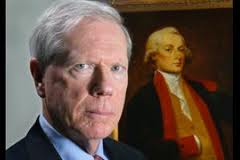
The Collapsing US Economy and the end of the world
In a recent column, “Can The World Survive Washington’s Hubris,” I promised to examine whether the US economy will collapse before Washington in its pursuit of world hegemony brings us into military confrontation with Russia and China. This is likely to be an ongoing subject on this site, so this column will not be the final word.
