Venessa Miemis: Awareness Design – The Most Powerful Field for Our Future?

Cultural Intelligence
0Shares
Venessa Miemis

Awareness Design: The Most Powerful Field for Our Future?

OK, OK, I don’t really subscribe to anything being “the most” of something… the headline was just a bit of sensationalism to capture your attention. 😉

*gently slaps self on wrist*

However, now that you’re here, I want to make a case for a new field of design.

I read a paper over the weekend called Leverage Points: Places to Intervene in a System, which lists the most effective strategies for making large-scale shifts in complex systems. #1 on the list was “the power to transcend paradigms.”

How timely, as our discussions of late have been about culture hacking, technologies of culture, and conscious evolution. It made me wonder –

What would it look like if we had a discipline called Awareness Design?

Like many design fields, the focus would be on behavior. The approach would be on ‘shaping digital and social tools that increase people’s awareness of themselves, their environments and systems.’ (so, expanding people’s capacity for self-awareness and systems-awareness).

The idea is to satisfy people’s needs and desires within a context of deep self-knowledge as well as a living systems perspective. By creating more awareness in one’s inner world, people would become aware of a larger range of options in how to respond to situations and make decisions. By creating more awareness to the outer world, people would gain a more thorough understanding of the impacts of their choices and behaviors on themselves and the world at large. These feedback loops would encourage more creative and empowered behavior.

Let’s further explore the what and why of awareness design!

Continue reading “Venessa Miemis: Awareness Design – The Most Powerful Field for Our Future?”
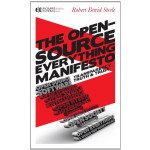
The Open Source Everything Manifesto: Chapter 4 Philosophical Concepts Extract II

Manifesto Extracts
0Shares
Amazon Page

The Open Source Everything Manifesto: Chapter 4 Philosophical Concepts Extract II

The sharing of truth in the form of widely available information creates a foundation for cost-effective transparent decisions that are inherently anti-corrupt in nature.

. . . . . . . .

Where the philosophy gets interesting, even challenging, is when it confronts the reality that dogma, opinion, and deception can create in the mind a view of reality that is not real, but that one considers to be truthful.  This gets to the heart of why education is the root requirement and right of each individual in any true democracy, and why democracy dies when dogma, ideology, and propaganda flourish.  Truth is our best effort to see reality as it really is, and make the most of it.  And please note that science, faith, and philosophy should not be considered antithetical to one another.

. . . . . . . .

The moral truth is worth dying for–sometimes a burning monk (Viet-Nam) or fruit seller (Tunesia) is the catalyst needed to illuminate the culture of fear and lies such that the public reconnects to its own power to be the truth, to define the truth, to demand the truth.  How we seek, sense, and share with one another is a function of, among many variables, on constant: whether we are in a state of grace such that the truth is the primary attribute of all that we see, smell, touch, and sense.

Review of the Book by Ralph Peters   …   Manifesto Extracts at Phi Beta Iota   …   Book Page at Amazon   .   Book Page at Barnes & Noble   .   Book Page at McNallyRobinson   .  Book Page at North Atlantic Books (Publisher)   .   Book Page at Powell’s Books   .   Book Page at Random House   .   Book Page at Super Book Depot

DefDog: War Study – Troops Had Bad Intel, Worse Spin

Corruption, Cultural Intelligence, Government, Idiocy, Military
0Shares
DefDog

This has been true since Vietnam (from my personal experience) and for all the money and technology that has been thrown at the IC, the return is dismal at best, criminal at worst….see my previous identifying your tribal summary as better than 99% of the intel I saw in Afghanistan.

War Study: Troops Had Bad Intel, Worse Spin

EXTRACT:

Ten years of war have given the U.S. military more than its share of frustrations. According to an internal Pentagon study, two of them were as fundamental as they were related: Troops had terrible intelligence about Iraq and Afghanistan, and they told their own stories just as badly.

Those are some preliminary conclusions from an ongoing Pentagon study into the lessons of a decade of combat, authorized by Gen. Martin Dempsey, the multi-tour Iraq veteran and chairman of the Joint Chiefs of Staff. The study doesn’t single out any sensor or spy platform for criticism.  Instead, it finds that U.S. troops didn’t understand the basic realities of society, culture and power structures in Iraq and Afghanistan, and couldn’t explain what they were doing to skeptical populations.

. . . . . . . .

The study Dempsey ordered is ongoing and will have several volumes, each with multiple iterations, before the military produces a definitive assessment of what went wrong in Iraq and Afghanistan. This is just the first volume. But it helps identify a series of problems that the military thinks it needs to fix to win the wars of the future.

That future military needs to “leverag[e] technology and social media” in order to consider “all relevant actors’ instruments of power; cultural, religious, and other demographic factors; and employs innovative, non-traditional methods and sources.” In other words, spin harder — and know what you’re talking about.

Read full article.

Continue reading “DefDog: War Study – Troops Had Bad Intel, Worse Spin”

Josh Kilbourn: Pakistan Condemns 245 US Drone Attacks

07 Other Atrocities
0Shares
Josh Kilbourn

YouTube (26:30): Attack of the Drones – USA

Pakistan condemns 245 ‘unlawful' US drone attacks (April 2012)

To see more go to http://www.youtube.com/user/journeymanpictures

Follow us on Facebook (http://goo.gl/YRw42) or Twitter (http://www.twitter.com/journeymanvod)

They can move together in swarms, build towers, dance, throw and catch, assess targets and soon will even make their own decisions. Both in war and at home, drones are developing fast and gaining control.

The screens at a US air force base lock onto a civilian car driving along a road in New Mexico. “We don't simulate or actually engage them, it is just training to follow a moving target.” The question, “with their permission?” is met with an embarrassed pause and the faltering reply, “we're just following them with a camera”.

Continue reading “Josh Kilbourn: Pakistan Condemns 245 US Drone Attacks”

The Open Source Everything Manifesto: Chapter 4 Philosophical Concepts Extract I

Manifesto Extracts
0Shares
Amazon Page

The Open Source Everything Manifesto: Chapter 4 Philosophical Concepts Extract I

Truth, Coin of Collective Consciousness

When things are not going well, until you get the truth on the table, no matter how ugly, you are not in a position to deal with it.

Bob Seelert

Truth is the foundation for all discourse and wise decision-making.  There is no such thing as truth in isolation.  The definition of meaning is a contextual and communal process, as the following two statements communicate succinctly:

Put enough eyeballs on it, no bug is invisible.

The truth at any cost lowers all other costs.

The first concept makes clear the role of community in arriving at the truth of any matter.  The second makes clear the moral and financial value of truth, reducing all manner of costs across all domains including time and space.  Neither of these concepts matter to the greedy, selfish one percent–they matter very much to the ninety-nine percent.

Book Page at Amazon   .   Book Page at Barnes & Noble   .   Book Page at McNallyRobinson   .   Book Page at North Atlantic Books (Publisher)   .   Book Page at Powell’s Books   .   Book Page at Random House   .   Book Page at Super Book Depot