This is Episode 5 of the critically feared Moment of Clarity SHOW by Lee Camp and Coalition Films. This episode also features creator of the Zeitgeist Movement Peter Joseph! This week we discuss money – what is it really? Why does it seem we never have enough? How do we rethink it? (And Henry does not have a Twitter account.)
1) For more on Coalition Films go to www.CoalitionFilms.com
2) The MOC rants and podcast come out twice a week. Go to LeeCamp.net for more.
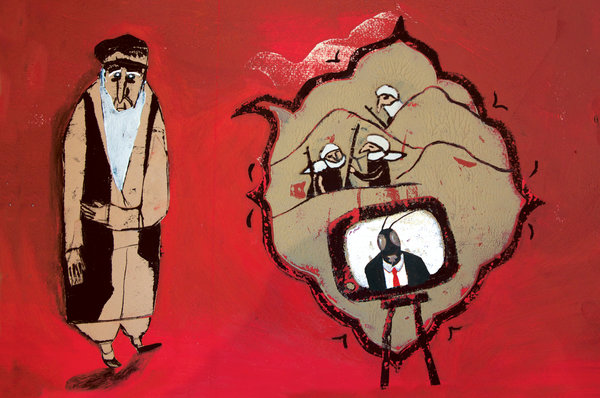
ON a sunny, crisp November day in 2008, three American civilians joined a platoon of United States soldiers on a foot patrol in Maiwand District, a flat, yellow patch of earth crowned by black-rock mountains in southern Afghanistan. The civilians were part of the Human Terrain System, an ambitious, troubled Army program that sends social scientists into conflict zones to help soldiers understand local culture, politics and economics.
Click on Image to Enlarge
That day, the team planned to interview shoppers coming and going from a nearby bazaar. Afghans had complained about the high price of flour, so the Human Terrain Team members were creating a consumer price index. They also wanted to find out whether Afghan officials were asking shopkeepers for bribes, and how merchants protected themselves and their goods in a place where insurgents and local security forces threatened civilians in equal measure.
The team’s social scientist that day was Paula Loyd, a 36-year-old Wellesley graduate and Army veteran with degrees in anthropology and diplomacy and years of experience as a development worker in Afghanistan. Through her interpreter, she struck up a conversation with an Afghan man who was carrying a jug of fuel, asking how much he had paid for it. They talked genially until her interpreter was called away. Suddenly, the man doused Ms. Loyd with gas from his jug and lit her on fire.
It was one stunning act of violence in a conflict that has killed more than 2,100 American troops and wounded more than 19,000. As the United States drawdown approaches, stalled peace talks with the Taliban, Afghan political maneuvering and the waste of billions in taxpayer dollars dominate headlines. Each new attack stokes our yearning for a quick exit. But the more assiduously we seek to put the pain and hard-won lessons of this conflict behind us, the more likely we will be to repeat the same mistakes in the next war.
Paula Loyd died of her injuries a few months after the attack, in January 2009. Soon after, I flew to Kandahar to try to figure out who had set her on fire, and why. It seemed obvious that the Taliban were behind it, but the assault was unusual, to say the least. She was unarmed, interviewing people and taking notes, something I’d often done in villages around Afghanistan. I couldn’t remember a Taliban attack that resembled it. Neither, it turned out, could anyone else.
Bradley Manning did everything but wear a sign saying “Timebomb waiting to explode!
Michael Farrell
Veterans Today, 14 August 2013
EXTRACT
The subject of the email was “My problem.”“I’ve had signs of it for a very long time,” Bradley Manning wrote. “It caused conditions within my family. I thought a career in the military would get rid of it. … But it’s not going away, it’s haunted me more and more as I get older.”There was a photograph attached. Sitting in a car, looking anguished, Manning stares into the camera’s lens. He is wearing a blonde wig and makeup. –Matt Sledge, the Huffington Post, 8-13-2013
In my post on July 31, I argued that the chain of command was largely responsible for the entire debacle ending in the release of documents. It appears based on testimony that not only was I right, it was worse than I thought. Those of us who were in leadership roles during that era and did not want to engage in witch hunts found the “Don’t ask, don’t tell” policy not that easy to enforce. This was a problem with a lot of issues by the way — people engaging in private behavior that the overall society was willing to accept, but that violated the Uniform Code of Military Justice. When a soldier came in to talk to me for some “personal problem,” I didn’t always begin with reading them their rights but I had the card handy just in case. But, while it did not happen, I knew exactly what I would do if someone came in and announced that they were gay–I’d make certain that they knew that by telling me they were in fact asking to be discharged, and then I’d be on the phone to the CSM and the legal clerk to start the paperwork. Nothing personal…I didn’t care, but the rules were pretty straightforward. And, in my leadership roles, I wasn’t dealing with a lot of soldiers who had clearances above Secret.
A CRISIS OF TRUST AND CULTURAL INCOMPATIBILITY: A Red Team Study of Mutual Perceptions of Afghan National Security Force Personnel and U.S. Soldiers in Understanding and Mitigating the Phenomena of ANSF – Committed Fratricide – Murders
May 12, 2011
Jeffrey Bordin, Ph.D. [Major (P) U.S. Army]
N2KL Red Team Political and Military Behavioral Scientist
jeffrey.bordin@afghan.swa.army.mil
EXTRACT
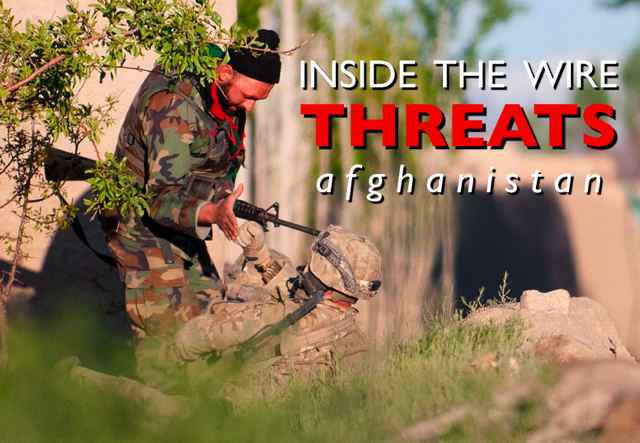
Unfortunately, the rapidly growing fratricide – murder trend committed by ANSF personnel against ISAF members is a valid COIN measure of the ineffectiveness in our efforts in stabilizing Afghanistan, developing a legitimate and effective
government, battling the insurgency, gaining the loyalty, respect and friendship of the Afghans, building the ANSFs into legitimate and functional organizations, and challenges the efficacy of the ‘partnering’ concept . This is all the more a paradox given ISAF’s assumption of and planned reliance for the ANSFs to be able to take over the security burden before it can disengage from this grossly prolonged conflict. This study shows that certain behaviors and policies (such as night raids and home searches
that directly involve U.S. Soldiers) have generated a great deal of animosity among much of the Afghan civilian populace as well as with many ANSF personnel that impedes the overall strategic effort. Such practices are simply unacceptable if ISAF is to be
even marginally successful here.
American Armies are the Greatest Impediment to Peace in the Korean Peninsula The Korean war never really ended, of course. It was just put on hold. The war itself lasted three years from 1950 to 1953, with both sides — the ROK in the south backed primarily by the US, and the DPRK in […]
The indefinite postponement of the World Health Organisation's report is alarming scientists and activists
Al Jazeera, 11 Aug 2013 13:28
Mozhgan Savabieasfahani
Dr Mozhgan Savabieasfahani, a native of Iran, is an environmental toxicologist based in Michigan. She is the author of over two dozen peer reviewed articles and the book, Pollution and Reproductive Damage (DVM 2009).
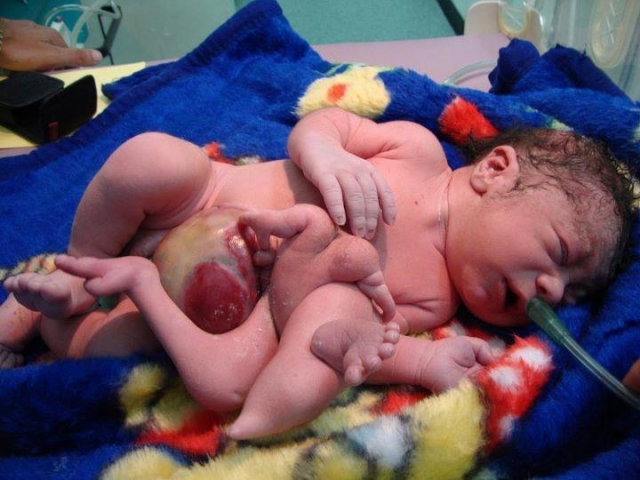
Click on Image to Enlarge
Large parts of the Middle East are now contaminated with war pollutants.
In Iraq, war debris continues to wear away and erode populated cities. Such debris includes the wreckage of tanks and armoured vehicles, trucks and abandoned military ammunitions, as well as the remains of bombs and bullets. Left unabated, the debris will act as dangerous toxic reservoirs; releasing harmful chemicals into the environment and poisoning people who live nearby.
Today, increasing numbers of birth defects are surfacing in many Iraqi cities, including Mosul, Najaf, Fallujah, Basra, Hawijah, Nineveh, and Baghdad. In some provinces, the rate of cancers is also increasing. Sterility, repeated miscarriages, stillbirths and severe birth defects – some never described in any medical books – are weighing heavily on Iraqi families.