1. Connected Cars
2. Cheaper 4K Monitors and TVs
3. Digital Health
4. Laptop/Tablet 2 in 1 Combos
5. Curved TVs
6. 3D Printers
7. The Smart Home
8. Wearables
This text provides the findings of a 2011 “Symposium on the Future of Development Challenges,” which was hosted by USAID. The basic goal of the symposium was to identify better ways of planning for future global development, particularly in four different contexts. (Note: In addition to an introduction and conclusion, the text summarizes the conclusions of four context-specific panels, which were all subdivided into four additional categories of interest — populations, science and technology, politics and economies, and the environment.)
Below is a lengthy report on the Benghazi attack that just appeared in the New York Times.
The report makes it pretty clear how ideological preconceptions implicit in the Orientation guiding the OODA loops of US policy makers prevented them from making a realistic appreciation of the situation in Benghazi, as well as a larger appreciation of the more general ramifications of a decision to remove Qaddafi by force.
Phi Beta Iota: US national level estimates and futures predictions have hit bottom. Now is the time to think deeply about the resurrection of intelligence (decision-support) with integrity (holistic analytic coherence).
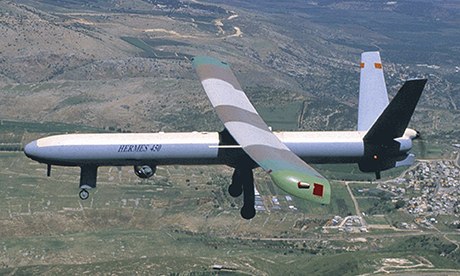
Heather Linebaugh's personal account of her work on the US drone program gives one set of reasons for why that program should be stopped immediately. Another reason was given by the Prime Minister of Pakistan two days ago: the use of drones in Pakistan violates the national sovereignty of that country and is protested by almost everyone there who learn to hate Americans for doing this to their country. A third reason: unless drones are banned by an international treaty with the same seriousness that chemical warfare was banned, we may live to see the day when powers hostile to the U.S. launch drones that kill or main you, your neighbors, your children, your friends. It could happen here–and sophisticated drones could be much harder to head off than other forms of attack. And the source of drone attacks may be hard to identify as drones start to become an accepted weapon by many countries, including small dictatorships that will eventually be ovethrown (some by people who wish to strike back at the US for supporting their repressive governments, as for example Egyptian Muslims watching as the US refuses to call the recent coup a coup so that we can still fund the military dictatorship which is every day proclaiming some new assault on freedm and democracy of the Egyptian people).
Few of the politicians who so brazenly proclaim the benefits of drones have a real clue how it actually works (and doesn't)
Heather Linebaugh
Guardian, U.K. Dec. 29th
Whenever I read comments by politicians defending the Unmanned Aerial Vehicle Predator and Reaper program – aka drones – I wish I could ask them some questions. I'd start with: “How many women and children have you seen incinerated by a Hellfire missile?” And: “How many men have you seen crawl across a field, trying to make it to the nearest compound for help while bleeding out from severed legs?” Or even more pointedly: “How many soldiers have you seen die on the side of a road in Afghanistan because our ever-so-accurate UAVs [unmanned aerial vehicle] were unable to detect an IED [improvised explosive device] that awaited their convoy?”
At the center of Correa’s foreign policy activities is the strengthening of regional Latin American organizations in which there are no U.S. representatives: the Community of Latin American and Caribbean States (CELAC), the Union of South American Nations (UNASUR), the Bolivarian Alliance for the Peoples of America (ALBA), and others.