Afghanistan: In an interview with the BBC which aired on 7 October, President Karzai strongly criticized the NATO military campaign in Afghanistan. “On the security front, the entire NATO exercise was one that caused Afghanistan a lot of suffering, a lot of loss of life, and no gains because the country is not secure.”
“I am not happy to say that there is partial security. That's not what we are seeking. What we wanted was absolute security and a clear-cut war against terrorism.”
He also said the NATO leadership fought the wrong war. He said initially, relations with the US were good. “In those beginning years there was not much difference of opinion between us”.
“The worsening of relations began in 2005 where we saw the first incidents of civilian casualties, where we saw that the war on terror was not conducted where it should have been.”
Mr Karzai said the war should have been conducted “in the sanctuaries, in the training grounds beyond Afghanistan, rather than that which the US and NATO forces were conducting operations in Afghan villages, causing harm to Afghan people.”
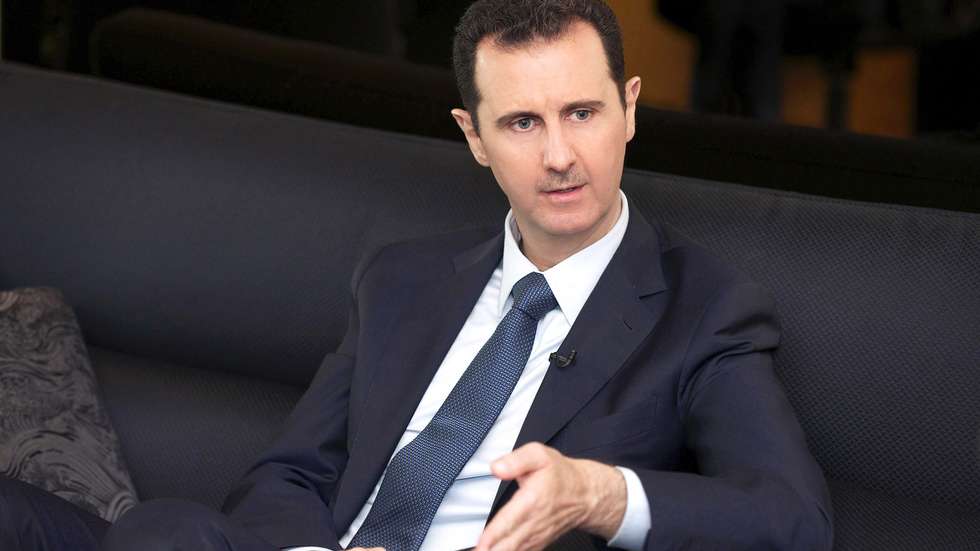
Der Spiegel Interviews Bashar al-Assad: WEST Supported al-Qaeda For 10 Years
President Bashar al-Assad said that all the political decisions that have been taken by the west in the last ten years have been in support of al-Qaeda, intentionally or inadvertently.
In an interview with the German Der Spiegel News Magazine, President al-Assad said that through Western support, now there are thousands of al-Qaeda fighters from 80 countries in Syria.
Following is the full text of the interview:
Click on Image to Enlarge
Der Spiegel: Mr. President, do you love your country?
President Assad: Of course, and in this I am no different from most people. This is not merely about emotions, but rather about what one can do for his country if he has the power and especially in times of crisis; and at this particular time, I realize more than ever how much I love my country and so I must protect it.
Der Spiegel: Wouldn’t you be more patriotic if you stepped down and allowed for negotiations over an interim government or for a cease-fire with the armed opposition?
President Assad: The Syrian people determine my fate; no other party can determine this issue. As for the armed opposition or factions, who do they represent – the Syrian people? If so, this can be proven only through the ballot box.
Pakistan: Pakistani media reported that the retirement announcement by Chief of Army Staff (COAS) General Ashfaq Pervez Kayani was a surprise. Kayani said, “My tenure ends on 29th November 2013. On that day I will retire.” He made the public statement to quell speculation that he might seek extension.
The post of the Chairman, Joint Chiefs of Staff Committee (CJCSC) also is vacant. The outgoing CJCSC General Khalid Shameem Wynne retired on 7 October, after 42 years of service.
In the statement today, Prime Minister Sharif said that while expectations regarding the announcement of the successor to the outgoing CJCSC before 8 October were reasonable, the issue needed comprehensive consideration due to the fact that the office of the COAS also was becoming vacant on 29 November.
Harvard National Security Journal (2014 Forthcoming)
Abstract:
Does it really matter, from a legal perspective, whether the U.S. government continues to maintain that it is in an armed conflict with al Qaeda? Critics of the status quo regarding the use of lethal force and military detention tend to assume that it matters a great deal, and that shifting to a postwar framework will result in significant practical change. Supporters of the status quo tend to share that assumption, and oppose abandoning the armed-conflict model for that reason. But both camps are mistaken about this common premise. For better or worse, shifting from the armed-conflict model to a postwar framework would have far less of a practical impact than both assume.
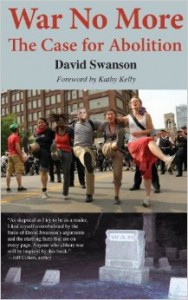
As I write this, in September 2013, something extraordinary has just happened. Public pressure has led the British Parliament to refuse a prime minister's demand for war for the first time since the surrender at Yorktown, and the U.S. Congress has followed suit by making clear to the U.S. president that his proposed authorization for war on Syria would not pass through either the Senate or the House.
Now, this may all fall apart in a week or a month or a year or a decade. The forces pressing for a war on Syria have not gone away. The civil war and the humanitarian crisis in Syria are not over. The partisan makeup of the Parliament and the Congress played a role in their actions (although the leaders of both major parties in Congress favored attacking Syria). Foreign nations' intervention played a role. But the decisive force driving governments around the world and U.S. government (and military) insiders to resist this war was public opinion. We heard the stories of children suffering and dying in Syria, but we rejected the idea that killing more Syrians with U.S. weapons would make Syria better off.
Those of us who believe that we should always have the right to reject our government's arguments for war should feel empowered. Now that it's been done, we cannot be told it's impossible to do it again … and again, and again.
Amazon Page
In the space of a day, discussions in Washington, D.C., shifted from the supposed necessity of war to the clear desirability of avoiding war. If that can happen once, even if only momentarily, why can it not happen every time? Why cannot our government's eagerness for war be permanently done away with? U.S. Secretary of State John Kerry, who led the unsuccessful marketing campaign for an attack on Syria, had famously asked, many years earlier, during what the Vietnamese call the American War, “How do you ask a man to be the last man to die for a mistake?” We have it within our power to make war a thing of the past and to leave Secretary Kerry the last man to have tried to sell us a dead idea.
(An argument will be made that the threat of war aided diplomatic efforts to disarm the Syrian government. It should not be forgotten that when Kerry suggested that Syria could avoid a war by handing over its chemical weapons, everyone knew he didn't mean it. In fact, when Russia called his bluff and Syria immediately agreed, Kerry's staff put out this statement: “Secretary Kerry was making a rhetorical argument about the impossibility and unlikelihood of Assad turning over chemical weapons he has denied he used. His point was that this brutal dictator with a history of playing fast and loose with the facts cannot be trusted to turn over chemical weapons, otherwise he would have done so long ago. That's why the world faces this moment.” In other words: stop getting in the way of our war! By the next day, however, with Congress rejecting war, Kerry was claiming to have meant his remark quite seriously and to believe the process had a good chance of succeeding.)
In this book I make the case outlined in the four section titles: War can be ended; War should be ended; War is not going to end on its own; We have to end war.
The August chemical weapons attack in the Syrian capital’s suburbs was done by a Saudi Arabian black operations team, Russian diplomatic sources have told a Russian news agency.
“Based on data from a number of sources a picture can be pieced together. The criminal provocation in Eastern Ghouta was done by a black op team that the Saudi’s sent through Jordan and which acted with support of the Liwa Al-Islam group,” a source in the diplomatic circles told Interfax.
The attack and its consequences had a huge impact on the Syrian situation, another source said.
“Syrians of various political views, including some opposition fighters, are seeking to inform diplomats and members of international organizations working in Syria what they know about the crime and the forces which inspired it,” he told the agency.
Liwa Al-Islam is an Islamist armed group operating near Damascus headed by the son of a Saudi-based Salafi cleric. The group claimed responsibility for the bombing of a secret governmental meeting in Damascus in July 2012 that killed a number of top Syrian officials, including Defense Minister Dawoud Rajiha, his deputy Asef Shawkat, and Assistant Vice President Hassan Turkmani.
The allegations mirror a number of earlier reports, which pointed to Saudi Arabia as the mastermind behind the sarin gas attack, which almost led to US military action against Syrian government. Proponents of this scenario say intelligence services in Riyadh needed a false flag operation to provoke an American attack in Syria, which would tip the balance in favor of the armed opposition supported by Saudi Arabia.
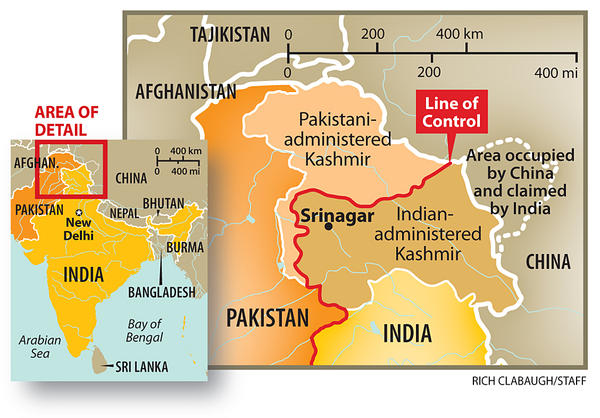
India-Pakistan: Indian military authorities report a week-long series of gun battles has been taking place in the central region of the Line of Control in Kashmir. Some 30 to 40 fighters crossed the Line on 24 September, up to 12 of whom have been killed by Indian soldiers. Five Indian soldiers have been wounded.
The infiltrators holed up in an abandoned village, which appears to be the location of the gun fights.
Although General Officer Commanding of the Army's 15 Corps Lt Gen Gurmit Singh had said it will be premature to say whether the Pakistan Army was involved in infiltration of militants, he said there were definite indications that some special troops were part of it.
“I can only say, analyzing the methodology of this infiltration, it was not a pure infiltration. It was a BAT [Border Action Team]-cum-infiltration. The number of militants who attempted this infiltration was rather large. In fact, Wednesday night 10 to 12 militants tried to sneak into the cordoned off area from across (the Line of Control).”
Pakistani authorities deny that an infiltration occurred.
Comment: A Border Action Team is a mixed unit of Pakistan Army special forces commandos and irregular forces including terrorists or Kashmiri militants. Allmost every time the top political leaders have a cordial meeting, a shooting incident occurs along the Line of Control.