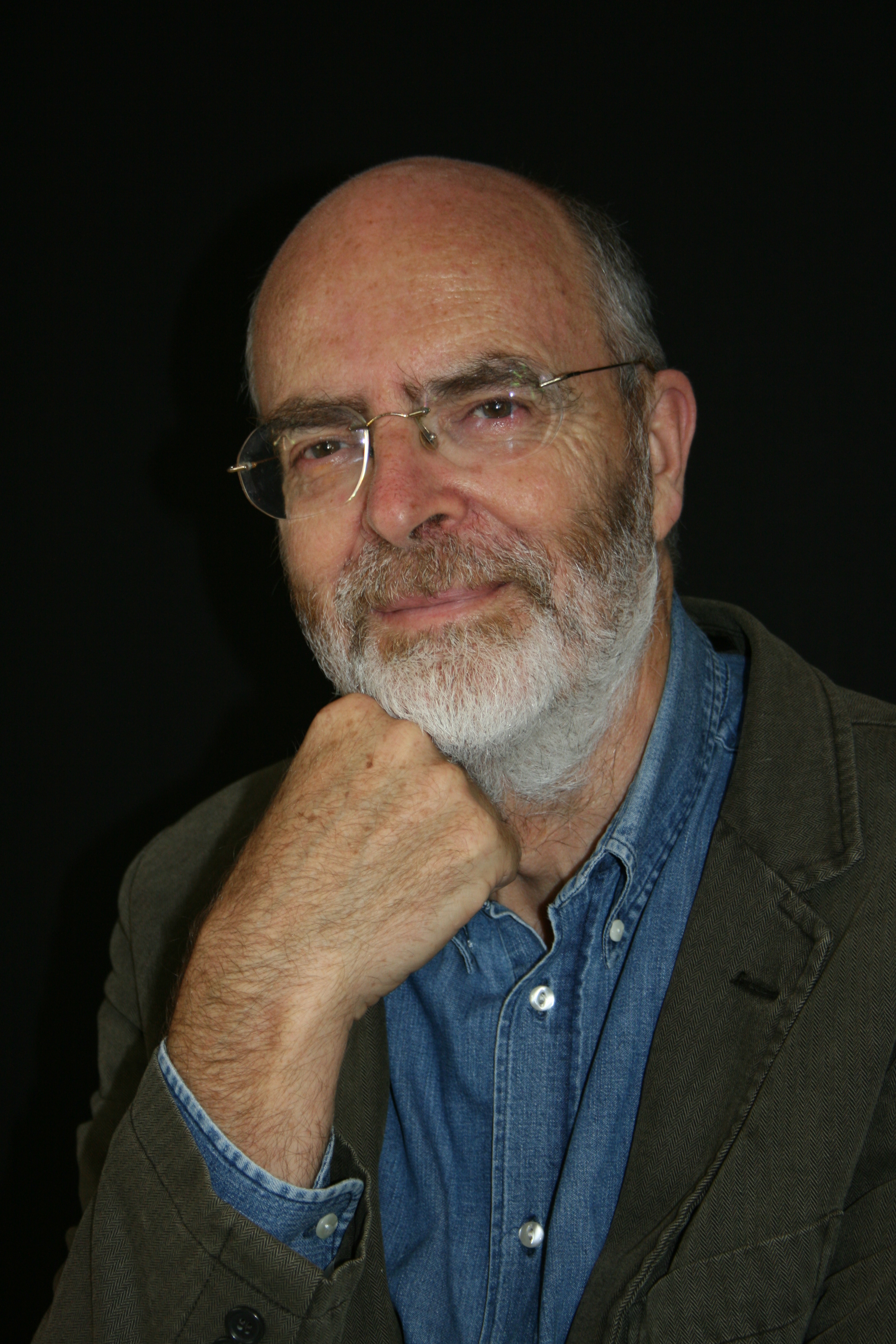
Berto Jongman: Breaking the Cycle of Counterinsurgency

Earth Intelligence, Peace Intelligence
Berto Jongman
Berto Jongman

Breaking the Cycle of Counterinsurgency

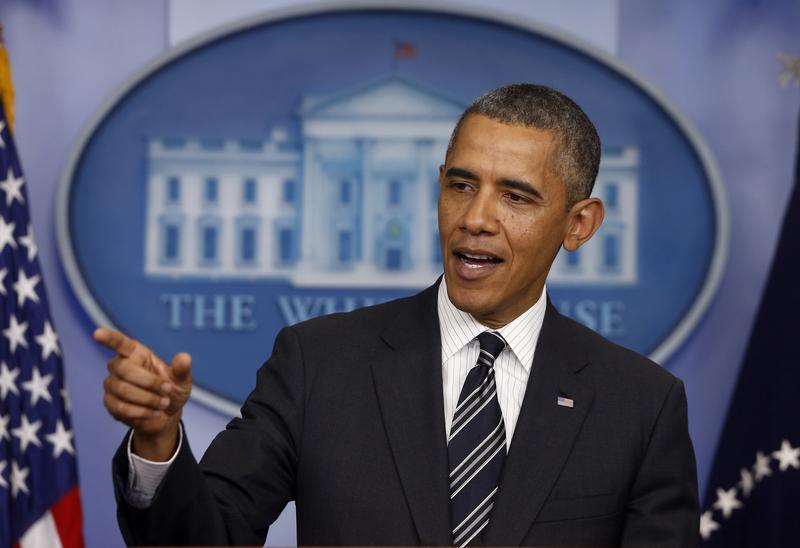
This September marked a potential turning point in America’s long and seemingly bottomless appetite for war. The Obama administration made a pitch for U.S. military intervention against Syria, and the American public didn’t buy it. Across the country, people demonstrated and wrote and prodded their congressional representatives to vote against air strikes, forcing the president to backtrack and agree to pursue a Russian plan to have Syria’s president Bashir al-Assad turn over his chemical weapons stockpiles. This turn of events came just days before the 12th anniversary of 9/11 and may mark the end of an era in which the U.S. public gives carte blanche support to foreign military intervention.

The United States could take this critical moment to learn from the mistakes of its recent past. In both Iraq and Afghanistan, the two full-scale wars of the era, the course of intervention followed a similar path. First came the military strikes. These were followed by the military-backed regime changes that installed Hamid Karzai and Nouri Al-Maliki. And then came the massive counterinsurgency campaigns that were launched after these governments failed to gain the full support of their people. As George Ball, undersecretary of state in the Kennedy and Johnson administrations, warned of Vietnam, “Once on the tiger’s back, we cannot be sure of picking the place to dismount.” In other words, once the path of intervention begins, it’s difficult to stop.

There is also a pattern of counterinsurgency in the larger course of history. The moment of the supposedly limited strike tends to be one of relative war fatigue, which incrementally erodes as U.S. involvement deepens and the war escalates. War fatigue then returns after the cost in dollars and American lives becomes intolerable. A generation later, the cycle begins again.

Taking COIN Out of Circulation

Read full article.

Continue reading “Berto Jongman: Breaking the Cycle of Counterinsurgency”
Gregory Sinaisky: HIST 3 APR 2003 Detecting Disinformation, Without Radar [Truth Specific, Lies Vague]

Collective Intelligence, Commercial Intelligence, Cultural Intelligence, Earth Intelligence, Peace Intelligence

ministry of disinformationDetecting disinformation, without radar
By Gregory Sinaisky [Pseudonym]

Asia Times, 3 April 2003

How to tell genuine reporting from an article manufactured to  produce the desired propaganda effect? The war in Iraq provides us plenty of interesting samples for a study of disinformation techniques.

Take the article “Basra Shiites Stage Revolt, Attack Government Troops”, published on March 26 in The Wall Street Journal Europe. Using its example, we will try to arm readers with basic principles of disinformation analysis that hopefully will allow them in the future to detect deception.

The title of the article sounds quite definitive. The article starts, however, with the mush less certain “Military officials said the Shiite population of Basra … appeared to be rising”. “Military officials” and “appeared to be” should immediately raise a red flag for a reader, especially given a mismatch with such a definitive title. Why “officials”? Were they speaking in a chorus? Or was each one providing a complementary piece of information? A genuine report certainly would tell us this and also name the officials or at least say why they cannot be identified.

Why “appears to be”? There are always specific reasons why something “appears to be”. For example, information about the uprising may be uncertain because it was supplied by an Iraqi defector who was not considered trustworthy and has not been confirmed from other sources. Again, every professional reporter understands that his job is to provide such details and it is exactly such details that make his reporting valuable, interesting, and memorable. If such all-important details are missing, this is a sure sign to suspect intentional disinformation.

Continue reading “Gregory Sinaisky: HIST 3 APR 2003 Detecting Disinformation, Without Radar [Truth Specific, Lies Vague]”

Penguin: All US Military Precision Systems Subject to Jamming & Misdirection — Is This the Real Reason Elective Attack on Syria Was Called Off?

Cultural Intelligence, Peace Intelligence
Who, Me?
Who, Me?

SPEAKING FREELY
Lost Cruise fears save Obama on Syria
By Gregory Sinaisky

Asia Times, 3 October 2013

Speaking Freely is an Asia Times Online feature that allows guest writers to have their say. Please click here if you are interested in contributing.

US President Barack Obama's reversal on the bombing of Syria took the world by surprise. For a long time, he was talking about the use of chemical weapons by Bashar Al-Assad's regime being “a red line”. There was a feeling that Obama's talk about chemical weapons use in Syria was like a proverbial “Chekhov's gun” – in a well-written play, if a gun is seen in the first act hanging from a wall, in the last act it must shoot.

Obama certainly knew for a long time that most Americans and all others were against involvement in Syria. He himself said that he was not obliged to ask the Congress permission for a remote-control war. Then suddenly the reversal. It certainly looks like something happened that he did not expect.

Nobody in the mainstream media had analyzed technical aspects of the attack, and nobody to my knowledge doubted the ability of America's armed forces to execute it. Yet this author's analysis, based mainly on data from open sources and technical common sense, shows that the reason for this reversal can very likely be found in limitations in military capability to execute a “clean” overwhelming strike on Syria.

Continue reading “Penguin: All US Military Precision Systems Subject to Jamming & Misdirection — Is This the Real Reason Elective Attack on Syria Was Called Off?”

Marcus Aurelius: SOF O-6 Sends – A World Where No One Listens to America

Cultural Intelligence, Peace Intelligence
Marcus Aurelius
Marcus Aurelius

All following appears consistent with Dinesh DiSousa's books and the film that came from them, “2016:  Obama's America,” which assert that POTUS is a rampant anticolonialist whose principal objective is to reduce America to the status of a Third World nation rather than to facilitate the nations of the Third World to achieving levels of political/social/economic development comparable to those of First World nations.

From: [RETIRED SENIOR US SPECIAL OPERATIONS OFFICER]
To: [REDACTED]
Sent: 02-Oct-13
Subj: A World Where No One Listens to America

Yes We Can.  Maybe.  Well,...
Yes We Can. Maybe. Well,…I have to check with Wall Street…

A World Where No One Listens to America

Dilip Hiro

Real Clear World, September 30, 2013

What if the sole superpower on the planet makes its will known — repeatedly — and finds that no one is listening? Barely a decade ago, that would have seemed like a conundrum from some fantasy Earth in an alternate dimension. Now, it is increasingly a plain description of political life on our globe, especially in the Greater Middle East.

In the future, the indecent haste with which Barack Obama sought cover under the umbrella unfurled by his Russian counterpart, Vladimir Putin, in the Syrian chemical weapons crisis will be viewed as a watershed moment when it comes to America's waning power in that region. In the aptly named “arc of instability,” the lands from the Chinese border to northern Africa that President George W. Bush and his neocon acolytes dreamed of thoroughly pacifying, turmoil is on the rise. Ever fewer countries, allies, or enemies, are paying attention, much less kowtowing, to the once-formidable power of the world's last superpower. The list of defiant figures — from Egyptian generals to Saudi princes, Iraqi Shiite leaders to Israeli politicians — is lengthening.

The signs of this loss of clout have been legion in recent years. In August 2011, for instance, Syrian President Bashar al-Assad ignored Obama's unambiguous call for him “to step aside.” Nothing happened even after an unnamed senior administration official insisted, “We are certain Assad is on the way out.” As the saying goes, if wishes were horses, beggars would ride.

Similarly, in March 2010, Obama personally delivered a half-hour-long chewing out of Afghan President Hamid Karzai, a politician Washington installed in office, on the corruption and administrative ineptitude of his government. It was coupled with a warning that, if he failed to act, a cut in U.S. aid would follow. Instead, the next month the Obama administration gave him the red carpet treatment on a visit to Washington with scarcely a whisper about the graft and ill-governance that continues to this day.

In May 2009, during his meeting with Israeli Prime Minister Benjamin Netanyahu, President Obama demanded a halt to the expansion of Jewish settlements on the West Bank and in occupied East Jerusalem. In the tussle that followed, the sole superpower lost out and settlement expansion continued.

These are among the many examples of America's slumping authority in the Greater Middle East, a process well underway even before Obama entered the Oval Office in January 2009. It had, for years, been increasingly apparent that Washington's wars in Afghanistan and Iraq, along with several lesser campaigns in the Global War on Terror, were doomed. In his inaugural address, Obama swore that the United States was now “ready to lead the world.” It was a prediction that would be proven disastrously wrong in the Greater Middle East.

Afghanistan and Pakistan

Continue reading “Marcus Aurelius: SOF O-6 Sends – A World Where No One Listens to America”

Afghanistan Reaching for Cricket World Cup — Whips Kenya, One Game to Go

Cultural Intelligence, Peace Intelligence

Afghanistan Targeting 2015 Cricket World Cup

Posted by:

Posted date: October 01, 2013 In: Sports | comment : 0 Comments

Afghanistan can qualify for the 2015 Cricket World Cup if they beat Kenya on Wednesday October 2nd   and Friday October 4th in the final two games at the World Cricket League Championship in the United Arab Emirates (UAE).

Ireland has already qualified from the competition as the top team and although the Afghans are fourth in the table of eight sides they can overtake UAE and Netherlands with two One Day International (ODI) victories in Sharjah to take the second qualifying spot.

If Aghanistan does not win both games, UAE will go to the 2015 tournament in Australia and New Zealand.

The Afghans and Kenyans have met four times in ODIs and each won twice. Afghanistan has won seven of its 12 championship matches in Sharjah, while Kenya has won five, including victories over both Ireland and UAE.

The coach of the Afghan side, former Pakistan international Kabir Khan, is confident.

The bottom six teams in the Sharjah competition still have a chance of qualifying for the 2015 tournament alongside other squads at next year’s ICC Cricket World Cup Qualifier in New Zealand, which will determine the last two teams to go through.

Afghanistan whip Kenya to dent UAE’s hopes

Continue reading “Afghanistan Reaching for Cricket World Cup — Whips Kenya, One Game to Go”

Anthony Judge: Global Security from an Interplanetary Perspective

Collective Intelligence, Cultural Intelligence, Earth Intelligence, Extraterrestial Intelligence, Peace Intelligence
Anthony Judge
Anthony Judge

Global Security from an Interplanetary Perspective

Interplanetary Security Council — Resolution on Planet Earth

27 Mres'klon 4013

Following is an unofficial translation of the purported resolution of the Interplanetary Security Council regarding the Planet Earth. A corrected translation may be anticipated.

This unusual document appears to follow the pattern of earlier purported resolutions of the Interplanetary Security Council. It is made available here because of its extraordinary structural resemblance to the resolution agreed by the UN Security Council on 27 September 2013 — consequent on various calls for an exceptionally “strong resolution” (UK, US and France call for ‘strong' UN resolution on Syria, The Guardian, 16 September 2013). As with the earlier documents of the purported Planetary Security Strategy of the Nibiruan Union, and the Nibiru-drafted Resolution on Earth, it is unclear whether the UN Resolution (2013) is merely an adaptation of the following Nibiruan document — correspondingly “strong” in its wording regarding Planet Earth. As such it is unclear whether it is reflecting an implementation of the policy of the Nibiruan Union — or whether the document outlining the future intervention in Syria on behalf of the UN, engendered a Nibiruan articulation of its policy towards other planets such as Earth — in defence of its own sovereign interests. Such reciprocal articulation might then constitute a case of policy engendered by morphogenetic field resonance effects. This would also be consistent with the classical injunction displayed outside the UN Security Council: ‘Do Unto Others as You Would Wish That Others Should Do Unto You' and may be the principle underlying all interplanetary policy. It would also be consistent with a Hermetic aphorism: As Above, So Below.

EXTRACT

Continue reading “Anthony Judge: Global Security from an Interplanetary Perspective”

NATO Watch: UK NATO Summit in 2014 to ‘lock in’ commitments on Afghanistan, burden-sharing and Smart Defence

Peace Intelligence

nato watchUK NATO Summit in 2014 to ‘lock in' commitments on Afghanistan, burden-sharing and Smart Defence

By Nigel Chamberlain, NATO Watch

2 October 2013

www.natowatch.org Promoting a more transparent and accountable NATO

Announcing that Britain will host the special NATO Summit in 2014 to coincide with the withdrawal from Afghanistan, Prime Minister David Cameron said on 27 September:

The summit will also be about the future of our alliance. Britain has always been at the forefront of shaping the alliance, from its start in 1949 to NATO's current operations, and the 2014 summit will be critical in ensuring NATO remains a relevant, modern, adaptable force fit for the 21st century.

Continue reading “NATO Watch: UK NATO Summit in 2014 to ‘lock in' commitments on Afghanistan, burden-sharing and Smart Defence”

noble gold