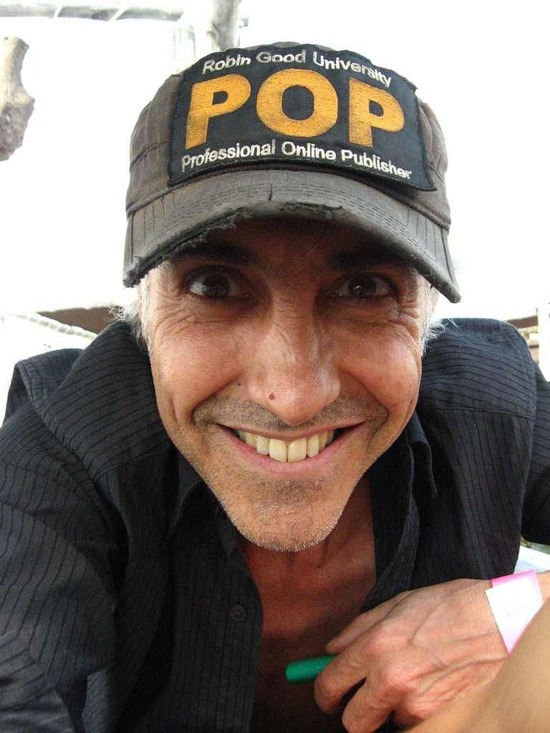
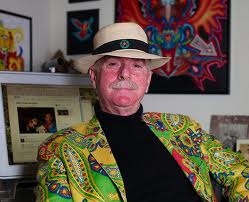
On stage, McGrath reiterated: “I think that open source intelligence is one of our biggest assets in understanding secret surveillance program because it’s something that can’t be shut down and it’s something that can be collected in a very decent decentralized fashion,” he said. “We have the potential to actually build a surveillance state that is a decentralize check on the surveillance state based on this open data.”
I am very pleased to see new interest in my original posts on The Human Factor, augmented by thoughtful contributions from others. The most popular is below, the rest are lined up below the fold.
Technology is the glue that connects programs and people, and helps information flow in the public sector, making it an essential component of everyday public sector operations. That puts the Chief Information Officer (CIO) in a unique position to take on the important job of integrating decision-makers and stakeholders.
At the recent International Journalism Festival in Perugia, Italy, Jeff Jarvis, Professor of Journalism at CUNY, gave a keynote speech that provides valuable insight and advice as to where the future of news and journalism are headed.
Jeff Jarvis' Key 15 Takeaways on the Future of Journalism:
Attached below is a masters thesis written by Major Paul J. Tremblay,** USMC as part of his study in the Command and Staff College of the U.S. Marine Corps. In my opinion, Tremblay has produced precisely the kind idea expansion that Colonel Boyd was trying to inspire with his Discourse.
P.J. Tremblay’s thesis aims to clarify what is perhaps the single most misunderstood aspect of Boyd’s theory of interacting OODA loops: the confusion of absolute speed with relative quickness, particularly as it applies to agility in Orientation and Re-Orientation. Tremblay’s aim is to improve the Marine Corps training curriculum by clarifying Boyd’s ideas and laying out a way to better incorporate them in progressively more comprehensive ways at each level in the Marine Corps’ educational system, from the lowest to the highest level.
PJ’s thesis is a case study in the kind of intellectual development and stimulation that John Boyd was trying to achieve by leaving the Marine Corps Research Center with the complete archive of his briefings and note. Boyd, an honorary Marine, would say, “Semper Fidelus, PJ.”
Digital Humanitarians are responding in full force to the devastating earthquake that struck Nepal. Information sharing and coordination is taking place online via CrisisMappers and on multiple dedicated Skype chats. The Standby Task Force (SBTF), Humanitarian OpenStreetMap (HOT) and others from the Digital Humanitarian Network (DHN) have also deployed in response to the tragedy. This blog post provides a quick summary of some of these digital humanitarian efforts along with what’s coming in terms of new deployments.
The meta-learning here — in addition to the course material — is about cultivating a co-learning community online. I’m planning the sixth iteration of Introduction to Cooperation Theory May 20-July 10. You can find out about it at http://bit.ly/cooperationclass. If you are interested in how I’ve approached co-learning in my years at UC Berkeley and Stanford, I’m doing a Hangout on Air with eight of my best former students to talk about co-learning then, now, and in the future, April 30, 9 AMhttp://connectedlearning.tv/co-learning-hybrid-environment.