Non-naturally occurring radionuclides from the Fukushima-Daiichi nuclear power plant’s triple meltdown last year radioactively contaminated the entire northern hemisphere within days and the US west coast bore a significant brunt of so called hot particles, an independent scientific paper released yesterday claims. Charles Digges, 19/09-2012
US government environmental monitoring agencies have either declared as safe, refused to comment on, or – say several independent researchers – vastly understated what impacts, if any, this could have for America’s western coastal population. Significant omissions in data reporting and hobbling of radioactive monitoring systems, say many, make it seem unlikely that hard government facts will be forthcoming to support evidence presented by independent researchers.
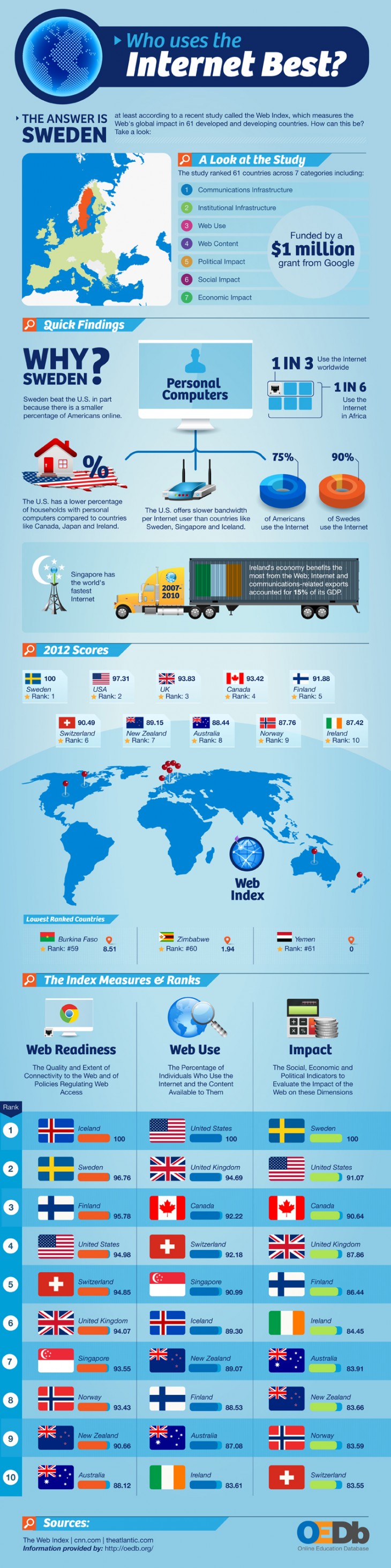
Phi Beta Iota: Open Everything (especially OpenBTS, Open Cloud, Open Data, Open Hardware, Open Software, and Open Standards) are the next big leap, or the Internet of Things will be in the service of the elite rather than the 5 billion poor whose entrepreneurial energy can only be harnessed when ALL of them have a free cell phone with Internet access and can receive a free education one cell call at a time.
Also vital in the development of Internet IMPACT as opposed to ACCESS, is the emergence of whole system analytics and true cost economics. Only when ALL have access to true cost information can corruption begin to be detected and eradicated supply chain by supply chain. The nuclear and tobacco and seed industries are three examples of how government corruption and media lies have created massive profit for the few with massive externalized costs to the many.
Imagine having all the downsides of Big Brother and none of the benefits: That's what you get with the Department of Homeland Security's vast network of “fusion” centers, according to a damning new report by the Senate's bipartisan Subcommittee on Investigations.
The fusion centers, described by Janet Napolitano as “one of the centerpieces of our counterterrorism strategy,” allegedly invade the privacy of Americans while producing “shoddy” reports that are typically “irrelevant” and “useless.” It's the sort of report that will find a home on every Ron Paul fan forum and, according to reporters, with good reason: The 77 centers, which have cost an estimated $289 million to $1.4 billion, have a pretty questionable track record. Here are some of the more surprising elements journalists have dug up from the report:
Those arguing for more defense spending lean heavily on misinformation to make their case; many of the critics–previously including myself–have relied on myth. The first of a two part series starts today in Time's Battleland blog at http://nation.time.com/2012/10/01/adventures-in-babbleland-desperate-rhetoric-for-mundane-times/. Tomorrow's piece probes further into the myth of American military superiority by looking into one of its prime hardware examples.
Imposing itself only infrequently on the consciousness of the noise-makers who dominate presidential campaign coverage on TV and in the newspapers, the defense budget has been a second-tier issue in the 2012 elections.
That may properly be so, but the inattention of the top of the line political pontificators, who can be excused for not understanding the issue except at the most superficial level, has not elevated the quality of the debate at the lower tier.
Leaving the discussion to people like the chairman and ranking members of the House and Senate Armed Services Committees, sitting and former secretaries of defense, and the retired chairman of the Joint Chiefs of Staff has-surprisingly only to some-left us with a debate on the Pentagon budget that is hysterical, misinformed, and, most of all, misinforming. Moreover, many of the critics of these histrionics from the other side, including myself, have been so wedded to myths that both parties should be seen as the source of the dismal babble, not just the one.
Harvard Business Review | 2:00 PM September 20, 2012
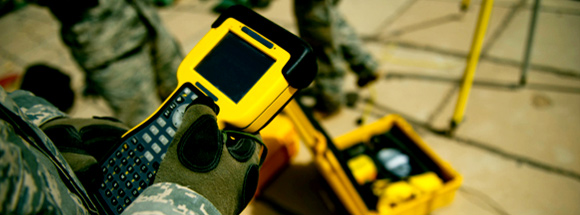
For soldiers in the field, immediate access to — and accurate interpretation of — real-time imagery and intelligence gathered by drones, satellites, or ground-based sensors can be a matter of life and death.
Capitalizing on big data is a high priority for the U.S. military. The rise in unmanned systems and the military's increasing reliance on intelligence, surveillance, and reconnaissance technologies have buried today's soldiers and defense professionals under a mountain of information. Since 9/11 alone, the amount of data captured by drones and other surveillance technology has increased a jaw-dropping 1,600%. And this avalanche of data will only increase, since the number of computing devices the Armed Services have in play is expected to double by 2020.
Rising to this challenge, defense companies have made major strides in image processing and analysis. Companies like our own have deployed technologies and software solutions for troops in Afghanistan that help soldiers quickly make sense of imagery and video feeds captured by unmanned systems flying overhead. And we are working on enhancing such technologies to decrease the lag time between gathering and interpreting data.
The financial and banking industries are on high alert tonight as a massive cyberattack continues, with potentially millions of customers of Bank of America, PNC and Wells Fargo finding themselves blocked from banking online.
“There is an elevated level of threat,” said Doug Johnson, a vice president and senior adviser of the American Bankers Association. “The threat level is now high.”
“This is twice as large as any flood we have ever seen,” said Dick Clarke, an ABC News consultant and former cybersecurity czar.
Sources told ABC News that the so-called denial of service attacks had been caused by hackers from the Middle East who had secretly transmitted signals commandeering thousands of computers worldwide.
A group of purported hackers in the Middle East has claimed credit for problems at the websites of both banks, citing the online video mocking the founder of Islam. One security source called that statement “a cover” for the Iranian government’s operations.
The attack is described by one source, a former U.S. official familiar with the attacks, as being “significant and ongoing” and looking to cause “functional and significant damage.” Also, one source suggested the attacks were in response to U.S. sanctions on Iranian banks.
Senior U.S. officials acknowledge that Iranian attacks have been the subject of intense interest by U.S. intelligence for several weeks. Last week, the Joint Chiefs of Staff’s Intelligence Directorate, known as J-2, confirmed continuing Iranian cyber attacks against U.S. financial institutions in a report described as “highly classified.”