Back in October 2011 I first wrote about Italian engineer, Andrea Rossi, and his E-Cat project, a device that produces heat through a process called a Low Energy Nuclear Reaction (LENR).
Very briefly, LENR, otherwise called cold fusion, is a technique that generates energy through low temperature (far lower than hot fusion temperatures which are in the range of tens off thousands of degrees) reactions that are not chemical. Most importantly, LENR is, theoretically, much safer, much simpler, and many orders of magnitude cheaper than hot fusion. Rather than explaining LENR in detail here please see my original posting for a more complete explanation.
My next post on this topic was here on Forbes a few days later and, as the labyrinthine and occasionally ridiculous saga developed, I tried to sort fact from fiction in a series of posts (see the list at the end of this posting) which covered everything from unconvincing demos, through an Australian businessman offering Rossi $1 million to show independently tested proof, to other players in the LENR market showing interesting results.
Massive Open Online Courses might seem like best way to use the Internet to open up education, but you’re thinking too small. Technology can turn our entire lives into learning experiences.
This probably sounds familiar: You are with a group of friends arguing about some piece of trivia or historical fact. Someone says, “Wait, let me look this up on Wikipedia,” and proceeds to read the information out loud to the whole group, thus resolving the argument. Don’t dismiss this as a trivial occasion. It represents a learning moment, or more precisely, a microlearning moment, and it foreshadows a much larger transformation–to what I call socialstructed learning.
Socialstructed learning is an aggregation of microlearning experiences drawn from a rich ecology of content and driven not by grades but by social and intrinsic rewards. The microlearning moment may last a few minutes, hours, or days (if you are absorbed in reading something, tinkering with something, or listening to something from which you just can’t walk away). Socialstructed learning may be the future, but the foundations of this kind of education lie far in the past. Leading philosophers of education–from Socrates to Plutarch, Rousseau to Dewey–talked about many of these ideals centuries ago. Today, we have a host of tools to make their vision reality.
Press TV has conducted an interview with Dr. Kevin Barrett, with the Muslim-Jewish-Christian Alliance from Wisconsin, to shed more light on Zionist settlers’ protests against the austerity measures implemented by the Tel Aviv regime.
What follows is a rough transcription of the interview.
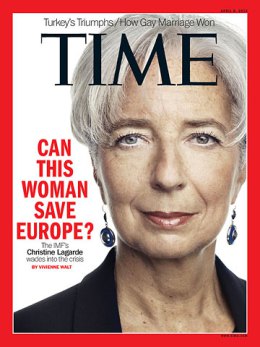
The head of the International Monetary Fund arrived in the dock of a Paris courtroom today as she braced herself to be formally charged with embezzlement and fraud. Christine Lagarde’s humiliation is not only a massive personal blow which could lead to her resignation, but one which will plunge the world’s banking system into further ignominy. The clearly nervous 57-year-old said nothing to reporters as she entered the Court of Justice of the Republic, a special tribunal set up to judge the conduct of France’s government ministers, shortly after 8.30am. Lagarde faces a maximum sentence of 10 years in jail if found guilty of the very serious charges.
It was when she was President Nicolas Sarkozy’s finance minister that she is said to have authorised a 270 million pounds payout to one of his prominent supporters, so abusing her government position. The money went to Bernard Tapie, a convicted football match fixer and tax dodger who supported Lagarde and Sarkozy’s UMP party. It came after Dominque Strauss-Kahn, another senior French politician, was sacked as IMF chief following allegations that he attempted to rape a chambermaid in a New York hotel. Ms Lagarde began campaigning to succeed Mr Strauss-Kahn soon after his arrest for the alleged crime.
Click on Image to Enlarge
But now it is Ms Lagarde, a lawyer and retired synchronised swimming star, who is facing a long court process of her own, as well as a possible jail sentence. The scandal will not only pile further shame on France’s political class, but worry politicians and bankers desperately trying to resolve the global financial crisis. Mr Tapie, the former head of adidas in France, claims he was cheated out of millions by Credit Lyonnais bank when the sports kit empire was sold in 1993. In 2007, Ms Largarde ended the epic dispute by ordering a panel of judges to arbitrate and, in turn, they awarded Tapie the damages. Opposition MPs were furious, with former presidential candidate Francois Bayrou accusing Ms Lagarde of ‘dipping into the taxpayers’ pocket for a private beneficiary.’
Mr Strauss-Kahn’s Socialist Party also accused Ms Lagarde of improper conduct, pointing to the fact that Mr Tapie was a vocal supporter of Sarkozy. Ms Lagarde’s lawyer, Yves Repiquet, said the inquiry was ‘in no way incompatible’ with her new job, and expected the case to be dismissed. Ms Lagarde denies any wrongdoing, saying before today’s court appearance: ‘If it’s decided to continue with this inquiry it won’t be particularly surprising. Personally, it doesn’t worry me at all – I didn’t benefit personally’. But it has been widely reported in the French media that investigators intend to charge her with fraud and embezzlement. Le Monde said that magistrates had already written to Mrs Lagarde to tell her that she should not expect any special treatment because of her high-profile international job.
Phi Beta Iota: If a panel of judges approved the payment amount, it would appear Madama Lagarde was simply acting as a government agent in settling the claim. When combined with the new Russia-Berlin-French axis, and the new plans of the BRICS to create their own development bank that by-passed the World Bank and the IMF (and all of their predatory inter-locked “conditions,” one has to wonder if we are at the beginning of a global campaign to destroy the Western financial system that has been so nakedly amoral — legalized crime.
The biggest emerging markets are uniting to tackle under-development and currency volatility with plans to set up institutions that encroach on the roles of the World Bank and International Monetary Fund.
The leaders of the so-called BRICS nations — Brazil, Russia, India, China and South Africa — are set to approve the establishment of a new development bank during an annual summit that began today in the eastern South African city of Durban, officials from all five nations say. They will also discuss pooling foreign-currency reserves to ward off balance of payments or currency crises.
“The deepest rationale for the BRICS is almost certainly the creation of new Bretton Woods-type institutions that are inclined toward the developing world,” Martyn Davies, chief executive officer of Johannesburg-based Frontier Advisory, which provides research on emerging markets, said in a phone interview. “There’s a shift in power from the traditional to the emerging world. There is a lot of geo-political concern about this shift in the western world.”
The BRICS nations, which have combined foreign-currency reserves of $4.4 trillion and account for 43 percent of the world’s population, are seeking greater sway in global finance to match their rising economic power. They have called for an overhaul of management of the World Bank and IMF, which were created in Bretton Woods, New Hampshire, in 1944, and oppose the practice of their respective presidents being drawn from the U.S. and Europe.
A broader context is required here. Barack Obama was elected in November of 2008. There is an end of year lull, then these reports are started in January of 2009, after Hillary Clinton was approved as Secretary of State. Obama left Robert Gates in place as Secretary of Defense. The QDR comes in first, closely followed by two companion reports. The White House then releases their National Security Strategy, advised in part by the DoD studies.
The NATO document involves the U.S. but it’s May release was timed to provide six months of review before the NATO summit that November in Lisbon. The July QDR Perspective was done at the behest of the Secretary of Defense in response to criticisms leveled at the QDR itself. The State Department issued it’s first Quadrennial Diplomacy & Development Review in December.
Obama’s win in November of 2012, then the nomination and approval of Secretary of Defense Hagel in February 2013 and Secretary of State John Kerry in March of 2013 are what set the stage for the next round of updates, due in the spring of 2014.
New Directions is just 178 pages and I chose to not read the nuclear and missile report portions, counting that as excess detail at this time. The seven reports themselves total 780 pages. I also noticed and curated the Quadrennial Homeland Security Review, which was released concurrent with the QDR in February of 2010. Since DHS is internal their report has no place in the assessment of our outward facing strategy.
I have roughly a nine month window to read and understand 958 pages of dense, high level material before the next update begins to arrive. I immediately see the usual set of issues that arise with any of our strategic planning.