
Jean Lievens: The Sharing Economy Will Thrive Only If Government Doesn’t Strangle It
03 Economy, Commercial Intelligence, Design
The Sharing Economy Will Thrive Only If Government Doesn't Strangle It
R. J. Lehmann
Reason.com, 2 August 2014
We're unlocking unthinkable amounts of capital and lawmakers stand in the way.
The so-called sharing economy is many things to many people. To Wall Street and Silicon Valley, firms like Uber and Airbnb offer tantalizing market capitalizations, the likes of which have not been seen since the go-go '90s. At the same time, political operatives see the emerging debates over regulation of ride-sharing and space-sharing as a potential opening for the libertarian right to assert their world view in urban politics for the first time in a long time.
See Also:
Five Principles for Regulating the Peer Production Economy
Regulation won't kill the sharing economy — we just need new rules.
SchwartzReport: Loss of Wildlife Increases Child Slavery – Holistic Analytics and True Cost Economics Absent
03 Economy, 03 Environmental Degradation, 11 Society, Earth Intelligence
This report illustrates that all life is interconnected and interdependent.
How Loss of Wildlife Leads to Child Slavery
NIINA HEIKKINEN and CLIMATEWIRE – Scientific American
What do child slavery in Ghana, Somali piracy and the illegal global ivory trade have in common? Their root causes can all be traced back to declining wildlife populations.
At least that's the theory of a group of researchers at the University of California, Berkeley, who looked at how wildlife loss impacts conflict in places where people depend on wildlife to survive.
Justin Brashares and his colleagues say that the way governments and international organizations respond to crimes like poaching often do not address the full “ecological, social and economic complexity of wildlife-related conflict.”
“We thought it was critical to connect the dots” among disciplines, said Brashares, the lead author of a paper published recently in the journal Science.
“If we don't provide people with livelihoods, if we don't change market dynamics, then we aren't going to win.”
Berto Jongman: No Drinking Water by 2040? Need Global Energy Paradigm Shift! Privatization is NOT the Answer
03 Environmental Degradation, 05 Energy, 12 Water
‘There Will Be No Water' by 2040? Researchers Urge Global Energy Paradigm Shift
Reports: World Faces ‘Insurmountable' Water Shortage
Common Dreams, 30 July 2014
The world risks an “insurmountable” water crisis by 2040 without an immediate and significant overhaul of energy consumption and demand, a research team reported on Wednesday.
“There will be no water by 2040 if we keep doing what we're doing today,” said Professor Benjamin Sovacool of Denmark's Aarhus University, who co-authored two reports on the world's rapidly decreasing sources of freshwater.
Graphic: How Much Water for Which Food?
01 Agriculture, 12 Water, Earth Intelligence, Earth Orientation, True Cost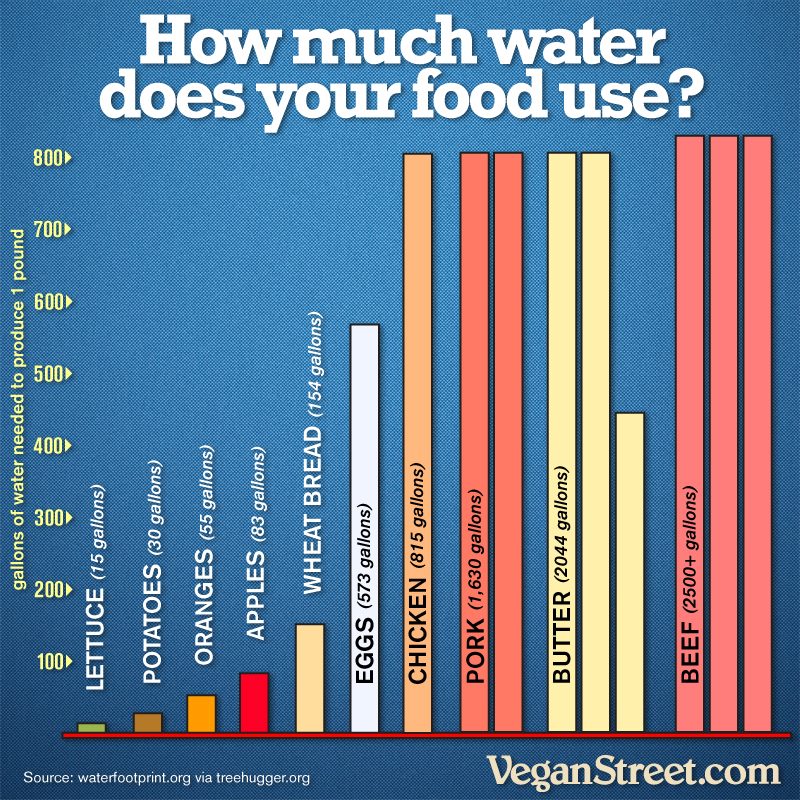
SchwartzReport: Top Agribusiness Companies Poisoning Clean Water with Unlimited Garbage and Pesticide Dumping
01 Agriculture, 03 Environmental Degradation, 12 Water, Commerce, Corruption, Earth Intelligence, True CostThis is one of the central failures of American corporate vampire capitalism. Because it only considers profit as a priority, polluting the water of a nation and putting the full spectrum of life at risk is no big deal, and they want to be allowed to continue it.
Top Agribusiness Food Companies Dumping Waste in Our Waters
ELIZABETH RENTER – Natural Society/Nation of Change
Companies like Tyson Foods, Cargill, Inc., and Perdue Farms Inc. dump their garbage-more than 206 million pounds of it-into our water almost every year and leave others to worry about the clean-up. Now, as the Environmental Protection Agency considers a rule to restore the Clean Water Act, these companies are pulling out all the stops to maintain their freedom to dump and pollute, regardless of the toxic outcomes.
John Boik: Advanced Economics – Economic Direct Democracy and Open Source Everything
03 Economy, 11 Society
It seems we are in basic agreement on the problems that society faces. You rightly emphasize the coercive nature of income inequality. And, IMHO, you rightly emphasize the role that open-source, open-data, open-design, widening-commons, etc. must play in a better, functional society.
Please allow me to explain the strategy behind my project. In a nutshell, the strategy is to develop a parallel financial–economic–business-
