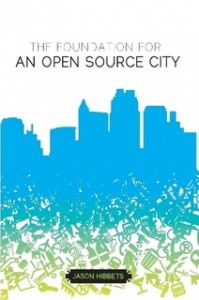
Explore the five elements of an open source city using Raleigh, North Carolina as a case study. See how the open source characteristics of collaboration, transparency, and participation are shaping the open government and open data movements. This book showcases the open source culture, government policies, and economic development happening in Raleigh and acts as a guide for other cities to pursue their open source city brand.
There's a world wide movement starting, to cover everyone's basic expenses. Imagine what this will do to free us up to actually participate in the political process, and to learn and teach … or to do that big project we always had to delay because we just couldn't find the time for it…
This once utopian vision is gaining ground, fast. A global network of academics, activists, non-governmental organisations (NGOs) and private groups are working towards the implementation of Basic Income Guarantees (BIGs) in some of the world's most impoverished regions. It is a small idea, both in terms of its simplicity and in terms of the sums of money involved. But it is having a big impact. In addition to reducing poverty and inequality, assessment results from pilot projects overwhelmingly indicate that providing a monthly income of only $10 to every person in some of the poorest communities on earth is good for business.
The rise of automatic document conversion could render vast amounts of data collected by government agencies useful. In their article, “Solving the Search Problem for Large-Scale Repositories,” GCN explains why this technology is a game-changer, and offers tips for a smooth conversion. Writer Mike Gross tells us:
In one particular case the cost of the automated process was less than one-tenth of the traditional process. Making content searchable, allowing for content to be reformatted and reorganized as needed, gives agencies tremendous opportunities to automate and improve processes, while at the same time improving workflow and providing previously unavailable metrics.
The goal is to build peer-to-peer platforms – physical, digital and institutional – to advance three main purposes: “living together (collaborative services), growing together (co-ventures), making together (co-production).” The CO-Mantova project may soon start a CO-Mantova Commons School.
Rachel Playforth introduces a new report on how digital technologies might contribute to or damage development agendas in the coming years. Through scenario development planning, the project investigated the landscape of developing countries in the digital age and how practitioners and policymakers might best respond. None of the scenarios below represents the most desirable outcome, but by working backwards from an ideal future, participants were able to develop key strategies for positive change.
Today, Nobel laureate Joseph Stiglitz, the Columbia professor and former economic advisor to Bill Clinton, [published] a new report for the Roosevelt Institute entitled “Rewriting the Rules,” which is basically a roadmap for what many progressives would like to see happen policy wise over the next four years.