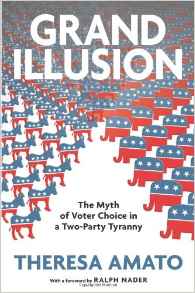
Review: Grand Illusion–The Myth of Voter Choice in a Two-Party Tyranny

5 Star, Politics
Amazon Page
Amazon Page

Final Detailed Review: Our Bunker Hill, June 8, 2009

Theresa Amato

Edit of 29 Jun 09 to correct 25% of the black population, thanks Mikey.

Edit of 18 Jun 09 to add two books by others and downgrade own books to unlinked mention.

Do not be surprised if your vote “disappears”. Amazon has the idea that anyone who votes for more than one of my reviews is a “fan” and should not count. We are all at the mercy of their control of the system.

I am giving this book five stars instead of four because it is the de facto “Bunker Hill” of our 21st Century Nation, doing for politics what Silent Spring did for the environment.

The book needs to be re-issued immediately in paperback with four additions that should themselves be offered free online: an annotated bibliography that properly embraces those who have gone before; an annotated legal list of cases; a list of the worst of the 527's; and a Presidential Decision Memorandum that itemizes the Electoral Reform Act of 2009.

The book does not acknowledge work by many including William Greider, e.g. Who Will Tell The People? : The Betrayal Of American Democracy or Greg Palast, e.g. The Best Democracy Money Can Buy. The latter bears on the author's being unwitting about Al Gore being bought off in Florida (today he is worth $100 million), with Warren Christopher carrying the offer from Wall Street.

That having been said, this is a SENSATIONAL BOOK not least because for the first time it has gotten Ron Paul to endorse a book and to talk to Ralph Nader in constructive terms–I pray this means that Ralph Nader is now ready to play well with others, including Cynthia McKinney and Jackie Salit.

I have goosebumps as I write this and a huge smile. This book is the first shot at our Bunker Hill and the government Of, By, and For the Banks (see the image I have loaded) is on the run, Goldman Sachs is finishing up its looting of the US Treasury, and I for one am appalled at the lack of integrity across the Senate–John McCain included–in failing to stop this under Bush and now under Obama–what better evidence do we need that this book by this author is “on target”? See Breach of Trust: How Washington Turns Outsiders Into Insiders; The Broken Branch: How Congress Is Failing America and How to Get It Back on Track (Institutions of American Democracy); Obama: The Postmodern Coup – Making of a Manchurian Candidate; and Vice: Dick Cheney and the Hijacking of the American Presidency among many others.

Here are my fly-leaf notes, followed by an itemization of the book's concluding thoughts and other recommended reading.

For me the gem of gems in this book is on page 253, and I quote the author directly: “Whether you can vote–and whether your vote counts–depends primarily on where you live.”

In many states such as Florida, 25% of the male black population has been convicted of a felony, served its time, and is still not allowed to vote. I agree this needs to change. [See Intro note 3 for citation].

Across the entire book, using the two Nader campaigns as a source of actual experience–this is non-fiction at its very best–non-fiction of great consequence I might add–the author documents the degree to which state documentation requirements and voting procedures vary “wildly” and can also be intimidating.

Citing Steven Hill and his book Fixing Elections: The Failure of America's Winner Take All Politics PB, the author quotes Hill: “Winner take all is horse & buggy technology.”

The Libertarian Party is mentioned six times, but not recognized by the author as a “main” third party, something I hope Ron Paul's endorsement of this book will change. I URGE THE PUBLISHER TO PAY ATTENTION: this book needs to be issued in paperback immediately, with the four additions detailed above.

I learn an enormous amount in this book, which is certain to be an academic, business, and political classic for years to come.

Terry McAuliffe is an unethical pig. Democratic Party under McAuliffe destroyed Nader's prospects, to include libeling him and creating massive published misrepresentation. I learn from the author that “You can get away with libel if you put it in a lawsuit.”

“Campaigns are simultaneously over-regulated, under-regulated, and ineffectively regulated.” The entire book documents this assertion.

$250,000 a day is what needs to be raised to be a Presidential candidate.

527s are not only out of control and use the federal complaints progress as well as state by state law suits to put third party campaigns into grid-lock.

3rd parties are not offered Secret Service protection (and in my view need it the most)

Press is a trivializing factor to point that 45% of the public now ignores the press (but I would add, still has no solid “truth teller” to rely upon).

Good chapter on the Presidential Debate Commission which is an unethical and unofficial fraud created to exclude Third Parties, and which uses the police to block third party candidates from even being in attendance.

Over 6 million “lost votes” across the Nation. Diebold is trash (I already knew that, but the book does a fine job of documenting Diebold's criminal insecurity.

Observers are blocked from vote counting by being called “threats to security.” I have a note, “Insanity prevails.”

I learn there is a National Association of Secretaries of State (NASS) which is important, since it was this position that stole the election for Bush in Florida in 2000 and Ohio in 2004.

The concluding review covers:
Electoral College
Vote Counting
Voter ID
Absentee & early Voting
Military & Overseas Votes
Write-In Votes
Provisional Votes
Recounts

The recommendations for reform are comprehensive:
Eliminate Electoral College
Add Affirmative Right to Vote
Federalize Federal elections
Federal Administration (24 specifics)
State-Level Reforms (25 specifics)
Judiciary Integrity

For a shorter eight-point version, search for <Electoral Reform Act oss.net>. The book ends with thoughts on the consequences of doing nothing. I urge one and all to demand of Obama an Electoral Reform Act of 2009, which itself should be defined by a nation-wide virtual summit among all interested voters.

Three other books of note:
The Tao of Democracy: Using Co-Intelligence to Create a World That Works for All
VOICE OF THE PEOPLE: The Transpartisan Imperative in American Life
The People's Business: Controlling Corporations and Restoring Democracy

I have offered up free online all of the books from Earth Intelligence Network, at oss.net/BOOKS (add the www), and especially recommend the annotated bibliography at oss.net/PIG, as it is a virtual “Citizen's Reader” and my summaries of 500+ books across a range of topics relevant to restoring the goodness of America at home and abroad can be helpful in arming those who mean to government themselves with the power of knowledge. The three best books here at Amazon (out of links) are:
ELECTION 2008: Lipstick on the Pig
NEW CRAFT OF INTELLIGENCE: Personal, Public, & Political
COLLECTIVE INTELLIGENCE: Creating a Prosperous World at Peace

Resist the Borg. Do not be assimilated. Demand Electoral Reform NOW.
Review: Dignity for All–How to Create a World Without Rankism

5 Star, Democracy

DignityExcellent Off-Site, Gift, or Personal Improvement Book,June 9, 2009

Robert W. Fuller

I had previously read and reviewed All Rise: Somebodies, Nobodies, and the Politics of Dignity (BK Currents (Hardcover)) and as much as I liked that first book, this is the one I recommend as a broad use item. It is ideal for any company or organizational off-set as a pre-arrival required reading, as a gift (including as an anonymous gift to the rankism-challenged, and as a personal easy to read book.

I myself have been terribly guilty of rankism, primarily in the customer service arena, where mediocre service has roused my fury and I have been less than stellar at realizing that it's not the person, it's the system, and so many others are responsible for the mediocrity that I am a fool for taking it out on the one person I can see.

Where this book renders a very useful service is in the naming of the anti-thesis to dignity, i.e. rankism. This is not a book about dignity, but rather about rankism in all its forms and how that robs all of us of dignity, but especially those least able to handle the inequalities including (new term for me) micro-inequalities–the subtle pecking to death by ducks, e.g. being interrupted constantly, not noticed, etc.

I have been focusing on integrity recently, on truth, and I confess that I have not given enough thought to the tact side of the equation. This book is persuasive in saying that truth by itself is not enough, truth must be accompanied by tact, or as I have it in my notes, “Integrity plus dignity = informed democracy.”

There are 24 sidebars, each a little gem, the key points are summarized at the end of each chapter, and I believe this book finally meets the need for a Citizen 101 Guide.

Among my fly-leaf notes:

1. Lack of dignity is a driver toward violence and unreason. This joins a mantra from elsewhere, that anger and violence generally stem from a feeling of being treated unfairly.

2. Dignity should be the first human right.

3. Costs of not providing dignity are enormous. The following is quoted from pages 3-4:

“The consequences of violating others' dignity are evident in widespread social problems such as high rates of school dropout, prison incarceration, violent crime, depression, suicide, divorce, and despair; in the business world in reduced creativity, lower productivity, or disloyalty to the organization. Even health and longevity areaffected.”

While the above is grossly simplistic, it is important and merits note.

4. Rnakism is the “root” “ism” e.g. for sexism, racism, etc, the one that fosters all other isms by artificially elevating one person over another.

5. Dignitarian intervention breaks the rankism cycle. John Steiner intervened with me one time in Denver, and I have to say that without having read this book, I did not quite see his point. Those intervening should anticipate not being understood the first several times.

6. HUMILITY in leaders signifies an open mind willing to listen to everybody. I have just finished giving up on the leaders of the U.S. intelligence community as they live in “closed circles” and are like Henry Kissinger when David Elsberg counseled him, becoming like morons in that they rely too much on narrow secrets and allow their “closed circle” to shut out all those who actually have ground truth real world experience. See my review of Secrets: A Memoir of Vietnam and the Pentagon Papers

7. The vignettes are not to be skipped. As impatient a reader as I am, I realized after a few of them that they comprise in the aggregate a 360 degree repetition of the basic lesson in many more naunced ways.

8. Secrecy and silencing are part of the Borg as I have tekn to calling it, the “establishment” in which neither Bush nor Obama really controls anything, the “system” goes on with its Wall Street ubber alles and two parties doing the bidding of special interests. Snobbery (think Council on Foreign Relations), bullying (think clearances removed from whistle-blowers) and blackballing (think CIA never hiring anyone critical of their nonsense) are all part of the Borg.

9. The book ends with comments on truth and reconciliation, of which I am a huge fan, believing the USA needs at least two–one for what has been done to We the People including our Native Americans and people of color, another for what has been done around the world “in our name” and at our expenses. Appreciative inquiry is discussed, as well as shared governances and shared evaluation.

Bottom line: this may well be the one book and the one idea that We the People cannot do without.

I also recommend:
The Tao of Democracy: Using Co-Intelligence to Create a World That Works for All
Society's Breakthrough!: Releasing Essential Wisdom and Virtue in All the People
The New Golden Rule: Community And Morality In A Democratic Society
Communitas: Means of Livelihood and Ways of Life
Orbiting the Giant Hairball: A Corporate Fool's Guide to Surviving with Grace
We the Purple: Faith, Politics, and the Independent Voter
Blessed Unrest: How the Largest Social Movement in History Is Restoring Grace, Justice, and Beauty to the World
Collective Intelligence: Creating a Prosperous World at Peace

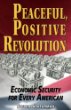
Review: Peaceful Positive Revolution–Economic Security for Every American

5 Star, Intelligence (Collective & Quantum)

PeacefulCitizen Intelligence, Core Good Idea Well Presented, June 9, 2009

Steve Shafarman

This book is the one that in combination with other things that are going on including Ron Paul's endorsement of the book Grand Illusion: The Myth of Voter Choice in a Two-Party Tyranny, has caused me to see 2008 as a tipping point. We the People are restless and on the prowl.

This particular book is the single best current exposition on the need for individual economic security as a citizen's right, in the book called the Citizen Dividend, also known as negative income tax or guaranteed income.

The author is clear on this being a modest sum, on the order of $500 to $1000 a month, a safety net, and the author also speaks to the Citizen Service that is made possible in return.

As a great admirer of the book by the United Nations High-Level Panel on Threats and Challenges, A More Secure World: Our Shared Responsibility–Report of the Secretary-General's High-level Panel on Threats, Challenges and Change, I am totally blown away by the intelligence in all its forms of this author, who nails the essential better and more concisely than anyone I have seen anywhere else: poverty, crime, health care, education, social security, family values, racism, pollution and global warming, farms and all, local communities, national security, globalization, other countries, world peace. This is a SERIOUS citizen not to be triffled with. See Earth Intelligence Network and the strategic analytic model there to understand why I am so very impressed.

The author has done a great deal of work in putting the book together, and among the things about it that I really like are the 26 Frequently Askewd Questions (FAQ) with detailed answers; the superb quotes from the Founding Fathers onward on why this kind of thing is needed; and the two Appendices, the first on previous attempt to implement the idea, the second on current efforts.

The author concludes the book with some hard thoughts on the corporations, courts, and media, on politicians as performers and politics as theater (see my own book, Election 2008: Lipstick on the Pig (Substance of Governance; Legitimate Grievances; Candidates on the Issues; Balanced Budget 101; Call to Arms: Fund We Not Them; Annotated Bibliography), and on how elected officials are out of touch with citizen reality while the special interests do not care.

The author gives credit to Senator Daniel Patrick Moynihan (D-NY), RIP, one of my own personal heroes, and his book The Politics of a Guaranteed Income: The Nixon Administration and the Family Assistance Plan.

I put the book down well-satisfied, and feeling that if every citizen were as serious as Steven Shafarman, We the People are certain to triumph in the 2010-2015 timeframe as we seek to restore the Constitution and free open elections.

In myh remaining six recommended books I want to focus on the corruption of the existing capitalism system, which is not moral capitalism (going well by doing good) but immoral predatory capitalism that has also destroyed democracy:
Deer Hunting with Jesus: Dispatches from America's Class War
The Working Poor: Invisible in America
The Global Class War: How America's Bipartisan Elite Lost Our Future – and What It Will Take to Win It Back
The Shock Doctrine: The Rise of Disaster Capitalism
The Soul of Capitalism: Opening Paths to a Moral Economy
Running on Empty: How the Democratic and Republican Parties Are Bankrupting Our Future and What Americans Can Do About It

My complex annotated bibliography is free online at oss.net/PIG. It is also the only way to get to many of my reviews now that Amazon buries any reviews that are not 100% positive about the book they are trying to sell.

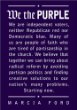
Review: We the Purple–Faith, Politics, and the Independent Voter

5 Star, Democracy

We the PurpleMore Religion Than I Expected, But Totally Righteous, June 9, 2009

Marcia Ford

This is one of the books that I bought at a transpartisan event (the Republican term is post-partisan. It is one of the books,I list ten others below, that have persuaded me that 2008 is the tipping point year for burying the two parties that have been in breach of the public trust, and restoring the Constitution, the Republic, and the sovereign We.

This is a small book, a serious book, with a wonderfully educational gloassry, very serious endnotes, and a list of ten web sites that I am immediately adding to the home page of Earth Intelligence Network.

The author introduces herself as a voter without a party and a Christian without a church, and having myself been so very angry with the parties and the churches this immediately grabs me.

She credits Barney Frank early on with being the originator of the “purple states” term from which is derived “purple voter,” and as a military person I am further impressed because “purple” is the color we use to define truly joint integrated operations that are not corrupted by inter-service rivalry.

The author discusses how from 2006-2009 the polls consistently have shown that 33-39% of America is neither Democratic nor Republican, and I observe a Pew poll just in the last two weeks that puts self-defined independents at 39%, the Democrats at 33%, and the Republicans at 26% or so and falling.

I have a note to myself, this book is a pre-cursor and companion to both Grand Illusion: The Myth of Voter Choice in a Two-Party Tyranny and Running on Empty: How the Democratic and Republican Parties Are Bankrupting Our Future and What Americans Can Do About It.

Page 9-10 (after a long preface) have a list of citizen grievances, I will quote just the first one:

“We're tired–tired of two parties whose main priority is self-preservation and self-promotion rather than serving the people who voted them into office.”

This is of course correct, and I would add that it is the loss of integrity across the government–executive as well as within Congress–that is responsible. See among other books Breach of Trust: How Washington Turns Outsiders Into Insiders and Vice: Dick Cheney and the Hijacking of the American Presidency.

The author discusses a number of electoral reforms that are needed, including non-partisan elections, universally-available write-in options, the instant run-off (and variations I was unaware of), term limits, getting rid of the money, an end to gerrymandering (tightly drawn distrcits), and an end to party registration as part of the voting process. All good stuff, see my comments for the list of eight reforms in the Electoral Reform Act that a number of us have press pressing on since the year 2000 while Al Gore sold his integrity for what we now know has become a $100 million pay-off. See The Best Democracy Money Can Buy for the back-story, all known to Gore three months in advance of the election.

I am much taken with the author's brief discussion of how Independents are NOT “undecideds” and are not “swing” voters either. The discussion of how the media ignores (disenfranchises) independent voters, and how the Internet is now empowering ordinary people, is worthy.

I like the author's conclusion that mixing religion and politics is a huge mistake.

Finally I have a note on the author's view that abortion and gay rights are two issues that divide us, and although I did not see this in the book, my own conclusion inspired by others is that we are wasting all of our time arguing about the 20% where we cannot agree, instead of focusing on the 80% where we can make gains: education, family, health, etcetera.

Here are six other books that support and bracket this one:
Crashing the Gate: Netroots, Grassroots, and the Rise of People-Powered Politics
Groundswell: Winning in a World Transformed by Social Technologies
Blessed Unrest: How the Largest Social Movement in History Is Restoring Grace, Justice, and Beauty to the World
VOICE OF THE PEOPLE: The Transpartisan Imperative in American Life
Election 2008: Lipstick on the Pig (Substance of Governance; Legitimate Grievances; Candidates on the Issues; Balanced Budget 101; Call to Arms: Fund We Not Them; Annotated Bibliography)

There are so many books I wish I could link to, especially with respect to betrayal of the public trust by government and the inappropriate insertion of religious ideology into both domestic and foreign affairs. See the comment for a link to my reviews of 500+ non-fiction books, all organized to empower individual citizens with knowledge not available to them from any political source.

Review: National Security Dilemmas–Challenges and Opportunities

5 Star, Strategy

National Security DilemmasBrilliant Tour, New Knowledge, Best in Class & Practical,June 19, 2009

Colin Gray

For those who have not already digested the author's seminal publication, Modern Strategy, I have a summative review there that could be helpful in conjunction with appreciating this new work.

10 pages of notes–this is a major work that is also easily grasped by undergraduates and graduates. I want to say up front that I have seen no finer overview that blends the original thinking of the author, himself a master strategist, with broad consideration of the work of others, and very disciplined integration of selected quotes and ample citations. The notes are superb.

My summary notes first:

Six lessons of Bush-Cheney era:
01–Bush era did not lack for brains or judgment, simply suspended intelligence in favor of “hopes, dreams, and good intentions.”
02–Crusades inconsistent with reality will fail
03–US forces not trained, equipped, organized for counterinsurgency
04–Transition to peace is harder than winning war
05–International politics is real and will not go away
06–Beware capabilities-driven strategy.

Three levels of strategic thinking:
–general
–general applied to regular or irregular warfare
–tailored to a specific “episode” e.g. Haiti, Somalia, Iraq

US starts with multiple handicaps:
01–cultural disposition to look at pieces, not the whole
02–flawed theory of deterrence
03–excessive faith in technology, insufficient grasp of human factors, incompetence at irregular war
04–one size fits all military does not suit diversity of challenges
05–lack of authority among those we seek to influence
06–barriers between military and political leaders (and lack of inter-agency coherence at any level)

“Deterrence…is not a fixed, settled, and now long-perfected product.” [It is] not understood, illusions abound, and it [a theory of] is desperately needed as a companion to the concepts of prevention and pre-emption. This is the first time I encounter a concise well-organized critique of the entire field of deterrence. He cites Payne in noting how the US tried to “deter” NVN with a Rolling Thunder air campaign, despite having no clue “about the enemy's policymaking process or how he rank-ordered his values.”

Key recommendations:
01–Deterrence must be part of broader strategy of influence in all its forms
02–We must take the ideas and perceptions of others seriously
03–Citing Metz & Mullen, “the age of the stupid enemy is past.”

Quoting Echeverria: “American way of battle has not yet matured into a way of war.” Later in the chapter on Irregular Warfare he observes, citing others as appropriate, that war is the whole enchilada–political, legal, social, economic, military, cultural; while warfare is the conduct of the war, predominantly but not exclusively military.

The chapter on surprise is original, lacking only one fundamental: intelligence must cast a wide net and policy must keep an open mind.

The chapter on revolutionary change is original but overlooks O'Hanlon's Technological Change and the Future of Warfare and does not address the broad literature on the need to reinvent intelligence and shift from secret unilateral to open multinational.

I learn that context is both that which surrounds, and that which weaves together; throughout the book the author emphasizes the importance of Gestalt, of “the whole,” with particular attention to the political consequences of military actions.

Citing Field Marshall Keitel: errors in tactics and operations can be corrected in the current war, errors in strategy can only be corrected in the next.

Quoting Gray:

p. 108: “Strategic surprise on the greatest of scales occurs as a result of changes in the contexts for national security.” He goes on to note that political surprise is what catches the US most unawares, in part because the US separates policy and politics from all else.

p. 119 “War is about peace…above all else, war is about the kind of peace that should follow.”

Essence of strategy:
01–About the use of force for political effect
02–About relationship between means and ends
03–Politics must rule BUT politicians must hear, understand, and respect the military

American “way of war (more properly, way of battle):
01–Apolitical (I would add, amoral)
02–Astrategic
03–Ahistorical
04–Problem-sovling, optimistic
05–Culturally-challenged
06–Technology-dependent
07–Focused on Firepower
08–Large-scale
09–Aggressive-Offensive
10–Profoundly-Regular
11–Impatient
12–Logistically-Excellent
13–Highly-Sensitive to Casualties

Irregular Warfare demands:
01–Protect-the-People
02–Intelligence-is-king
03–Ideology-matters
04–Enemy-not-the-main-target
05–Unity-of-effort (I add, Whole of Government, M4IS2)
06–Culture-is-crucial
07–No-sanctuaries
08–Time-is-a-weapon
09–Undercut-enemy-POLITICALLY

The author is deeply respectful of our soldiers, lamenting that they are victims of a strategic deficit among both our politicians and senior military leaders, hence sent in harm's way ill-advisedly to few good ends.

The author provides new thinking on pre-emptive and preventive war, stating on page 242 that both are “only feasible if intelligence is immaculate.” This chapter may be the most important chapter as well as the most difficult for conventional decision-makers, both political and military, to grasp, given their “closed circle” circumstances.

The concluding chapter on The Merit in Ethical Realism is absorbing and feels a huge gap in current US strategic thinking. Three quotes capture my admiration for this author and this chapter:

“…it is nearly always inexpedient to ignore or affront the ethical sensibilities of stakeholder communities, including one's own.”

“As a practicing strategist, I am convinced that strategy's ethical dimension is not subjectively irrelevant; rather it is integral to supposedly objective analysis, calculation, decision, and behavior.”

“The moral is strategic, and the strategic is moral.”

The author concludes that we cannot think in terms of one “Master Menace,” and must instead be prepared for a diversity of challenges and dilemmas. In my comment below I provide URLs for summary articles about the Army's Strategic Conferences in 1998 and 2008, both ignored by all “deciders.”

I encourage readers to buy this book, and to see my reviews of the books linked to below.
The Fifty-Year Wound: How America's Cold War Victory Has Shaped Our World
Breaking the Real Axis of Evil: How to Oust the World's Last Dictators by 2025
Wars of Blood and Faith: The Conflicts That Will Shape the 21st Century
A More Secure World: Our Shared Responsibility–Report of the Secretary-General's High-level Panel on Threats, Challenges and Change
The Unconquerable World: Power, Nonviolence and the Will of the People
Election 2008: Lipstick on the Pig (Substance of Governance; Legitimate Grievances; Candidates on the Issues; Balanced Budget 101; Call to Arms: Fund We Not Them; Annotated Bibliography)
The New Craft of Intelligence: Personal, Public, & Political–Citizen's Action Handbook for Fighting Terrorism, Genocide, Disease, Toxic Bombs, & Corruption
Collective Intelligence: Creating a Prosperous World at Peace

See images posted above and comment below. Colin Gray is a global treasure, would that those in power had the humility to attend to his wisdom.

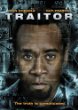
Review DVD: Traitor

5 Star, Intelligence (Government/Secret), Reviews (DVD Only)

DVD TraitorJeffrey Nachmanoff Hits It Out of the Park, June 20, 2009

Don Cheadle

As a former spy and leading critic of the $65 billion a year spent by the secret world, I normally limit my DVD intake to hotels and airplanes, but this one attracted my attention and deservedly so.

This is one of a tiny handful of decent depictions of the spy world, and I want to note that Jeffrey Nachmanoff, a name most will not notice, was also the screen writer for The Day After Tomorrow (Widescreen Edition).

The over-all plot is credible, well-acted, well-filmed, and I was pulled in to give this my undivided attention. The subtleties of inter-agency competition and non-sharing were well integrated.

Bottom line: a top-notch offering all the way around, but I want to single out Nachmanoff for getting it right. He's a talent to watch.

See also:
Taken [Blu-ray]
Breach (Full Screen Edition)
The Falcon and the Snowman
The Spy Who Came in from the Cold
Smiley's People
Tinker Tailor Soldier Spy
American Drug War: The Last White Hope

If you are interested in intelligence, I have written several books, all free online as well as for sale here at Amazon, and a great deal of information helpful to any citizen can be found at oss.net.

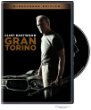
Review DVD: Gran Torino (Widescreen Edition)

5 Star, Crime (Organized, Transnational), Reviews (DVD Only)

DVD Gran TorinoMoving Collage Beyond Karrate Kid and Second Hand Lions, June 20, 2009

Clint Eastwood

I got this movie on a whim, in part because I am tired of seeing Americans turning into either fat blobs or pussies afraid of their own shadow (or worse, self-righteous morons who really think government is the answer to everything.

Eastwood might hate the comparison, but this is a collage that goes well beyond The Karate Kid meets Secondhand Lions (New Line Platinum Series).

It most assuredly is right up there with Million Dollar Baby (Full Screen Edition) and Absolute Power.

It's hard to sum up this movie so I will say just three things:

1. He weaves every possible American hard-ass self-made man image in as gracefully as it could be done.

2. He does for the hill people of Viet-Nam what Bride and Prejudice did for India but without the music, love, and dance.

3. The ending is spectacular–Eastwood's voice in the background, slow singing against a visual as the Gran Torino drives toward the future with its special passenger who inherited from the master. For this alone I would rent or buy the DVD.

noble gold