
NYT’s ‘Tinfoil Hat’ Conspiracy Theory
There is a “tinfoil-hat” quality to The New York Times’ pushing its “Donald Trump Is Russia’s Manchurian Candidate” conspiracy theory as the newspaper sinks deeper into a New McCarthyism, reports Robert Parry.

The truth at any cost lowers all other costs — curated by former US spy Robert David Steele.
NYT’s ‘Tinfoil Hat’ Conspiracy Theory
There is a “tinfoil-hat” quality to The New York Times’ pushing its “Donald Trump Is Russia’s Manchurian Candidate” conspiracy theory as the newspaper sinks deeper into a New McCarthyism, reports Robert Parry.
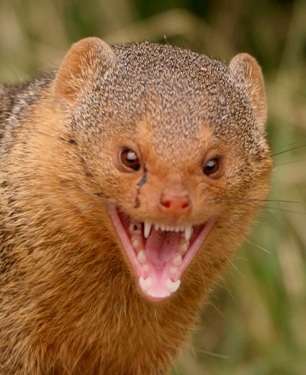
With friends like these: Trump struggles to win GOP
Donald Trump's proposed budget is “draconian, careless and counterproductive.” The health care plan is a bailout that won't pass. And his administration's suggestion that former President Barack Obama used London's spy agency for surveillance is simply “inexplicable.”
With friends like these, who needs Democrats?
Less than two months in, Republicans have emerged as one of the biggest obstacles to Trump's young administration, imperiling his early efforts to pass his agenda and make good on some of his biggest campaign promises.
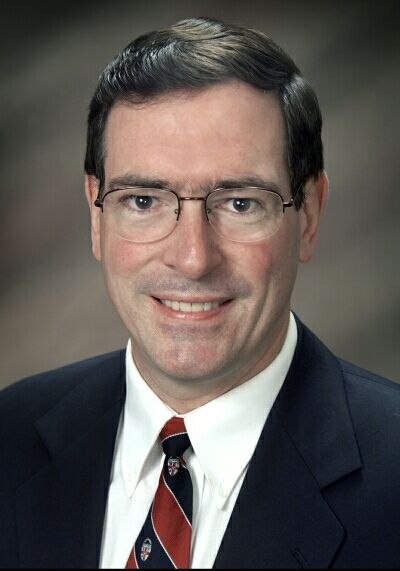
The Data That Turned the World Upside Down
Psychologist Michal Kosinski developed a method to analyze people in minute detail based on their Facebook activity. Did a similar tool help propel Donald Trump to victory? Two reporters from Zurich-based Das Magazin went data-gathering.
Phi Beta Iota: Cambridge Analytica appears to have some deep talents but it is also being grossly over-sold — there appears to be a very calculated hype campaign underway across various media. The bottom line is that Cambridge Analytica did not win the election for Donald Trump, and indeed got it wrong: at noon on Election Day they told The Donald that he had a 20% chance of winning.
See Especially:
See Also:
REVIEW ESSAY
Unhinged: drone assassination – American suicide
Intelligence and National Security, 33/1 March 2017
We kill because we can: from soldiering to assassination in the drone age, by Laurie
Calhoun, London, Zed Books, 2016, 400 pp., US$15.95 (paperback), ISBN 978 178360547 7
Drones and the future of armed conflict: ethical, legal, and strategic implications, by David Cortright, Rachel Fairhurst, and Kristen Wall, 2015, Chicago (IL), University of Chicago Press, 288 pp., US$27.50 (paperback), ISBN 978 022647836 4
Sudden justice: America’s secret drone wars, by Chris Woods, Oxford, UK, Oxford
University Press, 2015, 416 pp., US$17.87 (paperback), ISBN 978 019020259 0
Continue reading “Robert Steele: UNHINGED: drone assassination – American suicide”
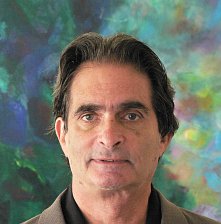
Trump is challenging the whole CIA-media nexus
As the mainstream press continues to stir the pot and attack Trump on every possible front, day after day, they strive to impart the impression that the escalating war between Trump and the CIA is a sign that the president’s administration is in a condition of severe imbalance, heading toward the edge of the cliff.
Two points about that: the press is trying to protect its shadow brother, the CIA; and the reason a war between a president and the CIA hasn’t broken out since JFK and the Bay of Pigs is, simply, no president has dared to challenge the CIA openly.
Or to put it another way, every president since Kennedy SHOULD have gone to war with the CIA, but no president did.
Continue reading “Jon Rappoport: Trump Takes on CIA — the First Since CIA Helped Assassinate JFK”
The philosopher Friedrich Nietzsche (1844-1900) famously proclaimed the death of God. Following this far more momentous precedent, it would now be fair to proclaim the death of the debilitating, semi-established duopoly party system that disables progressive politics in the United States.
The analogies are many.
Continue reading “CounterPunch: US Two-Party Tyranny is Dead”
The CIA’s 60-Year History of Fake News: How the Deep State Corrupted Many American Writers
In this week’s episode of “Scheer Intelligence,” Truthdig Editor in Chief Robert Scheer interviews Joel Whitney, author and co-founder of Guernica magazine.
Whitney’s new book, “Finks: How the C.I.A. Tricked the World’s Best Writers,” explores how the CIA influenced acclaimed writers and publications during the Cold War to produce subtly anti-communist material. During the interview, Scheer and Whitney discuss these manipulations and how the CIA controlled major news agencies and respected literary publications (such as the Paris Review).

