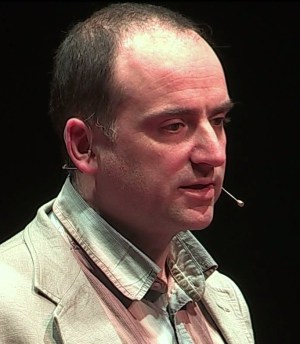
Tom Atlee: Beyond Blocks to Caring

Cultural Intelligence
0Shares
Tom Atlee
Tom Atlee

The social systems we live in – cultural, economic, political, and the rest – often make it difficult to effectively care. Understanding better the systemic realities that block our caring can help clarify how we need to change our lives and our societies. Here I explore some of the dynamics involved with money, time, distraction, complexity, individualism, and public relations – and new directions being pioneered by many among us, noting their common roots in caring.

Moving beyond systemic blocks to caring

EXTRACT (LIST ONLY)

Here are some of the systemic forces that alienate us from the life in and around us and block our caring energy:

▪ Money – and the reductionist statistics, profits, interest, and speculation that have accumulated in and around our money-based economies.

▪ Speed, pace, lack of time, and lack of deep time.

▪ Distraction, addiction, consumerism, and jobs.

▪ Complexity of connection, systems, issues.

▪ The cult of individualism and separateness.

▪ …the rapidly developing power of marketing, public relations, and advertising

Read full post.

Eagle: Charles Hugh Smith on Lessons of War

Officers Call
0Shares
300 Million Talons...
300 Million Talons…

What Have We Learned From 24 Years of War?

Charles Hugh Smith

The responsibility for starting and ending wars, the way wars are fought and the losses we suffer all rest with our elected civilian leadership.

What have we learned from 24 years of war? Since the First Gulf War in early 1991, the U.S. has had continuous combat operations in one theater or another. After the first war, combat air patrols enforced the No-Fly Zones over Iraq for years, until 9/11 triggered the first phase of the Afghanistan War and President Bush led the nation into the Second Iraqi War in March 2003.

Though this war officially ended with U.S. troop withdrawals in December 2011, the war continues to burn through lives and treasure in Iraq and it continues on in the memories, wounds and lives of veterans and their families.

What have we learned from 24 years of continual warfare? There may be two sets of answers: one set for policy-makers, those we have elected to make the consequential decisions of war and withdrawal, and another set for the citizenry who provide the volunteers who actually fight the wars and the treasure to pay for the wars and their long aftermath.

Continue reading “Eagle: Charles Hugh Smith on Lessons of War”

SchwartzReport: Slavery for Profit — Continues Today

07 Other Atrocities, Cultural Intelligence
0Shares
Stephan A. Schwartz
Stephan A. Schwartz

[My past experience] left me with the conviction that the White narrative was a comforting lie. Now Edward Baptist has taken this mythology head on. Here is a taste.

“It’s symbolic annihilation of history, and it’s done for a purpose. It really enforces white supremacy”: Edward Baptist on the lies we tell about slavery

Continue reading “SchwartzReport: Slavery for Profit — Continues Today”

RIck Robinson: Building Cities with Open Source Everything

#OSE Open Source Everything
0Shares
Rick Robinson
Rick Robinson

From concrete to telepathy: how to build future cities as if people mattered

EXTRACT

There are many issues of policy, culture, design and technology that we need to get right for this to happen, but the main objectives are clear:

  • The data from city services should be made available as Open Data and through published “Application Programming Interfaces” (APIs) so that everybody knows how they work; and can adapt them to their own individual needs.
  • The data and APIs should be made available in the form of Open Standards so that everybody can understand it; and so that the systems that we rely on can work together.
  • The data and APIs should be available to developers working on Cloud Computing platforms with Open Source software so that anyone with a great idea for a new service to offer to people or businesses can get started for free.
  • The technology systems that support the services and infrastructures we rely on should be based on Open Architectures, so that we have freedom to chose which technologies we use, and to change our minds.
  • Governments, institutions, businesses and communities should participate in an open dialogue, informed by data and enlightened by empathy, about the places we live and work in.

If local authorities and national government create planning policies, procurement practises and legislation that require that public infrastructure, property development and city services provide this openness and accessibility, then the money spent on city infrastructure and services will create cities that are open and adaptable to everyone in a digital age.

Elisabet Sahtouris: Cybernetics as Necrophilia

Cultural Intelligence, Earth Intelligence
0Shares
Elisabet Sahtouris
Elisabet Sahtouris

Cybernetics is an advanced form of mechanism, but it is still mechanism, which I consider a poor metaphor for any living system—a metaphor missing the system’s very essence. Guattari argues that cybernetic machinery, which introduced the capacity to collect all manner of feedback to increase control, has, with the advent of the Internet, made elite control more insidious and effective than ever. He is right that elites have learned to control society by deliberately working to construct society itself as machinery and teaching people to see it as machinery, because machinery can be controlled. That does not mean that psyche, society, and nature are machinery. All living beings can read feedback from their environments!

Continue reading “Elisabet Sahtouris: Cybernetics as Necrophilia”

James Corbett: YouTube (1:30:11) Century of Enslavement: The History of The Federal Reserve

07 Other Atrocities, 10 Transnational Crime, Commercial Intelligence, Federal Reserve
0Shares

What is the Federal Reserve system? How did it come into existence? Is it part of the federal government? How does it create money? Why is the public kept in the dark about these important matters? In this feature-length documentary film, The Corbett Report explores these important question and pulls back the curtain on America's central bank.