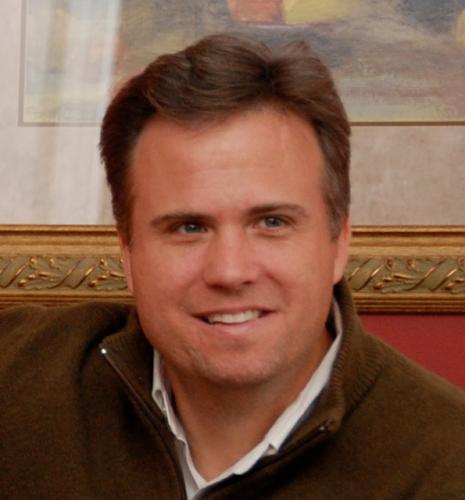
One of the report¹s authors, Dr. Michael Antoniou of King¹s College London School of Medicine in the UK, uses genetic engineering for medical applications but warns against its use in developing crops for human food and animal feed.
Aren¹t critics of genetically engineered food anti-science? Isn¹t the debate over GMOs (genetically modified organisms) a spat between emotional but ignorant activists on one hand and rational GM-supporting scientists on the other?
A report released June 17, GMO Myths and Truths, challenges these claims. The report presents a large body of peer-reviewed scientific and other authoritative evidence of the hazards to health and the environment posed by genetically engineered crops and organisms.
Unusually, the initiative for the report came not from campaigners but from two genetic engineers, who believe there are good scientific reasons to be wary of GM foods and crops.
· Transparency and truth – reveal what chemicals and metals have been used.
· Close all of the bases and radar facilities – completely de-militarize the island.
· Clean and decontaminate the bases and land, aquifers and sea around them.
· Provide health care to all people affected by military activity on the island
· Provide financial assistance and clean land and sea to farmers and fishers
Need to test some new weapons? Bomb paradise! The sound of bombs, missiles, and other explosions; massive attacks from the sea onto the beach; an epidemic of cancers and birth defects; soil, air, food and water contaminated with heavy metals, jet fuel and other poisons; and national and company secrets that prevent the residents from learning the truth: Is this a modern war zone? No – Sardinia is the victim of weapons manufacturers, polluting military activities and a political system that cares about power and money over the health of people and the environment.
N 2009 Tim Gowers – a mathematician at Cambridge University and a recipient of the prestigious Fields Medal – used his blog to invite readers to help him solve a difficult mathematical problem. He dubbed his experiment the Polymath Project.
For seven hours there were no replies. Then a Canadian academic posted a comment, followed by an Arizona high school teacher, then a fellow Fields Medallist from the University of California. Over the next five weeks, twenty-seven people exchanged 800 online comments. They not only cracked the problem; they also solved a more difficult conundrum that included the original as a special case.
The Polymath Project exemplifies the new possibilities of networked science explored by Michael Nielsen in Reinventing Discovery. Nielsen, an expatriate Australian and one-time Federation Fellow at the University of Queensland, has spent most of his career in North America – first as one of the pioneers of quantum computing, and more recently as an advocate of open science. Reinventing Discovery is a manifesto for open science, directed towards breaking the shackles of contemporary scientific culture and the scientific publishing industry.
Nielsen believes that we are on the verge of a new era of scientific discovery facilitated by the internet. Future generations will look back on this era in the same way as we look back on the first scientific revolution of the seventeenth and eighteenth centuries, when organised science transformed human societies. While there is a tension between Nielsen as a chronicler of this transformation and as an advocate of further change, this complicates Reinventing Discovery rather than diminishes it.
The first half of Reinventing Discovery elaborates on how online tools make us smarter. It employs examples such as Microsoft’s online chess match, “Kasparov versus the World,” Linux open-source software and Wikipedia. Nielsen argues that these examples go above and beyond the “wisdom of crowds,” amplifying human intelligence at the limits of human problem-solving ability. (Nielsen has no time for those who argue that the internet reduces our intelligence. This “is like looking at the automobile and concluding it’s a tool for learner drivers to wipe out terrified pedestrians.”)
The key to online tools, Nielsen argues, is making the right connections with the right people at the right time. As it stands, scientific discovery is often constrained by lack of specific expertise, and breakthroughs often depend on fortuitous coincidence. Online tools facilitate “designed serendipity” by creating an “architecture of attention” that directs people’s attention and skills to where they are most needed.
Specifically, effective online tools “modularise” the problem, splitting it into small sub-tasks which can be attacked more or less independently. They encourage small contributions, which reduces barriers to entry and extends the range of available expertise. And they develop a rich “information commons,” allowing people to build on earlier work. Wikipedia provides a neat example of all of these things.
But online tools only work when participants share a body of knowledge and techniques – which Nielsen describes as a “shared praxis.” There are many fields of activity where there is no shared praxis, such as fine arts, politics and the better part of economics. In these circumstances, people are unable to agree on the nature of the problem, and online tools provide no help in scaling up collective intelligence.
Phi Beta Iota: Many of these ideas have been proferred below. The major issue we have with the proposition is that it focuses only on the sciences. As E. O. Wilson argued in CONSILIENCE: The Unity of Knowledge, the sciences need the humanities. Engineering without ethics is like a putting a rapid fire weapon in the hands of a spastic teen-ager. Engineers have allowed their genius to be corrupted both by isolation and by mis-application.
It seems that there are very few significant IR journals in a position to go open access. The obvious candidates would be journals associated with professional associations — in addition to RIS, that would include the International Studies Association journals, the European Journal of International Relations, and some others. But at least BISA and SGIR (soon to be EISA) use the revenue from the journals to support their activities. That leaves the independent foundation journals, such as International Organization, as the most likely candidates for moving to open access.
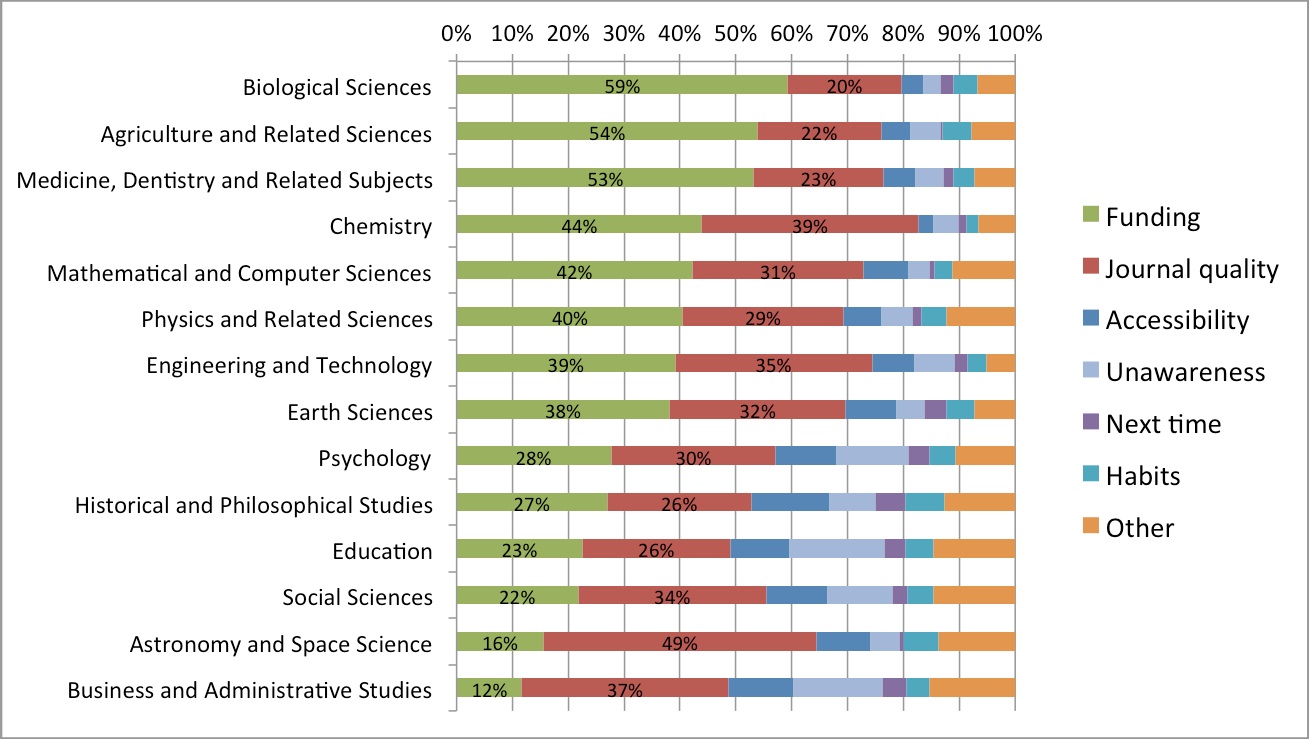
Open-access journals sustain themselves through some combination of subsidy and pay-for-publication. In essence, authors provide a fee upon acceptance if they want their articles to appear “in print.”It took PLoS — probably the most famous member of the open-access family — a number of years for revenues to exceed costs. I can imagine a lot of IR scholars recoiling at paying such a fee. The math suggests that their institutions (if they are associated with one) should be happy to fork over the money, as doing so is cheaper than subscribing to journals. But right now, at least, institutions already pay for standard IR journals, so the open-access journals represent an additional fee. This isn't an issue if the institution is Harvard University, but it might be for smaller places — particularly if the fee comes out of cash-strapped Departmental coffers rather than scientific grants. The graphic comes from the Chronicle of Higher Education, which, in 201, reported on a study highlighting the two biggest hurdles to open access:
A new survey of nearly 40,000 scholars across the natural sciences, humanities, and social sciences shows that almost 90 percent of them believe open-access journals are good for the research community and the individual researcher. But charges for publishing and the perception that open-access journals are of lower quality than traditional publications deter scholars from the open-access route, according to the Study of Open Access Publishing report, by an international team of researchers.
These concerns are likely to be a particular problem in IR. The aforementioned factors suggest that most open-access journals will be both digital-only and new. Given the field's elitism concerning “journal hierarchy,” and its general conservatism when it comes to all things smacking of “web 2.0”, those are both significant barriers to success. I think it would be very difficult to ask IR scholars to pay-for-publication in an unranked, digital-only journal. While everyone knows this is the future, it isn't clear how we will get there.
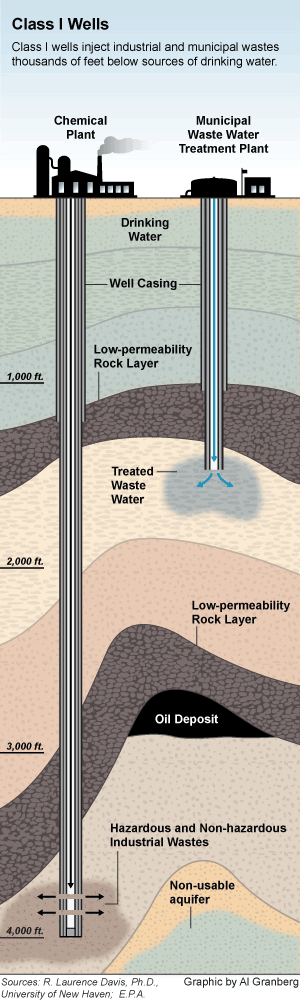
Over the past several decades, U.S. industries have injected more than 30 trillion gallons of toxic liquid deep into the earth, using broad expanses of the nation's geology as an invisible dumping ground.
No company would be allowed to pour such dangerous chemicals into the rivers or onto the soil. But until recently, scientists and environmental officials have assumed that deep layers of rock beneath the earth would safely entomb the waste for millennia.
Click on Image to Enlarge
There are growing signs they were mistaken.
Records from disparate corners of the United States show that wells drilled to bury this waste deep beneath the ground have repeatedly leaked, sending dangerous chemicals and waste gurgling to the surface or, on occasion, seeping into shallow aquifers that store a significant portion of the nation's drinking water.
In 2010, contaminants from such a well bubbled up in a west Los Angeles dog park. Within the past three years, similar fountains of oil and gas drilling waste have appeared in Oklahoma and Louisiana. In South Florida, 20 of the nation's most stringently regulated disposal wells failed in the early 1990s, releasing partly treated sewage into aquifers that may one day be needed to supply Miami's drinking water.
There are more than 680,000 underground waste and injection wells nationwide, more than 150,000 of which shoot industrial fluids thousands of feet below the surface. Scientists and federal regulators acknowledge they do not know how many of the sites are leaking.
Federal officials and many geologists insist that the risks posed by all this dumping are minimal. Accidents are uncommon, they say, and groundwater reserves — from which most Americans get their drinking water — remain safe and far exceed any plausible threat posed by injecting toxic chemicals into the ground.
But in interviews, several key experts acknowledged that the idea that injection is safe rests on science that has not kept pace with reality, and on oversight that doesn't always work.