Theophillis Goodyear: Edgar Morin as “Root” for Sy-Bernetics

Advanced Cyber/IO, Knowledge
0Shares
Theophillis Goodyear
Every avenue of vital feedback is jammed, mostly by mega media corporations, but also by other social institutions, like collectives of public “servants.” The result is like the original “The Day the Earth Stood Still.” Paralysis. Nothing moves.

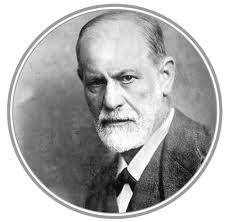
In pursuing various lines of inquiry, I keep coming up with one name: Edgar Morin.  He was born in 1921. That means he's 91.  He's one of the French social philosophers who drifted away from Marxism.

Wikipedia/Edgar Morin

One of his most important works is available in English, although very expensive.

Method: Towards a Study of Humankind, Vol. 1: The Nature of Nature

This is the first of several volumes exposing Edgar Morin's general systems view on life and society. The present volume maintains that the organization of all life and society necessitates the simultaneous interplay of order and disorder. All systems, physical, biological, social, political and informational, incessantly reshape part and whole through feedback, thereby generating increasingly complex systems. For continued evolution, these simultaneously complementary, concurrent, and antagonistic systems require a priority of love over truth, of subject over object, of Sy-bernetics over cybernetics.

He was a founding member of the International Ethical, Scientific and Political Collegium also known as the  Collegium International that published the Declaration of Interdependence in 2005.  This is not to be confused with a document by the same name published in 1945 by Will Durant, among others.

See Also:

Edgar Morin: A Partial Introduction, by Alfonso Montuori —- California Institute of Integral Studies, San Francisco
Apparently Montuori is at least something of an expert on Morin. Here's a webpage about Montuoi

Marcus Aurelius: 8,000 Wealthy US Citizens Leaving US and Renouncing US Citizenship

03 Economy, 11 Society, Civil Society, Commerce, Corruption, Cultural Intelligence, Government
0Shares
Marcus Aurelius

Wealthy Americans Jumping Obama’s Ship

NewsMax, Sunday, 24 Jun 2012 12:46 PM

Wealthy Americans aren’t just leaving tax-heavy states like New York and California, they’re leaving the country.

U.S. citizens are defecting at record levels in order to escape high taxes, the New York Post reported. About 8,000 U.S. citizens are projected to renounce their citizenship in 2012, or about 154 a week — versus 3,805 in 2011, or about 73 per week, according to immigration officials, the Post reported.

They want to avoid tax bills resulting from the proposed 55-percent hike on the wealthy and the anticipated expiration of the Bush-era tax cuts at the end of the year, the Post reported.

“High-net-worth individuals are making decisions that having a US passport just isn’t worth the cost anymore,” Jim Duggan, a lawyer at Duggan Bertsch, which specializes in protecting assets of the wealthy, told the Post.

“They’re able to do what they do from any place in the world, and they’re choosing to do it from places with much lower tax rates,” he said. “Some are philosophically disgusted at the course our country is taking in all kinds of ways. They’re making a strong protest of, ‘Enough is enough.’ But largely it’s an economic decision.”

But to leave means finding a new country and obtaining citizenship and there are many that are eager to welcome wealthy Americans, such as Australia, Norway, Singapore, Cayman Islands, Costa Rica, and Antigua, according to the Post.

These countries tend to offer a fast track to citizenship and protections from the Justice Department and IRS.

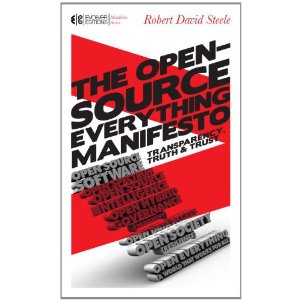
The Open Source Everything Manifesto Chapter 6 Whole-Systems Thinking Extract II

Manifesto Extracts
0Shares
Amazon Page

The Open Source Everything Manifesto Chapter 6 Whole-Systems Thinking Extract I

In The Collapse of Complex Societies, Joseph Tainer concludes that if we are to achieve sustainability and resilience, we must nurture at all levels across all boundaries a culture that elevates “problem-solving” as well as the ability to think strategically–an understanding that everything is connected and that getting a grip on the facts of the matter across all boundaries is an essential first step toward conceptualizing workable solutions to complex challenges.

Truth–the combination of intelligence and integrity as well as transparency–is the foundation for both understanding and eradicating these threats, while moving as quickly as possible toward what should be the human mantra toward the Earth and all species, “First, Do No Harm.”

. . . . . . . . .

David Keys, author of Catastrophe: An Investigation into the Origins of Modern Civilization, tells us that natural catatrophes are treated as remote and improbable until they actually occur.  Only those civilizations that plan ahead and are well-organized can respond to disasters as they happen, thus reducing the severity of draught, famile, or other challenges.

What he does not focus on, covered very ably by Ted Steinberg in Acts of God: The Unnatural History of Natural Disasters in America, is how systemic corruption among the elites increases the damage caused by natural disasters, as little flexibility or resilience is built into systems designed to reward the few.  People are persuaded or allowed to occupy floodplains and other areas prone to disaster; land speculation runs rampant with local government and insurance company complicity; intermediate measures suc has levees are built at public expense.  When it all comes crashing down, as with Katrina over New Orleans or the increasingly regular Mississippi River flooding, the rich walk away with their high risks having been amortized, which the poor and minority communities are ruined.

Review of the Book by Ralph Peters   …   Manifesto Extracts at Phi Beta Iota   …   Book Page at Amazon   .   Book Page at Barnes & Noble   .   Book Page at McNallyRobinson   .  Book Page at North Atlantic Books (Publisher)   .   Book Page at Powell’s Books   .   Book Page at Random House   .   Book Page at Super Book Depot

Patrick Meier: Crisis Mapping End of Sudan’s Dictatorship?

Advanced Cyber/IO, Civil Society, Government, Knowledge, Media
0Shares
Patrick Meier

Crisis Mapping the End of Sudan’s Dictatorship?

Anyone following the twitter hashtag #SudanRevolts in recent days must be stunned by the shocking lack of coverage in the mainstream media. The protests have been escalating since June 17 when female students at the University of Khartoum began demonstrating against the regime's austerity measures, which are increasing the prices of basic commodities and removing fuel subsidies. The dissent has quickly spread to other universities and communities.

There's no doubt that Sudan's dictator is in trouble. He faces international economic sanctions and a mounting US$2.5 billion budget deficit following the secession of South Sudan last year. What's more, he is also “fighting expensive, devastating, and unpopular wars in Darfur (in the west), Blue Nile, Southern Kordofan, and the Nuba Mountains (on the border with South Sudan)” (UN Dispatch). So what next?

Enter Sudan Change Now, a Sudanese political movement with a clear mandate: peaceful but total democratic change. They seek to “defeat the present power of darkness using all necessary tools of peace resistance to achieve political stability and social peace.” The movement is thus “working on creating a common front that incorporates all victims of the current regime to ensure a unified and effective course of action to overthrow it.”

According to GlobalVoices, “The Sudanese online community believe that media coverage was an integral part of the revolutions in Egypt and Tunisia, and are therefore demanding the same for Sudan.” The political movement Sudan Change Now is thus turning to crisis mapping to cast more light on the civil resistance efforts in the Sudan:

Read full article with maps, photos

Michel Bauwens: The Sharing Economy – Conversation with Links

03 Economy, 04 Education, 06 Family, 11 Society, Knowledge
0Shares
Michel Bauwens

El Correo de las Indias English edition

The “Sharing Economy,” the “economy of the commons,” deserves and needs a point of reference equivalent to the large institutions of European social theory.

Via GAIA: Global Alliance for Immediate Alteration

Production, not consumption; Economics of the Commons, not Sharing Economics

For a “Somewhere School of Sharing Economics”

See Also:

P2P revolution in 10 minutes

How to start P2P projects and business models

What replaces the University in the P2P mode of production?

Sepp Hasslberger: Solid-State Hydrogen Powers Laptops

05 Energy
0Shares
Sepp Hasslberger

Novel fuel cell uses solid-state hydrogen to power laptops – Taipei Times

The nation’s Industrial Technology Research Institute (ITRI) on Friday unveiled a portable fuel cell that is believed to be the first in the world to use solid-state hydrogen. The device combines solid-state hydrogen fuel, water and a catalyst in a bottle the size of a beverage can, and it can generate sufficient electricity to power laptops and LED lights, the researchers said, demonstrating the product at a news conference held at an ITRI research park in Tainan.

See Also:

Sepp Hasslberger at Phi Beta Iota

Review (Guest): The Open Source Everything Manifesto – Transparency, Truth & Trust

#OSE Open Source Everything, 5 Star, America (Founders, Current Situation), Asymmetric, Cyber, Hacking, Odd War, Banks, Fed, Money, & Concentrated Wealth, Budget Process & Politics, Capitalism (Good & Bad), Change & Innovation, Civil Affairs, Civil Society, Communications, Complexity & Resilience, Consciousness & Social IQ, Cosmos & Destiny, Decision-Making & Decision-Support, Democracy, Economics, Education (General), Education (Universities), Electoral Reform USA, Environment (Solutions), Games, Models, & Simulations, Information Operations, Information Society, Information Technology, Insurgency & Revolution, Intelligence (Collective & Quantum), Intelligence (Commercial), Intelligence (Extra-Terrestrial), Intelligence (Government/Secret), Intelligence (Public), Intelligence (Wealth of Networks), Justice (Failure, Reform), Leadership, Manifesto Extracts, Media, Misinformation & Propaganda, Nature, Diet, Memetics, Design, Peace, Poverty, & Middle Class, Philosophy, Politics, Power (Pathologies & Utilization), Priorities, Privacy, Public Administration, Science & Politics of Science, Secession & Nullification, Secrecy & Politics of Secrecy, Security (Including Immigration), Stabilization & Reconstruction, Strategy, Survival & Sustainment, Technology (Bio-Mimicry, Clean), Threats (Emerging & Perennial), True Cost & Toxicity, Truth & Reconciliation, Values, Ethics, Sustainable Evolution, Voices Lost (Indigenous, Gender, Poor, Marginalized), War & Face of Battle, Water, Energy, Oil, Scarcity
0Shares

Amazon Page
Robert David Steele

5.0 out of 5 stars PREPARE TO HAVE YOUR MIND BLOWN!,June 24, 2012

B. Tweed DeLions “B.T.”

If there's a single Founding Father of the Open Source movement, Robert D. Steele is it. Everyone else has been playing catchup. And if you don't know what the Open Source revolution is, you need to read this book. You don't even need to know why! You need to buy it, read it, and then you'll *know* why. No other book on Open Source can open your eyes the way this one can. That's because there's no potential use of Open Source intelligence that Steele hasn't anticipated. Collective Intelligence is coming! It's an unstoppable force. And it will change everything. So if you like to know about things like that in advance, you need to buy this book.

The information age that was created by personal computers was just a kiddie car with a squeaky horn. By comparison, the open source revolution is a freight train. Its potential to change your world is orders of magnitude greater. This is not hyperbole. In fact superlatives can't begin to express the ground-shaking potential of this next wave of human evolution.

Continue reading “Review (Guest): The Open Source Everything Manifesto – Transparency, Truth & Trust”