Jean Lievens: Indigenous Economy & Ethical Work in Ecuador

Civil Society, Commerce, Commercial Intelligence, Cultural Intelligence, Ethics
Jean Lievens
Jean Lievens

Indigenous Economy & Ethical Work in Ecuador – Dissertation Reviews

From dissertationreviews.org May 6, 10:43 AM

Drawing on a range of personal experiences and ethnographic fieldwork conducted over a number of years, Kristine Latta’s Merchant Moralities is a detailed and sympathetic account of the moral predicaments faced by Otavalo’s indigenous comerciantes/merchants. Working with Otavaleño communities, indigenous leaders, family members and friends, Latta explores life as it unfolds in and around the town itself, in family homes in the community of Peguche, and also on travels within the United States. Through careful descriptions, we learn of the particular transformations and vulnerabilities that these entrepreneurs face, as they engage in the decidedly transnational textile and tourism industries. These transformations coincide with actions elsewhere associated with a revalorization of indigeneity – both in localised spaces and particular cultural practices, and also more broadly on the national political stage. What can the distinct moral experiences of Otavalo’s merchants tell us more broadly about the dynamics of cultural change, the recalibration of tradition, and the complexities of contemporary indigenous experience? Focusing on people’s responses to shifts in priorities and contested commitments, we see how merchants articulate their own entrepreneurial values as personalised expressions of indigeneity, and do so amidst the novel opportunities and conspicuous disparities that their livelihoods create.

Berto Jongman: Rise in Global Political Violence Challenges Supply Chains — True Cost of Predatory Capitalism Becomes Visible

Civil Society, Commerce, Commercial Intelligence, Corruption, Cultural Intelligence, Government, Peace Intelligence
Berto Jongman
Berto Jongman

Example of true cost: corruption plus public abuse = political violence = cost to predatory capitalism.

Rise in global political violence challenges supply chains

Supply Management, 7 May 2014 | Will Green

Levels of conflict and political violence have increased in 48 countries over the past six months and created “significant challenges to supply chains”, according to a report.

Maplecroft’s biannual Conflict and Political Violence Index showed Ukraine moved 52 places to become the 35th most at risk country following its uprising and the threat of Russian intervention, while 16 countries are rated as “extreme risk”.

These include the Central African Republic, South Sudan, Somalia, Democratic Republic of Congo and Libya, while Syria remains the country with the highest levels of conflict and political violence.

Many key growth markets feature in the “high” and “extreme” risk categories, including Colombia (11), Nigeria (15), Philippines (17), India (18), Bangladesh (21), Thailand (23), China (25), Indonesia (29) and Turkey (31).

Continue reading “Berto Jongman: Rise in Global Political Violence Challenges Supply Chains — True Cost of Predatory Capitalism Becomes Visible”

David Swanson: Olympic Capitalism – Brazil Does Great Wrong

Commerce, Commercial Intelligence, Cultural Intelligence, Government
David Swanson
David Swanson

Olympic Capitalism: Bread and Circuses Without the Bread

The author of Brazil's Dance With the Devil: The World Cup, The Olympics, and the Fight for Democracy, Dave Zirin, must love sports, as I do, as billions of us do, or he wouldn't keep writing about where sports have gone wrong.  But, wow, have they gone wrong!

Brazil is set to host the World Cup this year and the Olympics in 2016.  In preparation Brazil is evicting 200,000 people from their homes, eliminating poor neighborhoods, defunding public services, investing in a militarized police and surveillance state, using slave and prison labor to build outrageous stadiums unlikely to be filled more than once, and “improving” a famous old stadium (the world's largest for 50 years) by removing over half the capacity in favor of luxury seats.  Meanwhile, popular protests and graffiti carry the message: “We want ‘FIFA standard' hospitals and schools!” not to mention this one ((FIFA = Fédération Internationale de Football Association, aka Soccer Profiteers International):

Click on Image to Enlarge

Read full article.

Jean Lievens: Peer Production Based on Commons & Possession Vice Property

Commercial Intelligence, Cultural Intelligence
Jean Lievens
Jean Lievens

Christian Siefkes: Peer Production is based on Possession, not Property

“Peer production is based on commons and possession (not on property). Benkler talks about “commons-based peer production” to emphasize the important role of the commons (goods and resources without owners who can control how they can be used). Generally, commons such as free software and open knowledge play an important role as input or output (or both) of peer projects.

. . . . . . .

The key is that “possession” is rooted in the concept of “use rights” or “usufruct” while “private property” is rooted in a divorce between the users and ownership. For example, a house that one lives in is a possession, whereas if one rents it to someone else at a profit it becomes property. Similarly, if one uses a saw to make a living as a self-employed carpenter, the saw is a possession; whereas if one employs others at wages to use the saw for one's own profit, it is property. Needless to say, a capitalist workplace, where the workers are ordered about by a boss, is an example of “property” while a co-operative, where the workers manage their own work, is an example of “possession.”

Read full discussion.

Berto Jongman: Scillia Elworthy on 10 Global Values Needing Replacement

Commercial Intelligence, Cultural Intelligence, Earth Intelligence
Berto Jongman
Berto Jongman

10 Global Values That Are Old and Stale, and How to Replace Them

Scillia Elworthy

Huffington Post, 23 April 2014

Two hundred and thirty remarkable people from North and South gathered in Reykjavik from April 9-12 to share actions for effective change on the issue of “the power of love and compassion in governance.”

CONCLUSION:

I presented the gathering with 10 values or norms that have governed our (Western) actions for centuries, and which have contributed to the state of the planet today, and then proposed what we can replace each one with the kind of values that could enable better decisions — decisions that could get us out of the mess we're in:

I presented the gathering with 10 values or norms that have governed our (Western) actions for centuries, and which have contributed to the state of the planet today, and then proposed what we can replace each one with the kind of values that could enable better decisions — decisions that could get us out of the mess we're in:

  1. (old value) “Humans have the right to do as we like with the Earth” — replace with “humans become responsible stewards of the Earth, in order to preserve its beauty and diversity.”
  2. (old value) “Science and the rational mind are what matter most” — replace with “the human body, mind, feelings and soul are all one, interacting constantly, and the entire package is consciousness.”
  3. (stale value) “Continuing economic growth is essential” is replaced with “growth in consciousness is now more urgent.”
  4. “Survival of the fittest” — so dated — becomes “it's more efficient to replace competition with co-operation for the greater good.”
  5. “Good fences make good neighbors” becomes “building trust is the most effective and least costly form of security available today.”
  6. “Might makes right” is replaced with “common security is safer and cheaper than an international system based on weapons and superior power.”
  7. “Short-termism is fine” becomes “our decisions now take account of future generations, as the oldest indigenous traditions have told us for centuries.”
  8. “The technical fix will always be invented in time to resolve serious problems” gives way to “the greater intelligence is not only available to us here and now, but is infinitely more powerful than human intelligence.”
  9. “Women are too emotional to deal with the real issues of business and world affairs” fades away, because “the capacities of the deep feminine and the deep masculine — in both men and women — are now seen as vital for human survival on the planet”.
  10. “Consuming is our right” (and our addiction!) gives way to the realization that “what we really desire is to satisfy the human need for meaning and beauty.”

Chuck Spinney: Freeman Dyson – Great Science Demands Great Blunders and Good Losers – Nature Never Loses and Always Plays Fair

Commercial Intelligence, Cultural Intelligence, Earth Intelligence
Chuck Spinney
Chuck Spinney

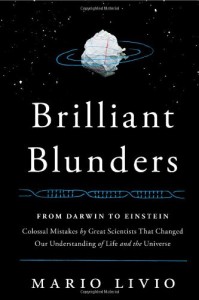
The author of the attached book review is a brilliant writer as well as one of the last of the great 20th Century scientists. “The Case for Blunders” is an important subject, because the confusion of theory with facts is perhaps the most persistent “Orientation” problem misshaping the OODA loops driving contemporary political discourse in economics, social policy, and defense policy as well as in the practice of institutional “big” science (where scientists are forced to cope with the conformist pressures of publication, gatekeeping, obtaining grants, etc). Dyson explains how practice of good science resolves this confusion in a constructive way.

The Case for Blunders

Freeman Dyson

New York Review of Books, 6 March 2014

Amazon Page
Amazon Page

Review: Brilliant Blunders: From Darwin to Einstein—Colossal Mistakes by Great Scientists That Changed Our Understanding of Life and the Universe, by Mario Livio, Simon and Schuster, 341 pp., $26.00

Science consists of facts and theories. Facts and theories are born in different ways and are judged by different standards. Facts are supposed to be true or false. They are discovered by observers or experimenters. A scientist who claims to have discovered a fact that turns out to be wrong is judged harshly. One wrong fact is enough to ruin a career.

Theories have an entirely different status. They are free creations of the human mind, intended to describe our understanding of nature. Since our understanding is incomplete, theories are provisional. Theories are tools of understanding, and a tool does not need to be precisely true in order to be useful. Theories are supposed to be more-or-less true, with plenty of room for disagreement. A scientist who invents a theory that turns out to be wrong is judged leniently. Mistakes are tolerated, so long as the culprit is willing to correct them when nature proves them wrong.

Continue reading “Chuck Spinney: Freeman Dyson – Great Science Demands Great Blunders and Good Losers – Nature Never Loses and Always Plays Fair”

Jim Dean: Alexander Orlov on USA Implosion in Middle East — “Going, Going, Gone…”

05 Iran, 06 Russia, Commercial Intelligence, Cultural Intelligence, IO Deeds of War, Peace Intelligence
Jim W. Dean
Jim W. Dean

NEO – USA in Mid East – Going, Going, Gone

[Veteran's Today Editor's note:  Alexander brings us more analysis from the Russian perspective at this critical time. The US seems to be rolling the dice in a desperate game to create instability on Russia's border, establish an offensive base in the Ukraine, threaten Russia gas markets in Europe, and give Putin some payback for his solid support of Syria.

The famous quote of Carl von Clausewitz comes to mind, “War is the continuation of politics by other means.”

But I think 21st century America will be remembered for raising sanctions up to the level of conducting war and occupying a targeted country at the same time, while using the least amount of military power.

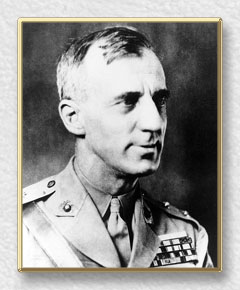
General Smedley Butler, USMC

America seems hell bent on conducting economic warfare across the globe, where our military has been relegated to the thug status that Marine General Smedley Butler described in his famous expose, War is a Racket. The modern Madison Avenue PR people had their fun trying to disguise the dirty deeds, with feints like calling them “color revolutions” versus the assaults that they really are.

But the bloom is off the rose now. We see the ugliness of it all for what it really is… just plain ugly. We also see that it is not being done for our benefit in any way. On the contrary, it never was.

We have been plantation assets to be used however the elites have wanted. And this endless game of serfdom will never end until we refuse to play the game… Jim W. Dean ]

US is losing its positions in the Middle East due to the Ukrainian Crisis

… by  Alexander Orlov,    … with  New Eastern Outlook, Moscow

By taking an extremely hostile position against Russia in the Ukrainian crisis, Washington has managed to hasten the reorientation of Moscow towards the East, especially the Mid East.

Iran is among the states that can expect the future development of bilateral relations with Russia, since it is one of the most influential countries in the region.

Complete article below the fold.

Continue reading “Jim Dean: Alexander Orlov on USA Implosion in Middle East — “Going, Going, Gone…””

noble gold