This is a really good take on what is happening financially, and why it has a deadening effect on technological development. When immediate profit is your only priority, there are no correcting forces, and you slowly go off course in terms of wellness. Until you crash. We ask the wrong questions so we get the wrong answers.Author’s note: This post is based on papers presented and remarks made during a *conference panel I moderated featuring William Lazonick of U Mass-Lowell, Jan Kregel of the Levy Institute and Damon Silvers of the AFL-CIO.
This article is divided into two parts: the first part will summarise the situation and propose solutions, explaining the analytical and geopolitical reasons behind the war, the main players and events, future evolution and political proposals; the second will set out the events in chronological form, in order to avoid including an excessive amount of detail in the previous part.
. . . . . . . .
Democratic politics has been kidnapped and intoxicated by the insidious totalitarianism of finanzcapitalism. If democracy is not capable of winning back its independence and freedom, we may only have the cold comfort of living in a science fiction world where financial zaibatsu control the planet and Blade Runner will seem like a children’s fairy-tale.
Corporate business plans and market control are being challenged by the expansion of the sharing economy and its “collaborative consumption”. Some corporations are ignoring the challenge. Some are fighting it. Some are creatively joining it. All these responses add up to a complex and rapidly evolving economic landscape that’s not well recognized by the general population.
Co-Intelligence Institute board member Heather Tischbein sent me a remarkable article, “Corporations must join the collaborative economy” by Jeremiah Owyang. It claims that the growth of what it calls the collaborative economy – the peer-to-peer dynamics increasingly known as “the sharing economy” in my circles – is an inevitable challenge that corporations will have to respond to whether they want to or not.
FORCES DRIVING THE EXPANDING “SHARING ECONOMY”
The article describes a number of societal, economic, and technical developments that are driving the emergence of the collaborative economy. These include supports for connectivity – including increasing population density and people’s desire for community accompanied by the rise of social networking and multi-function mobile devices. Also people’s attitude are shifting: More of them are more altruistic and motivated by a desire for sustainability and for more flexible livelihoods. They feel less need to own things as long as they have access to the services those things provide. Finally, both corporations and citizens are trying to monetize their idle resources, an effort that becomes easier as new payment systems are developed.
I was surprised that this list of forces driving the development of the sharing economy does not include “reduced purchasing power caused by economic downturns, inequity, and unemployment”. It seems obvious to me that when people don’t have enough money, many of them start sharing and working creatively to survive together. The article also does not particularly note that more people are satisfying their needs through doing things themselves – building, fixing, gardening, and so on – both individually and together. Nevertheless, the article’s analysis is quite interesting for the factors it does cover.
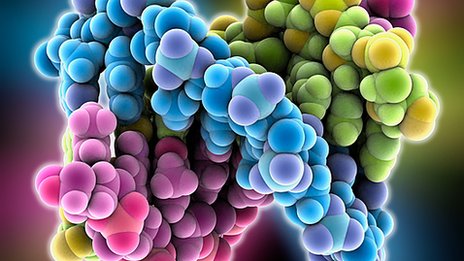
Will the emerging science of designing and engineering new forms of life receive the same hostile reception as genetically modified food and crops?
This is the question facing the growing community of academic and commercial researchers exploring the potential of synthetic biology.
Click on Image to Enlarge
For those pioneering this new field, the science offers a whole realm of exhilarating possibilities – dreaming up and building new organisms that will perform exactly what's ordered. It is a vision for taking control of nature.
Synthetic biology is a dimension beyond genetic modification.
While GM involves taking genes from one organism and inserting them in another, synthetic biology involves designing and creating artificial genes and implanting them instead – not just borrowing from the natural world but rewriting it or even reinventing it.
At a major conference this week in London – the BioBricks Foundation SB6.0 – excited talk suggested that synthetic biology could become the next big thing in everything from energy to medicines to industry.
Wastewater, increasingly injected into deep disposal wells amid the energy boom, appears to be the culprit in an increase in U.S. quakes.
EXTRACT:
In a study out today that provides the strongest link to date between wastewater wells and quakes, seismologists and geologists say U.S. earthquakes have become roughly five times more common in the past three years. They warn about inadequate monitoring of deep wastewater disposal wells that are setting off these small quakes nationwide.
There are more than 30,000 such deep disposal wells nationwide. They're increasingly used as mile-deep dumping grounds for fluids left over from the more shallow hydraulic fracturing, or “fracking,” wells responsible for surging U.S. natural gas production. The earthquakes have been linked to the wastewater wells but not the fracking drilling wells themselves.