Twitter has closed down Posterous.com, the former host of my blog “Random Communications from an Evolutionary Edge”.
We decided to make this problem into an opportunity. So Co-Intelligence Institute board member John Abbe and I have moved my blog to a new site where it has its own memorable domain name:
I really like the new look that we've created. You will see that more posts are now visible on the home page. There is also a tag cloud to make it easier to find what you are looking for and to give you an overview of the topics covered.
The new blog contains all the posts from the previous site at Posterous and all my new posts will be found at this new site.
Over 90% of my blog posts are also mailed to my list (the one you're getting this bulletin on) – and vice versa. So you can subscribe to the blog's RSS feed or simply continue to get my posts via this email list.
Capt. Robert Salas (USAF, Ret.) testifies and then describes a series of incidents that he witnessed both first hand and then has continued to study, where US Nuclear capabilities were disabled or compromised in conjunction with sightings of UFOs and unexplained phenomena in the vicinity of the bases.
The biggest banks have done an excellent job of delaying and undermining the Dodd-Frank financial overhaul law and staving off criminal investigations into wrongdoing.
Social media, Web 2.0, the Internet of Things, mobile computing, and the expansion of sensors is allowing more information to be gathered than ever before which, coupled with Big Data analytics, offers unprecedented insight into the needs, patterns, and habits of users, citizens, and consumers.
While there is little that is new in the attached article by Philip Giraldi; it is nevertheless very important and well worth reading. Giraldi has produced an excellent summary of the truly poisonous influences on US foreign and defense policies, a group more accurately described by the collective modifier neo-conmen.
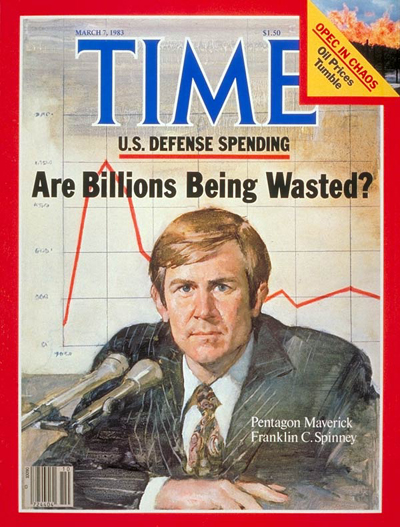
He describes how the influence of this movement's current incarnation got its start inside the Scoop Jackson (aka the Senator from Boeing) mafia during the 1970s, how it grew and infiltrated establishment of Versailles on the Potomac in the 80s and 90s, and then metastasized into a truly destructive menace after 9-11, which to the neo-conmen, became a kind of manna from heaven. The trauma unleashed by that attack enabled them to cynically fan the fires of blind fear and convert a horrendous crime into an act of war. I was in the Pentagon between 1973 and 2003 and first became aware of their growing influence in 1977 or 1978, although I erroneously discounted them at the time as being nutty. But, by 1983 or so, my discounting began to disappear. From my mind’s eye, Giraldi's retrospective is spot on,
Think about it: The neoconmen’s poison has been one of the (and in some cases “the,”) central causes of (1) the mistaken war in Iraq, (2) the failed war in Afghanistan, (3) the rise of a state of perpetual war that is morphing into an endless, as yet unacknowledged, and increasingly unfocused war against tribal Islam in the Middle East and Africa, (4) the hijacking of US foreign policy by our client state of Israel, (5) the never-ending crisis with Iran, (6) the continued addiction to high and economically counterproductive defense budgets, the growth of which are more tuned to the obsessions of the Cold War than the wars the neo-conmen started, (7) the reduction of civil liberties at home, and most importantly, (8) a web of growing grand-strategic mismatches among the (a) values America professes to uphold (what we say we are), (b) the actual values revealed to world by America’s actions (what we really are) and (c) the growing constraints of the world America has to deal with. This arrogant hypocrisy implicit in this grand-strategic web is becoming increasingly obnoxious to people living in the rest of the world.
Left uncorrected, this behaviour is a prescription for isolation. There can be no good end to the 21st Century grand-strategic pathway launched by the people described by Giraldi below. In saner times their destructive actions would have placed the neo-conmen in the dock of public opinion, if not the law.
It has been noted ironically by Justin Raimondo at antiwar and also by Scott McConnell over at The American Conservative how the neoconservative dominated American Committee for Peace in the Caucasus, which sees Chechens and other Central Asian Muslim militants as “freedom fighters” against Russian rule, exists side by side with other organizations like the Foundation for the Defense of Democracies and the American Enterprise Institute that feature many of the same neoconservatives dedicated to restraining Political Islam while extirpating what they frequently describe as “Islamic fascism.” As is frequently the case with ideologically driven positions, the American neocon supporters of Chechen independence have failed to note that the Chechen nationalist uprising of the 1980s has now morphed into an Islamic based insurgency. The contradictory behavior is particularly glaring as Chechens have frequently been identified among al-Qaeda fighters in Afghanistan and elsewhere and have carried out major terrorist operations in the Russian Confederation, highlighted by the killing of 186 schoolchildren at Beslan in September 2004. The friends of Chechnya response to the massacre has been to successfully pressure the State Department to provide political asylum and a government job for Ilyas Akhmadov, a rebel leader who might have been party to the terrorist attack, a bit of hypocrisy that the Russians have noted vis-à-vis Washington’s professed global war on terror.
Formal Statements
1. Public Speeches
2. Letters of opposition or support
3. Declarations by organizations and institutions
4. Signed public statements
5. Declarations of indictment and intention
6. Group or mass petitions
In the run up to the December 2013 European Council devoted to defence issues, and in view of ongoing austerity cuts in EU and NATO member states, the Security & Defence Day ’13 will address several questions: Does Europe have the means to fulfil its global security ambitions and stabilise its own neighbourhood? How could NATO’s ‘smart defence’ and EU’s ‘pooling and sharing’ relieve the pressure on defence budget and what could be done to kick-start a renewed defence industry drive? This year’s debate will span many topics, including how cooperation between the EU and NATO might be improved to avoid duplication in maritime operations, mitigate the threats posed by terrorism and coordinate their cyber-security as well as cyber defence strategies.