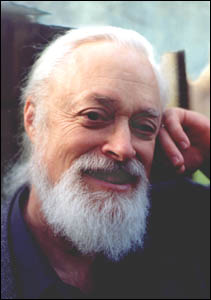
Tom Atlee: Rachel Naomi Remen on Wholeness Among Us and With World

Collective Intelligence, Cultural Intelligence
Tom Atlee
Tom Atlee

Rachel Naomi Remen offers a story about how wholeness became embedded in the world, waiting for us to call it forth.  I explore different dynamics of wholeness and how it relates to being agents of healing and transformation – including the power of disturbance to evoke grace.

Wholeness moving in us and the world

Rachel Naomi Remen offers a story about how wholeness became embedded in the world, waiting for us to call it forth. I explore different dynamics of wholeness and how it relates to being agents of healing and transformation – including the power of disturbance to evoke grace.

Healing is about restoring former wholeness. Health is about maintaining existing wholeness. Transformation and evolution are about generating or evoking new forms of wholeness from – as Rachel Naomi Remen puts it in the piece below – “the seed of a greater wholeness, a dream of possibility”.

To a certain extent new forms of wholeness can be created, as in art, innovative technologies, or the unique synergies and dynamic tensions of a groundbreaking work of architecture or engineering. Yet some of the most remarkable forms of wholeness are organic and self-organized, from new ecosystems and babies’ personalities to spontaneous realizations and cultural shifts. Although this kind of wholeness can’t be created in a linear sense and normally simply happens by itself, it can also be catalyzed, evoked, or nurtured by invitation, inspiration, opportunity, and – as Rachel Naomi Remen puts it – by “our listening, our belief, our encouragement and our love.”

“Emergent processes” like Open Space and World Cafe are, in essence, ways to enhance a group’s capacity for generating novel but self-organized wholeness from among its members. I like to think of these processes as thoughtfully designed channels for the Tao, the Way of Nature, whose power is not in what it does but in what it allows, evokes, and facilitates.

Continue reading “Tom Atlee: Rachel Naomi Remen on Wholeness Among Us and With World”
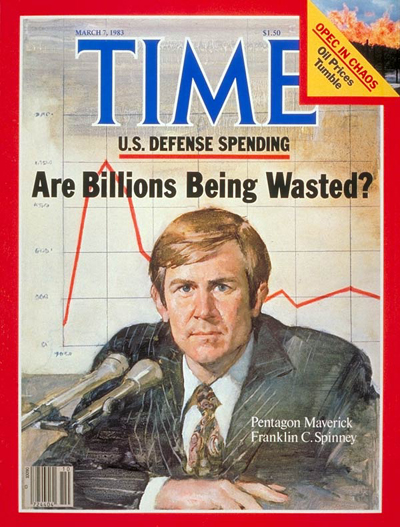
Chuck Spinney: Syria as a Case Study in the Failure of Democracy, Economics, Foreign Policy, Governance, and Intelligence

Corruption, Government, Media, Peace Intelligence
Chuck Spinney
Chuck Spinney

Attached is another excellent report by Patrick Cockburn on the disorientating nature of contemporary yellow journalism in the Syrian Civil War.

Of course, disorientation is not a new problem in war: Sun Tzu said, “All war is based on deception.”

But the ability to manipulate data and images with high-tech computing technology and then distribute that manufactured ‘reality' nearly instantaneously, and at very low cost, has increased and decentralized the power to deceive.  This decentralization of the power to disorient has made everyone from Barack Obama to John Q. Average American more vulnerable to the self deception of an incestuously amplifying OODA loop*, and in so doing, it has spread confusion, disorder … and culpability throughout the political decision-making system.

This ambiguity goes beyond centrally orchestrated propaganda and raises what may the central question of contemporary governance in a system based on the assumptions of a representative democracy :  Who are the real decision makers in an evolving decision making system (or OODA loop) that is pulled and twisted by a plethora of ephemeral shadows in a cave?

————————–

* Readers unfamiliar with the nature of incestuous amplification in OODA loops will find a brief explanation in my essay Iraq Invasion Anniversery: Inside the Decider's Head.

Chuck Spinney

Port de Plaisance,Taverna, Corsica


Foreign media portrayals of the conflict in Syria are dangerously inaccurate

World View: It is naive not to accept that both sides are capable of manipulating the facts to serve their own interests

Patrick Cockburn

Independent, 30 June 2013

Every time I come to Syria I am struck by how different the situation is on the ground from the way it is pictured in the outside world. The foreign media reporting of the Syrian conflict is surely as inaccurate and misleading as anything we have seen since the start of the First World War. I can't think of any other war or crisis I have covered in which propagandistic, biased or second-hand sources have been so readily accepted by journalists as providers of objective facts.

Continue reading “Chuck Spinney: Syria as a Case Study in the Failure of Democracy, Economics, Foreign Policy, Governance, and Intelligence”

Bojan Radej: Divided We Stand — Integration as Triad

Cultural Intelligence
Bojan Radej
Bojan Radej

Divided we stand

Abstract: For Durkheim, the society integrates as dual, separately in a mechanical and in organic way. The first individuals in their interactions habituate new local rules which integrate society in its specific issues in a bottom-up direction. When new rules are institutionalisded and enforced for all, they feed back as mechanical restriction of behaviours from the top-down. Micro to macro structuration is seen as a circular process and does not err in descriptions of integration process that is also circular in nature. However, it fails to explain what integrates society constituted on unresolvable oppositions, and so how translate integration efforts into the integration outcome.

To fill this gap, integration is reorganised from dual to triadic concept first and so adjusted to fit a meso, instead of conventional micro or macro frame. The case is illustrated with evaluation study. Three measures of integration are derived. A strong balance is a measure of the mechanical integration between primary oppositions involved in the evaluated issue. Cohesion is a correlative measure of cooperative achievements. The third is a weak balance which measures mutuality of relations, assessing if they weave social ties in an emancipatory way. Circular interpretation is thus not rejected here. It is only reframed in a triadic concept having in its centre a meso category which is soft in its logic, intermediary in its function, but radical in transformative consequences.

Bojan Radej ( bojan.radej@siol.net), Mojca Golobič, Slovenian Evaluation Society, Working paper, vol. 6, no. 1 (June 2013), 23 pp.;

Neal Rauhauser: Turkey – Iran – Saudi Arabia in Conflict

Cultural Intelligence
Neal Rauhauser
Neal Rauhauser

Today’s Tripolar Power Struggle

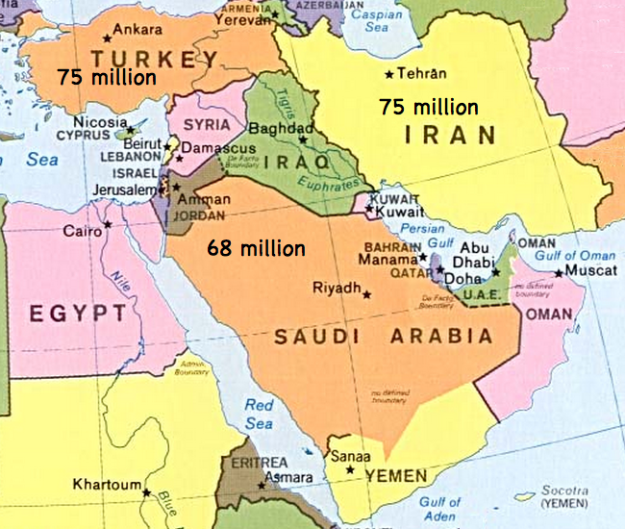
A few days ago I came across a map as part of research intended to expand the current Shia/Sunni labels applied to the Syrian conflict into the regional actors that fuel it. Egypt was given a prominent role that likely dated back to thinking about the United Arab Republic, formed early on in the Cold War. Today I undertook creating a map based on current conditions.

Click on Image to Enlarge

Turkey certainly has a role, with Syria melting down on their doorstep, and Iran views Syria as an ally, part of the Shia arc from the northeast Mediterranean to Iran’s eastern border. Egypt is bogged down with internal issues and the other player is a composite of the Saudis and the Qataris, both of whom fund radicalized Sunni groups. The 68 million population number is for all countries of the Saudi Arabian peninsula, not just the two who fund adventures.

Click on Image to Enlarge

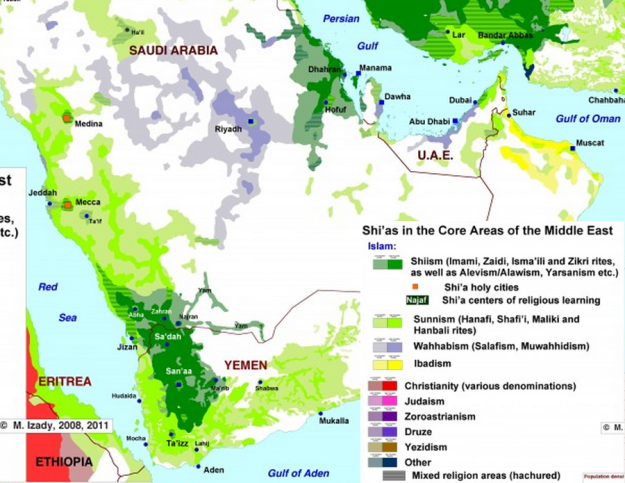
Twenty percent of Saudia Arabian peninsula residents are Shia. Tiny majority Shia Bahrain, home to the U.S. 5th Fleet, has simmered with dissent over injustice that flows from the Sunni dominated regime, and Saudi Arabia has intervened directly in order to keep the troubles from overflowing into their own Shia population, some 10% of the total, and concentrated in the provinces near Bahrain.

Click on Image to Enlarge

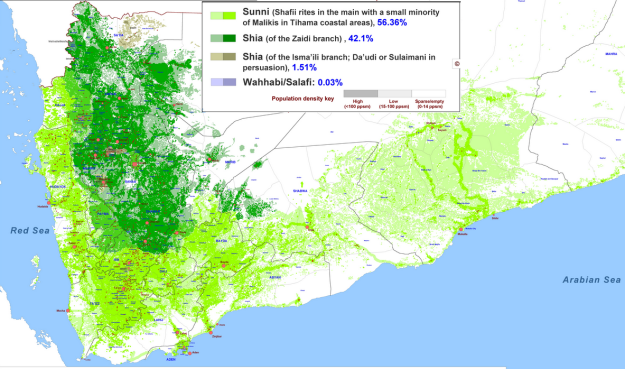
Yemen, formerly the nations of North and South Yemen, who merged in 1990, is evenly split between Shia and Sunni adherents, and has been at a rolling boil for the last four years. As recently as three weeks ago U.S. drones struck al Qaeda Arabian Peninsula (AQAP)  leadership in Yemen.

I recently posted Bipartisan Opposition To Syrian Intervention, a report on both sides of Capitol Hill weighing in on their disinterest in an unsupervised adventure in Syria. Congressman Peter Welch had this to say:

Syria is in a brutal and tragic civil war the roots of which go back hundreds of years

Read full post.

Continue reading “Neal Rauhauser: Turkey – Iran – Saudi Arabia in Conflict”

Mini-Me: UK General “We Should Have Talked to Taliban” Decade Ago

Cultural Intelligence, Earth Intelligence, Peace Intelligence
Who?  Mini-Me?
Who? Mini-Me?

Huh?

‘We should have talked to Taliban' says top British officer in Afghanistan

Exclusive: General Nick Carter says west could have struck a deal with Taliban leaders after they were toppled a decade ago

Emma Graham-Harrison in Kabul

The Guardian,

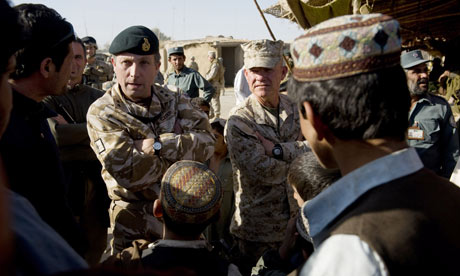
The west should have tried talking to the Taliban a decade ago, after they had just been toppled from power, the top British commander in Afghanistan has told the Guardian, barely a week after the latest attempt to bring the insurgent group to the negotiating table stuttered to a halt.

Click on Image to Enlarge

General Nick Carter, deputy commander of the Nato-led coalition, said Afghan forces would need western military and financial support for several years after western combat troops head home in 2014. And he said the Kabul government may have to accept that for some years it would have only shaky control over some remoter parts of the country.

Speaking exclusively to the Guardian, he said: “Back in 2002, the Taliban were on the run. I think that at that stage, if we had been very prescient, we might have spotted that a final political solution to what started in 2001, from our perspective, would have involved getting all Afghans to sit at the table and talk about their future,”

Acknowledging that it was “easy to be wise with the benefit of hindsight”, Carter added: “The problems that we have been encountering over the period since then are essentially political problems, and political problems are only ever solved by people talking to each other.”

Read full article.

Continue reading “Mini-Me: UK General “We Should Have Talked to Taliban” Decade Ago”

Neal Rauhauser: A Cognitive Prosthetic

Cultural Intelligence
Neal Rauhauser
Neal Rauhauser

A Cognitive Prosthetic

I recently wrote Curation & Cognition after receiving a paper that defined the practice of curation: Attention Doesn’t Scale. Summary: good curation is a treasure when you find it, and now we know what that entails.

Stemming A Torrent Of Garbage describes the poor condition of LinkedIn groups without naming names. The ones I admit to being in are fine, a lot of the others … not fine. Summary: There is a problem, and good curation can play a role in resolving it.

Click on  Image to Enlarge
Click on Image to Enlarge

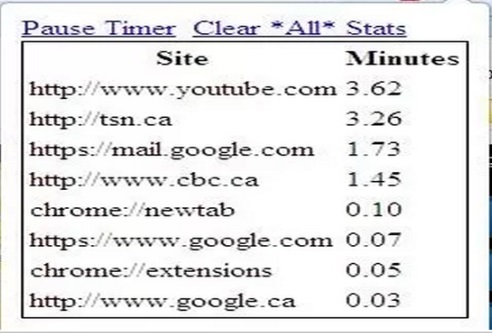
An acquaintance recently forwarded me a story about a young man who was using his cell phone as a ‘cognitive prosthetic’. He had some sort of dangerous sleep disorder and the phone served as means for him to self assess so he’d know when trouble was brewing. This set me to thinking about what sort of cognitive prosthetic I could arrange for myself in order to improve my focus. I had long been thinking I needed to do a time study on how long it took me to get through the policy oriented email I receive, I decided I’d look for a browser plugin that could assist in this, and I got something that will serve as a starting point with my very first search: Time Tracker.

Continue reading “Neal Rauhauser: A Cognitive Prosthetic”

NIGHTWATCH: Syrian Realities You Can Trust

08 Wild Cards, Cultural Intelligence, Peace Intelligence

Click on Image to Enlarge

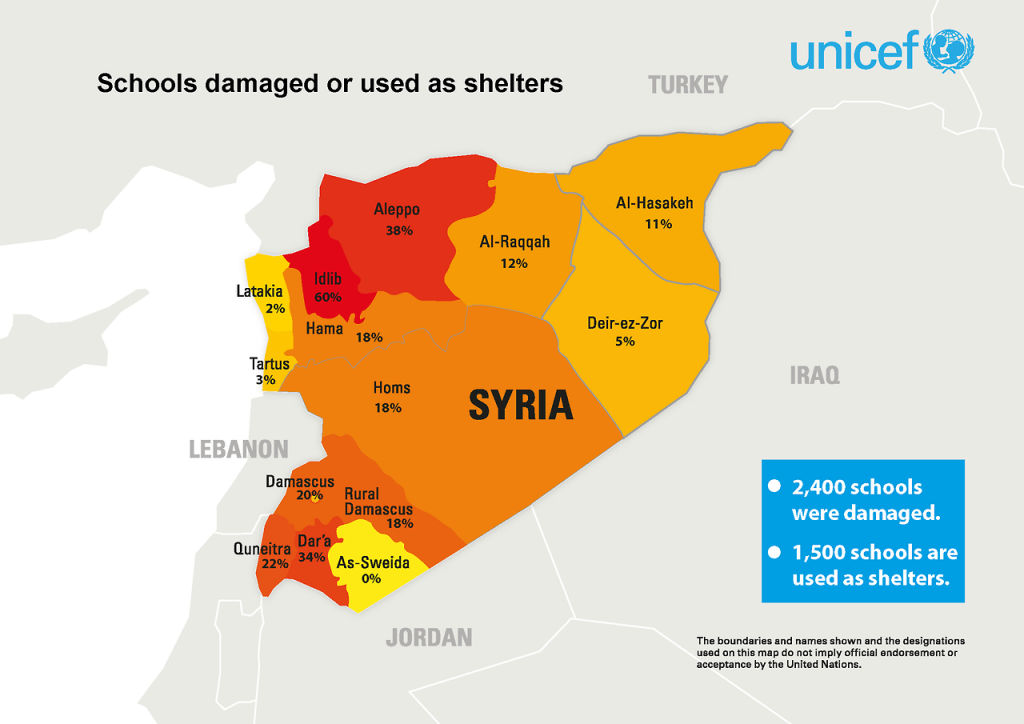
Syria: Yesterday, the official news agency, al Manar, reported that government forces had captured Tal Kalakh near the northern border of Lebanon, after several days of “fierce clashes.” It was a key node for rebel arms smuggling.

Comment: Actually the Syrian army took control of the town over the weekend. Patrick Cockburn visited Tal Kalakh this week to investigate the government claims. He reported his interviews and findings in The Independent today. They are instructive. The rebels and town leaders cut a deal with the Syrian army leaders. The terms of the deal were not disclosed but shops have opened and residents expect no more fighting.

A local Free Syrian Army (FSA) commander said he and his men changed sides because they were disillusioned. A Syrian army officer said the town cut a deal because its leading men wanted to avoid its total destruction as occurred at al Qusayr. The 300-400 FSA men fled to Lebanon or merged back into the population.

Cockburn makes several significant points based on his conversations that are insightful about the nature of the fighting. First is the revelation that many local deals are being brokered or negotiated in many towns to prevent their destruction. Second, the deals are a consequence of the destruction of al Qusayr. Third, the deals are easier when Syrians are talking to Syrians. As a result, the Syrian residents move away from neighborhoods occupied by foreign fighters.

Cockburn judges that the local cease fire agreements are holding and will be critical to ending the violence.

His observations and those of his sources explain the sputtering pace of the fighting and add insight into the government's description of the rebels. The government's negotiating progress falls under or outside the reporting threshold of the mainstream international news agencies. Syrians are more prone to cooperate with the Syrian government than with foreign fighters.

The most important point Cockburn makes is that the simplistic media depiction of Syria as two hostile camps divided by disparity of cult is an inadequate representation of a complex security problem, made much worse by outside interventions.

noble gold