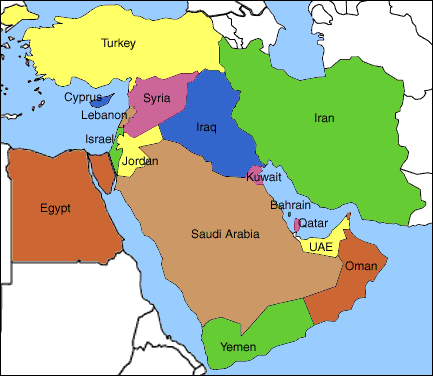
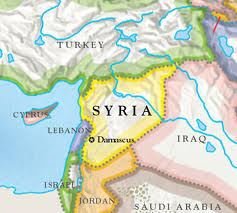
Syria:Comment: Israeli and Western news outlets report the Syrian government is rebounding and the army is on the offensive. The clearest sign of greater vigor is President Asad's public appearance at a power station in Damascus. This is his first public appearance since January, but he gave two televised interviews in April.
While Asad activities are confidence builders, the army's continuing offensive against rebel-held sections of the city of Homs is a more tangible manifestation of resurgence. The operation, thus far, has succeeded in taking back parts of Homs that had been held by rebels for a year.
Hezbollah is providing flank support by attacking opposition fighters on the border town of Qusayr, which is located along the route between Damascus and the Alawite core region to the north. Syria forces also are fighting in the port town of Baniyas.
A reasonably successful offensive in this region would secure the western and most productive parts of Syria for the regime and essentially fragment the country. It also would ensure that attempts to provide western arms to the rebels via the Mediterranean ports would be subject to capture by Syrian and Hezbollah forces.
Syrian leaders appear to be trying to improve their political and military positions before the US leadership makes up its mind about increased intervention. They are also taking advantage of continuing disunity and fractiousness among the rebel groups. The Times of Israel judged that the decline in opposition fortunes began when the rebel al Nusrah Front announced its allegiance to al Qaida.
In the run up to the December 2013 European Council devoted to defence issues, and in view of ongoing austerity cuts in EU and NATO member states, the Security & Defence Day ’13 will address several questions: Does Europe have the means to fulfil its global security ambitions and stabilise its own neighbourhood? How could NATO’s ‘smart defence’ and EU’s ‘pooling and sharing’ relieve the pressure on defence budget and what could be done to kick-start a renewed defence industry drive? This year’s debate will span many topics, including how cooperation between the EU and NATO might be improved to avoid duplication in maritime operations, mitigate the threats posed by terrorism and coordinate their cyber-security as well as cyber defence strategies.
Lebanon/Hezbollah-Syria:Al Ahram reported on 30 April a televised speech by Hassan Nasrallah, the leader of Lebanese Hezbollah. He confirmed that Hezbollah fighters are aiding government troops in Syria.
“A large number of (Syrian rebels) were preparing to capture villages inhabited by Lebanese,” so it was “normal to offer every possible and necessary aid to help the Syrian army, popular committees (pro-government militia) and the Lebanese,” Hassan Nasrallah said in a televised speech.
He warned the Syrian opposition, “You will not be able to take Damascus by force and you will not be able to topple the regime militarily. This is a long battle. Syria has real friends in the region and in the world who will not allow Syria to fall into the hands of America or Israel.”
Comment: Nasrallah arrived in Tehran on Monday to participate in the World Summit of Ulama and Islamic Awakening. This is an Islamic scholars conference.
The timing of Nasrallah's speech suggests that it is a response to the discussion in the US about alleged Syrian use of chemical weapons as a red line for increased US intervention. It signals an escalation of the conflict and reconfirms that the Syrian fighting has become a regional war by proxy.
Al Arabiya reported that the bodies of 30 Hezbollah fighters were returned to Lebanon yesterday, bringing the total number of Hezbollah fighters reported killed to over 130.
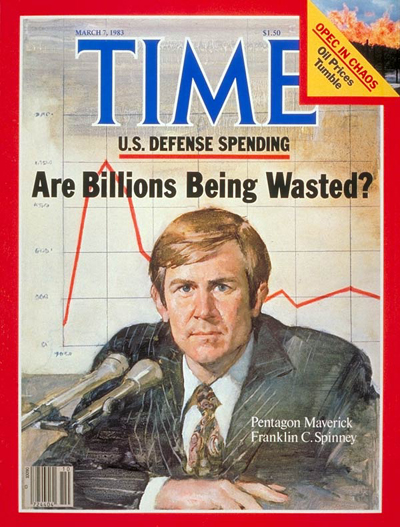
In the attached essay, my very good friend Mike Lofgren raises the question of whether defense spending is good for the economy. This is a current issue because the threat of defense budget reduction is being countered by arguments asserting that these reductions will push the economy into recession. More generally, the political addiction to defense spending has been a major contributor to our nation's economic decline and our political stagnation — i.e., what I have called Americas Defense Dependency, the subject of an essay I wrote last November for Counterpunch. Mike comes at these issues from a different albeit complimentary and equally important angle.
Readers interested in learning more about this important subject will find the work of the late Professor Seymour Melman of Columbia University to be particularly edifying. In his prescient book, Profits Without Production (Knopf, 1983), Melman explained how the growing militarization of our economy was one of the central causes of the decline in America’s manufacturing competitiveness. This decline started in the 1970s, but Melman showed how it grew out of seeds planted by the permanent military mobilization of a huge defense industry in the 1950s.
The 1960s comedy show Laugh-In included an occasional sketch in which co-host Dan Rowan played a comic general whose tag-line was “war is good for business!” In an ironic echo of that skit, an April 27 Washington Post story delivers the same message: “A steep slowdown in defense spending tied to the end of the wars in Iraq and Afghanistan is undercutting the country's economic recovery, new government data released Friday revealed.” An 11.5-percent annual drop in Pentagon spending resulted in slower growth in the gross domestic product (GDP) during the first quarter of 2013 than economists expected.
So did the dozen years of war, with all the deaths, destruction, and expense they entailed, have the perverse silver lining of being good for the economy? Most mainstream economists — who, like cynics, know the price of everything and the value of nothing — would answer in the affirmative.
Gross domestic product, which they tend to treat as a surrogate for economic well-being, is only a tote board of all spending that occurs in an economy. Statistics like GDP are arbitrary, subject to incomplete data, and can mislead us about underlying economic conditions. A dollar spent on a cancer cure has the same worth to the GDP as a dollar spent to bribe an Afghan drug lord. This convention can reach absurd lengths, such as massive hurricane damage possibly increasing the GDP: money must be spent just to get conditions back to the way they were, but it counts it as “growth.”
Based on my almost three decades on Capitol Hill, most of them involved in defense budgeting, I can say authoritatively that military spending evokes an almost mystical reverence among many members of Congress. A $325-billion defense program like the F-35, however technically flawed, typically engenders less floor debate than relatively miniscule domestic programs such as the Corporation for Public Broadcasting.
This is the story of two competing worldviews, of conscience vs. court, of fantasy vs. reality, of history vs. the future.
The Prophets of Oak Ridge
Dan Zak
Washington Post, 30 April 2013
Click on Image to Enlarge
Last summer, in the dead of night, three peace activists penetrated the exterior of Y-12 in Tennessee, supposedly one of the most secure nuclear-weapons facilities in the United States. A drifter, an 82-year-old nun and a house painter. They face trial next week on charges that fall under the sabotage section of the U.S. criminal code. And if they had been terrorists armed with explosives, intent on mass destruction? That nightmare scenario underlies the government’s response to the intrusion. This is the story of two competing worldviews, of conscience vs. court, of fantasy vs. reality, of history vs. the future.
“It’s idolatry, putting trust in weapons. And weapons are made like gods. … Weapons are always false gods because they make money. It’s profiteering.”Sister Megan Rice
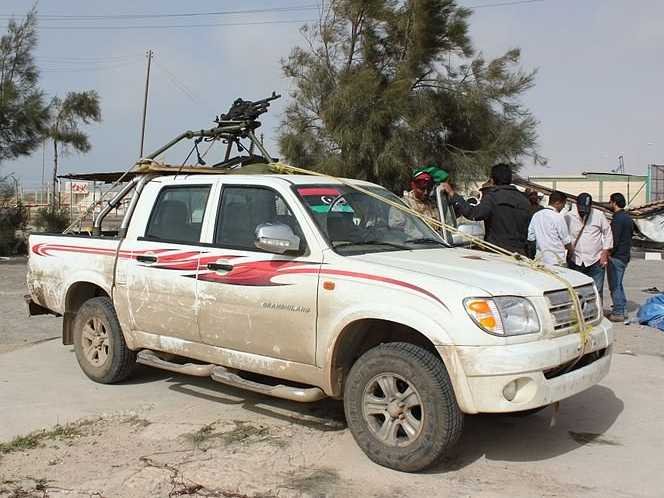
Ever fancied owning your own “technical” – the sort of pickup truck fitted with a heavy machine gun that rebels careering around the streets from Somalia to Libya have made notorious?
Click on Image to Enlarge
Come to the Shanghai Auto Show and a Chinese automaker will sell you one.
When the show opened a week ago, Zhongxing Auto proudly displayed on its stand a version of its Grand Tiger pickup with an unusual accessory – a four-legged steel frame fixed to the cargo bed, ready for the weapon of your choice.
Watch the full interview with Jeremy Scahill on Democracy Now! at http://owl.li/knEmh. Jeremy Scahill, author of the new book, Dirty Wars: The World Is A Battlefield, has spent years covering secret U.S. warfare through drone strikes, targeted killings, and enlisting foreign militias in countries from Somalia to Pakistan. Speaking to Democracy Now!, Scahill says U.S. diplomatic cables released WikiLeaks were instrumental in researching the book. “In terms of understanding how the covert apparatus works, WikiLeaks was indispensable,” he says. “We're going to look back decades from now and realize that because of the release of those documents, there was a huge shift in how we understand some of the more hidden aspects of U.S. policy.”
Watch the 50-minute Part 1 of our interview with Jeremy Scahill at http://owl.li/klnWN.
Democracy Now! is an independent global news hour that airs weekdays on 1,100+ TV and radio stations Monday through Friday. Check out our vast news archive and stream live 8-9am ET at http://www.democracynow.org.