Rob Dover: Intelligence Failures in Syria & Algeria — Is Open Source Everything an Alternative? Steele Comments

#OSE Open Source Everything, Commercial Intelligence, Corruption, Cultural Intelligence, Government, Idiocy, Ineptitude, Military

Rob-DoverSyria, Mali, Algerian gas-works and ‘Open Source Everything’

Read any government security document, any of the national security strategies produced by a now large number of states and you will get a feel for the proliferation in the number of threats they feel they face. The preamble will normally contain a paragraph explaining that after the Cold War or after 9/11 everything got a little more complex, a little less explicable.

Heightened complexity in the international system appears to have coincided (and is only partially causally linked) to the increased levels of activity/ improvements in technology, social media etc. The rate at which information can be collected has increased, even if the sort of information being collected is broadly the same.

The problem of accounting for events like the Algerian gas-plant siege a few weeks ago (or the development of the insurgency in Syria, or in the hijacking of the state in Mali) for state-based security organisations is that their resources allocated in such a way that it logical for them to be looking the wrong way when this happens. It would be unlikely – although we can’t be sure, obviously – that there’s a bod in every security community across Europe pondering the safety of gas-plants in the ME and Maghreb. So, when this happens the information required to rapidly come down the pipe needs to be hastily scoped and drawn in. And this got me thinking about Robert Steele’s ‘open source everything’ manifesto (I declare the interest that Robert has written a chapter for the Routledge Handbook on Intelligence that I, Mike Goodman and Claudia Hillebrand have compiled and which will be in a good bookshops from August, and that he and I have corresponded at length about these issues), and how it could be used or applied in these circumstances. I have my own take on this, and I’ve provided the link above to the source: Robert also has a good search on his name I think so I’d guess he’ll correct me in comments too! But my wonder is more in the aggregation of huge quantities of information.


Read full article.

Continue reading “Rob Dover: Intelligence Failures in Syria & Algeria — Is Open Source Everything an Alternative? Steele Comments”

DefDog: CyberCom is a Joke. Does Boosting Its Numbers Fivefold Make it a Travesty? Memo to Hagel: Start Here.

Corruption, Idiocy, Ineptitude, IO Impotency, Military
DefDog
DefDog

Cybercom is a joke.   This is insane.

Pentagon to boost cybersecurity force

By , Sunday, January 27, 5:42 PM

The Pentagon has approved a major expansion of its cybersecurity force over the next several years, increasing its size more than fivefold to bolster the nation’s ability to defend critical computer systems and conduct offensive computer operations against foreign adversaries, according to U.S. officials.

The move, requested by the head of the Defense Department’s Cyber Command, is part of an effort to build an organization that until now has focused largely on defensive measures into the equivalent of an Internet-era fighting force. The command, made up of about 900 personnel, will expand to include 4,900 troops and civilians.

Details of the plan have not been finalized, but the decision to expand the Cyber Command was made by senior Pentagon officials late last year in recognition of a growing threat in cyberspace, said officials, who spoke on the condition of anonymity because the expansion has not been formally announced. The gravity of that threat, they said, has been highlighted by a string of sabotage attacks, including one in which a virus was used to wipe data from more than 30,000 computers at a Saudi Arabian state oil company last summer.

Read full article.

Continue reading “DefDog: CyberCom is a Joke. Does Boosting Its Numbers Fivefold Make it a Travesty? Memo to Hagel: Start Here.”

DefDog: 9/11 Refutations Gaining Traction

Corruption, Cultural Intelligence, Government
DefDog
DefDog

From JFK to 9/11 to the Bin Laden Raid, what I am seeing is growing public disbelief of any government claim.

Architects and Engineers Question The Official 9/11 Story

Libertarian News, January 18, 2013

It may come as a surprise to many readers who are unfamiliar with the evidence surrounding the 9/11 terrorist attacks, but explosives were indeed found in all of the dust samples taken from the World Trade Center.  Of course, the state organized investigation failed to turn up any, but that was because they didn’t look for the particular type of explosive used.  A team of private investigators, physicists and engineers conducted an independent analysis of the dust and found it to contain unreacted nano-thermite, which is a special type of military grade explosive.  Engineer Jim Hoffman explains the various properties of the explosives used to destroy the towers:

Read full article.

Continue reading “DefDog: 9/11 Refutations Gaining Traction”

Mini-Me: Bin Laden — the Story Continues — Zero Dark Thirty as the Glorification of Treason — What Price Integrity? How Many SEALS Must Die For a Lie?

Corruption, Government, Military
Who?  Mini-Me?
Who? Mini-Me?

Huh?

“Zero Dark Thirty”: The deeper, darker truths

Jim Fetzer, former Marine

Veterans Today, 26 January 2013

A film that may even take the Academy Award for “Best Picture of 2012” raises serious moral issues; glorifies a political stunt and is based on an historical fiction. It is the latest in Obama propaganda.

Osama bin Laden was not killed on 2 May 2011 during the raid on a compound in Pakistan. He actually died in Afghanistan on or about 15 December 2001 — and he was buried there in an unmarked grave.

Local obituaries reported Osama’s death at the time. Even FOX News subsequently confirmed it. He was buried in an unmarked grave in accord with Muslim traditions. He did not die in Pakistan.

Continue reading “Mini-Me: Bin Laden — the Story Continues — Zero Dark Thirty as the Glorification of Treason — What Price Integrity? How Many SEALS Must Die For a Lie?”

Penguin: Has America Become an Authoritarian State?

Corruption, Government
Who, Me?
Who, Me?

Macro-analysis.  But it is absolutely essential to understanding how it works.

Has America Become an Authoritarian State?

On the destruction of our democracy.

January 25, 2013  |

The debate in both Washington and the mainstream media over austerity measures, the alleged fiscal cliff and the looming debt crisis not only function to render anti-democratic pressures invisible, but also produce what the late sociologist C. Wright Mills once called “a politics of organized irresponsibility.” For Mills, authoritarian politics developed, in part, by making the operations of power invisible while weaving a network of lies and deceptions through what might be called a politics of disconnect. That is, a politics that focuses on isolated issues that serve to erase the broader relations and historical contexts that give them meaning. These isolated issues become flashpoints in a cultural and political discourse that hide not merely the operations of power, but also the resurgence of authoritarian ideologies, modes of governance, policies and social formations that put any viable notion of democracy at risk. Decontextualized ideas and issues, coupled with the overflow of information produced by the new electronic media, make it more difficult to create narratives that offer historical understanding, relational connections and developmental sequences. The fragmentation of ideas and the cascade of information reinforce new modes of depoliticization and authoritarianism. 

Read full article.

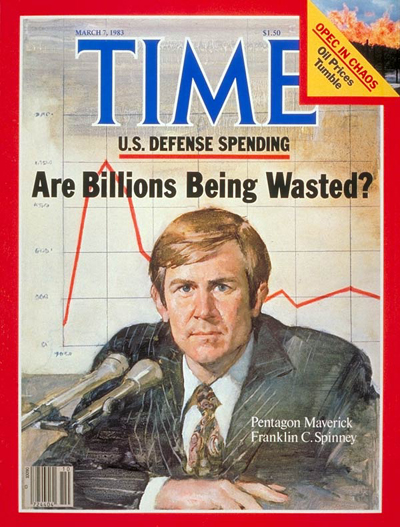
Chuck Spinney: Into the Sahel Rabbit Hole….

Corruption, Government, Idiocy, Ineptitude, Military
Chuck Spinney
Chuck Spinney

This is a very important report by highly regarded scholar of the region, especially Algeria.

Call to arms will bring no peace to Sahel

Region cannot be returned to Mali’s control militarily, says Hugh Roberts

By Hugh Roberts, Financial Times, January 24, 2013 6:03 pm

The writer is Edward Keller Professor of North African and Middle Eastern History at Tufts University

David Cameron’s vision of decades of global counter-terrorist struggle in north Africa sounded like the promise of doom to anyone who cares about the region. The Sahel’s terrorism problem dates back no further than 2003 – the west’s global war on terror gave birth to it; the west’s part in the destruction of Muammer Gaddafi’s Libya aggravated it; and France’s decision to pursue another war in Mali is expanding it.

In 2003, two drastic changes occurred. Washington launched its Pan-Sahel Initiative, soon renamed the Trans-Saharan Counterterrorism Initiative; and a branch of the Salafist Group for Preaching and Combat (known by its French acronym of GSPC) migrated from north-eastern Algeria to the far south of the Algerian Sahara, announcing its arrival with the abduction of 32 European tourists that year.

These developments were linked. In its drive to involve itself in the Sahel, where it blithely trespassed on France’s traditional sphere of influence, the Pentagon massively hyped the terrorist threat. But what really made the PSI feasible was Algeria’s involvement. Algiers had seized on the terrorist attacks of September 11 2001 to align itself with US President George W. Bush’s war on terror. One reason for this was to avoid being marked for destruction, like Iraq. But the country also saw an opportunity to resume normal relations with its western partners, following a French-led boycott begun after a 1994 terrorist attack on an Air France flight.

Read full article.

Chuck Spinney: Why we lose wars at ever increasing cost…

Corruption, Government, Idiocy, Ineptitude, Military
Chuck Spinney
Chuck Spinney

Don't hold your breath: One impediment to understanding what works and what does not work in war is an out-of-control secrecy system that clogs up DoD's own OODA loops with over-classified needlessly compartmented information.  The barriers within this system work to stretch out our own decision cycles.  But, as the American strategist Colonel John Boyd showed, one of the central objectives implicit in any military strategy is to stretch out the OODA loops governing your adversary's decision cycles.  Operating inside your adversary's OODA loops enables you to disconnect his decisions from the reality and collapse him into confusion and disorder (short explanation here, longer explanations here).  So, stretching out your own loops is, ipso facto, really loopy. 

 
The attached report by Scott Shane may seem hilarious, but it is really an outward symptom of the much deeper strategic problem posed by the compartmented nature of this self-inflicted wound.  Think about the mentality that fuels a predilection to burn books that reveal harmless chickenshit details — like, for example, the widely used nickname for National Security Agency and the real name of Baghram Air Force base, a name that became well known to the entire world during the Soviet Union's aborted occupation, or the reclassification of an unclassified citation for a bronze star medal.  Is this the behaviour of decision making system that is tightly connected to its own environment and is trying to improve its performance by learning from experience?  To ask this question is to answer it.
 
Of course, understanding how we disconnected our own decisions from reality in hot wars does not matter: The epistemological essence of a mindset ruled by the secret compartments of the military-technical revolution is that the future will be different from the past.  We are leaving the hot war in Afghanistan and an intensification of the secrecy system will be necessary to extract ever larger amounts of taxpayer dollars to fund the super-secret deep strike ‘precision' weapons which lie at the heart of the Obama's strategic pivot to a new cold war focused on China.

Pentagon Reverses Some of Its Censoring of a War Book

By SCOTT SHANE
New York Times, January 25, 2013

WASHINGTON — In an illustration of the government’s changeable ideas of what should be secret, Pentagon censors have decided that nearly half of more than 400 passages deleted from an Afghan war memoir can be printed without damaging national security.
noble gold