
Published on Sep 12, 2012 by DarthF3TT. This is the Muhammad Movie by Sam Becile that caused Muslims to kill United States ambassador, J Christopher Stevens. The film claims Islam is a lie and Muhammad was a pedophile. All rights to Sam Becile or whoever made this film. 13.50 in length. YouTube Source
Mini-Me: From 9/11 to Arab Spring to Iran War — Who, Exactly? + Meta-RECAP
Advanced Cyber/IO, Corruption, Government, Knowledge, Politics
Huh?
James H. Fetzer: Mossad Played a Crucial Role in 9/11 Attacks
Interview with James H. Fetzer
By: Kourosh Ziabari
EXTRACT
The key players in relation to 9/11 were the neo-conservatives in the Department of Defense and the Israeli Mossad. Philip Zelikow, Executive Director of the 9/11 Commission, for example, had as his area of academic specialization before entering government the creation and maintenance of public myths, M-Y-T-H-S, which is what he gave us in the 9/11 Commission Report. As Elias Davidsson has shown, the government has never shown that the alleged hijackers were abroad any of those planes. As David Ray Griffin and A.K. Dewdney have shown, all of the alleged phone calls from those planes were faked. As Col. George Nelson, USAF (ret.), has observed, although there were millions of uniquely identifiable pieces from those four aircrafts, the government has yet to produce even one! Neither the FBI nor the NTSB even investigated those “crashes,” claiming that it wasn’t necessary because “we saw what happened on television”. But it was all a fraud.
Continue reading “Mini-Me: From 9/11 to Arab Spring to Iran War — Who, Exactly? + Meta-RECAP”
SmartPlanet: Why algorithms need humans to predict the weather
Advanced Cyber/IO, Earth Intelligence, Knowledge Why algorithms need humans to predict the weather
Mari Silbey | September 11, 2012
History is rich with intellectuals who have revered theories of determinism; ideas that suggest if we could only know every facet of a situation, every molecule of the landscape, we could predict and even shape future political, economic, and cultural outcomes.
But when it comes to the weather, forecasters long ago gave up any hope of cataloging all of the variables that could impact rainfall in Seattle, or the arrival of a cold front in New York. At least that’s what Nate Silver reports in his new book, The Signal and the Noise: Why So Many Predictions Fail — but Some Don’t, an excerpt of which was adapted for a recent article in The New York Times Magazine.
Continue reading “SmartPlanet: Why algorithms need humans to predict the weather”
Steven Aftergood: Army Introduction to Open Source Intelligence – Comment by Robert Steele
#OSE Open Source Everything, Advanced Cyber/IO, Military
AN ARMY INTRODUCTION TO OPEN SOURCE INTELLIGENCE
A new U.S. Army publication provides an introduction to open source intelligence, as understood and practiced by the Army.
“Open-source intelligence is the intelligence discipline that pertains to intelligence produced from publicly available information that is collected, exploited, and disseminated in a timely manner to an appropriate audience for the purpose of addressing a specific intelligence and information requirement,” the document says.
“The world is being reinvented by open sources. Publicly available information can be used by a variety of individuals to [achieve] a broad spectrum of objectives. The significance and relevance of open-source intelligence (OSINT) serve as an economy of force, provide an additional leverage capability, and cue technical or classified assets to refine and validate both information and intelligence.”
See “Open-Source Intelligence,” Army Techniques Publication (ATP) 2-22.9, July 2012.
The new manual is evidently intended for soldiers in the field rather than professional analysts, and it takes nothing for granted. At some points, the guidance that it offers is remedial rather than state of the art.
For example, “if looking for information about Russian and Chinese tank sales to Iraq, do not use ‘tank' as the only keyword in the search. Instead, use additional defining words such as ‘Russian Chinese tank sales Iraq'.”
But the manual reflects the ongoing maturation of open source intelligence (OSINT), and it contains several observations of interest.
“The reliance on classified databases has often left Soldiers uninformed and ill-prepared to capitalize on the huge reservoir of unclassified information from publicly available information and open sources,” the manual states.
Venessa Miemis: CultureHacking, IntentCasting, & Connecting with Strangers
Advanced Cyber/IO, Cultural Intelligence, Culture
Culture Hack: Collaborating with Strangers
The culture hacking story I want to share with you is almost ten years old now. Back then I was a Ph.D. student in Computer Science with a deep interest in social software. I was posting to my blog daily, and building a reputation as a thinker in the field.
One of my issues with the blogosphere (as we called the universe of all blogs) was that it appeared as this galaxy of nebulously-connected personal streams. As a result, people with a shared interest in a given topic had a hard time finding each other; conversation on any given topic was discouragingly scattered.
So, one Wednesday in October I wrote in a blog post tiled “Making group-forming ridiculously easy“:
“I’d like to explain an idea that I have been bouncing around for a while. It might well be a reformulation of what others have said previously. I believe that implementing this properly would give a nice boost to the blogosphere’s social aggregation capability. ”
I then offered a short blueprint of a system for pulling together blog posts from all over the blogosphere with a shared topic into a single stream, thus helping people connect around shared interest. I then wrote, “I haven’t worked it out in detail, but wouldn’t it be possible to hack a beta of this together as follows?” and spelled out how the thing might be built. The idea was slightly peripheral to my focus, and I didn’t have time to learn all that was needed for me to implement it myself.
What followed exceeded my expectations many-fold. On the other side of the planet, in New Zealand, a programmer named Philip Pearson came across my post and read it. He had been working blog-based systems for a while and must have thought the idea had merit, because over the weekend he hacked together a complete working prototype version of the system I had dreamed up, and unassumingly sent me an email telling me about it.
Paul Craig Roberts: 9/11 – Reviewing the UnCredible Once Again
Advanced Cyber/IO, Corruption, Government, Knowledge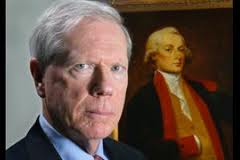
The 11th Anniversary of 9/11 ~ Paul Craig Roberts
The article below was written for the Journal of 9/11 Studies for the eleventh anniversary of September 11, 2001, the day that terminated accountable government and American liberty. It is posted here with the agreement of the editors.
In order to understand the improbability of the government’s explanation of 9/11, it is not necessary to know anything about what force or forces brought down the three World Trade Center buildings, what hit the Pentagon or caused the explosion, the flying skills or lack thereof of the alleged hijackers, whether the airliner crashed in Pennsylvania or was shot down, whether cell phone calls made at the altitudes could be received, or any other debated aspect of the controversy.
You only have to know two things.
Continue reading “Paul Craig Roberts: 9/11 – Reviewing the UnCredible Once Again”
Yoda: Education Finally Being Deeply Disrupted & Modernized by Internet
04 Education, Advanced Cyber/IO
The 3 Biggest Ways Technology Is Disrupting Education Forever
Digital education is today where digital music was in 2001. The digital music revolution started unintended when peer-to-peer file service “Napster” started by Sean Parker & Shawn Fanning in 1999 controversially morphed into a digital music sharing service.
It became mainstream with the highly successful launches of the Apple iPod & iTunes in 2001 and now services like Spotify are taking it to next level by integrating it to our increasingly digital lifestyle. As is the case of all life-changing trends, an unintended start changed the whole experience of buying and consuming music.
I enjoy being part of the generation caught in between a massive revolution (Digital Immigrants – Digital Natives). It is fascinating to see how technology is becoming so pervasive that it is re-disrupting cultures all over again. As in the case of digital music, the most fundamental driving force to this change is the Internet. The Internet has fundamentally boosted our ability to access and share knowledge.
The Internet has allowed us to re-imagine everything from reading a book to digesting the news to taking notes. Quite fittingly, the next big trend is going to be the disruption of education.
There’s been a long-time joke in education: if Rip Van Winkle woke up today, he’d be puzzled by just about every aspect of modern life–from planes to tablets –but he’d feel right at home in many classrooms. Now that’s starting to change in a big way.
Education has two challenges: access and effectiveness. It all started relatively quietly with Bill Gates’ favorite teacher Salman Khan’s YouTube channel, followed by highly successful “A.I. Class” experiment of Stanford University where over 160,000 enrolled from 190 countries. Here are a few other disruptive things happening right now that will changed education as we know it.
MOOCs
At the forefront we have Udacity, EdX, and Coursera (the “Big Three?”) that work with leading American universities to offer free online courses known as Massive Open Online Courses, or MOOC’s. Just in matter of months they have reached two million registered students from roughly over 200 countries. Students in MOOC’s typically watch short video lectures, complete automatically graded tests or assignments, and use online communities to work through concepts they don’t understand. MOOC’s mission is to make the world’s best academic programs accessible to masses for free.
Online Degrees
Led by 2tor, known to be most-funded education startup, there are hosts of private technology companies are on the mission of taking campuses online. They work with physical campuses to convert the courses offered in digital format so that they can be delivered online. They offer to reduce the cost of education and make the universities universally accessible.
Social Learning
Led by Edmodo, Schoology and Lore this is the most active space. The idea here is to apply modern social web technology to enhance effectiveness and management of in campus delivery of education. Most of these products have seen very large-scale adoption in the recent past and some of these are on the way to emerge as the integral part of formal education.
To me these initiatives will drive in some very fundamental change in the education. In addition to these there is a lot more happening, which I shall cover in subsequent articles. The fact is the Web’s infrastructure is built, the platforms have emerged, everyone is connected on social networks and open education resources are available everywhere; we now need to connect the dots and create a meaningful digital learning ecosystem in a way that augurs well with the digital life style of today’s learner.
