Stephen E. Arnold: IBM PR in Overdrive — IBM Substance Completely Lacking

IO Impotency
Stephen E. Arnold
Stephen E. Arnold

Watson and Shopping: No Service, Just an Assertion

I read “Make IBM’s Watson Your Personal Shopping Assistant.” IBM wants to leapfrog www.pricewatch.com, www.amazon.com, and the aging www.mysimon.com, among other shopping services.

Now quite a few people have embraced Amazon’s flawed, yet popular, recommendations service. I am trying to remember when I first noticed this somewhat annoying feature of the digital WalMart. I cannot recall. I am reminded of the weaknesses of the system each time I log in and see recommendations to my wife’s book selections. Undoubtedly she and I are not following Amazon’s best practices. My wife is pretty familiar with my user name and password, Amazon, and the ease with which she can order products (dog vitamins), novels (wonky mysteries infused with herring), and oddments I know won’t plug into my computer systems; for example, something for a faux soft drink machine.

My view is that for some folks, an Amazon habit is going (note the present progressive)  to be difficult to modify. Even though Amazon is struggling to deliver profit joy, the Amazon online shopping thing has quite a following.

Well, just in the nick of time–is it years too late?—IBM says it will apply the billion dollar baby to meet my shopping needs. Oh, yeah. Here’s what I learned from the write up:

Continue reading “Stephen E. Arnold: IBM PR in Overdrive — IBM Substance Completely Lacking”

Graphic: Global Internet Access

IO Impotency
Click on Image to Enlarge

QUOTE: On a continent where only 7 percent of its inhabitants are online, this map is an eye-opening illustration of the digital divide. With the internet comes improved access to information, communication and ideas — and organizations need to make sure to bridge the gap. The good news is that Africa's telecommunications market is one of the fastest growing in the world.

Phi Beta Iota: We would add Amazonia, First Nation (North), and Central Asia.

Source

Jim Dean: Alexander Orlov on USA Implosion in Middle East — “Going, Going, Gone…”

05 Iran, 06 Russia, Commercial Intelligence, Cultural Intelligence, IO Deeds of War, Peace Intelligence
Jim W. Dean
Jim W. Dean

NEO – USA in Mid East – Going, Going, Gone

[Veteran's Today Editor's note:  Alexander brings us more analysis from the Russian perspective at this critical time. The US seems to be rolling the dice in a desperate game to create instability on Russia's border, establish an offensive base in the Ukraine, threaten Russia gas markets in Europe, and give Putin some payback for his solid support of Syria.

The famous quote of Carl von Clausewitz comes to mind, “War is the continuation of politics by other means.”

But I think 21st century America will be remembered for raising sanctions up to the level of conducting war and occupying a targeted country at the same time, while using the least amount of military power.

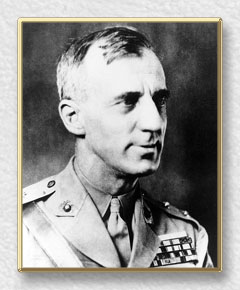
General Smedley Butler, USMC

America seems hell bent on conducting economic warfare across the globe, where our military has been relegated to the thug status that Marine General Smedley Butler described in his famous expose, War is a Racket. The modern Madison Avenue PR people had their fun trying to disguise the dirty deeds, with feints like calling them “color revolutions” versus the assaults that they really are.

But the bloom is off the rose now. We see the ugliness of it all for what it really is… just plain ugly. We also see that it is not being done for our benefit in any way. On the contrary, it never was.

We have been plantation assets to be used however the elites have wanted. And this endless game of serfdom will never end until we refuse to play the game… Jim W. Dean ]

US is losing its positions in the Middle East due to the Ukrainian Crisis

… by  Alexander Orlov,    … with  New Eastern Outlook, Moscow

By taking an extremely hostile position against Russia in the Ukrainian crisis, Washington has managed to hasten the reorientation of Moscow towards the East, especially the Mid East.

Iran is among the states that can expect the future development of bilateral relations with Russia, since it is one of the most influential countries in the region.

Complete article below the fold.

Continue reading “Jim Dean: Alexander Orlov on USA Implosion in Middle East — “Going, Going, Gone…””

Stephen E. Arnold: Big Data – Can the Trend Deliver?

IO Impotency
Stephen E. Arnold
Stephen E. Arnold

Big Data: Can the Latest Trend Deliver?

If you track Big Data, you will want to read “Why Big Data Is Stillborn (for Now).” The write up hits the highlights of the flickering hyperbole machine that sells fancy math to the government and organizations desperate for a Silver Bullet.

The article asserts:

Most “big data” has to be moved in physical containers. Most data centers do not have excess capacity to handle petabyte level simultaneous search and pattern discovery.

Believe in real time and high speed access? Consider this statement:

Bandwidth, throughput, and how “real time” is defined all come down to the weak link in the chain and we have many ***very weak*** links across the chain and especially in Washington, D.C. The bottom line is always “who benefits?” The FCC decision to destroy net neutrality is in error. The citizen, not the corporation, is “root” in a Smart Nation.

If you wonder why your Big Data investments have yet to deliver a golden goose pumping out 24 caret eggs everyday, check out this write up. Worth reading.

Stephen E Arnold, April 25, 2014

See Also:

Big Data @ Phi Beta Iota

Kevin Barrett: Malaysian Airlines – Remote Hijack, Sealed Evidence, Most Aircraft Vulnerable

07 Other Atrocities, Advanced Cyber/IO
Kevin Barrett
Kevin Barrett

Missing Plane Mystery Solved?

Two former high-level insiders may have solved two of the mysteries surrounding the disappearance of Malaysian Flight 370:

What caused the plane to suddenly fly off-course? And why are all of the governments involved covering up the truth?

Had MH 370 crashed in the ocean, it would have left a huge, easily-visible debris field. Countries with satellite surveillance systems, and their partners, know exactly where the plane went. Boeing and its engine-manufacturer Rolls Royce also know, since planes and engines have GPS systems. (You can buy a GPS system for a little over $50 in the US; it would be naive to think a $320 million aircraft doesn’t have one.) Even the INMARSAT satellite “pings” that we have been told can only sweep a broad arc of possible locations could in reality be used to locate the aircraft with some precision, due to the fact that radio transmissions vary in signatures according to time of day, sunspots, and so on. The “hunt for the airliner” peddled to the mainstream media is clearly a charade.

So what are all of the major players – both in governments and the aircraft industry – working so hard to hide?

Continue reading “Kevin Barrett: Malaysian Airlines – Remote Hijack, Sealed Evidence, Most Aircraft Vulnerable”

Stephen E. Arnold: Caution Advised on Big Data

IO Impotency
Stephen E. Arnold
Stephen E. Arnold

Caution Advised on Big Data

Someone is once again raining on the big data parade, urging us to consider carefully before jumping on the bandwagon. FT Magazine warns, “Big Data: Are We Making a Big Mistake?” Writer Tim Harford points to Google’s much-lauded Google Flu Trends as an emblematic example in the field. That project notes an increase in certain search terms, like “flu symptoms” or “pharmacies near me”, by point of origin. With those data points, its algorithm extrapolates the spread of the disease. In fact, it does so with only one day’s delay, compared to a week or more for the CDC’s analysis based on doctors’ reports.

The thing is, this successful project is also an example of the blind faith many are putting into the results of data analysis. The scientists behind it aren’t afraid to admit they don’t know which search terms are most fruitful or how, exactly, its algorithm is constructing its correlations—it’s all about the results. Correlation over causation, as Harford puts it. However, Google Flu Trends hit a speed bump in 2012: it greatly over-estimated the flu’s spread, unnecessarily alarming the public. Correlation is much, much easier to determine than causation, but we must not let ourselves believe it is just as good.

The article cautions:

Continue reading “Stephen E. Arnold: Caution Advised on Big Data”

Berto Jongman: WIRED on Right Way to Build Smart Cities

Advanced Cyber/IO, Civil Society, Cultural Intelligence
Berto Jongman
Berto Jongman

Here’s the Right Way to Build the Futuristic Cities of Our Dreams

  • By Adie Tomer and Rob Puentes

Our technology-first approach has failed the city of the future. So-called “smart cities,” powered by technology, carry the promise of responding to the great pressures of our time, such as urban population growth, climate instability, and fiscal uncertainty. But by focusing on the cutting-edge technologies themselves and relying on private companies to move forward, we have lost sight of what we even want our cities to achieve with all that tech.

To date, smart city conversations mostly trade in optimism, focusing on images of cities without congestion and smart energy meters on every building. Global publications like this one devote space to specific solutions, while television commercials offer a visual taste of how our cities could look in the years ahead. Marketers fuel the fire by estimating a multi-trillion dollar market within a decade.

At what point do we prioritize the municipality–the actual governance of the city–to make great plans?

To help push the industry forward and achieve those trillion dollar market projections, we need to spend as much time and energy creating policy blueprints as we’ve spent researching and marketing new technologies. Smart policies must match smart technologies.

KEY POINTS ONLY::

1. Smart Cities Must Craft an Economic Vision That Includes a Specific Role for Technology

2. Smart Cities Must Use Technology to Promote a Healthy Economy

3. Smart Cities Must Include an Empowered Municipal Technology Executive

4. Smart Cities Must Balance Project Size and Appetite for Risk

5. Smart City Executives Need Stronger Networks and Improved Communication Tools

Read full post.

Continue reading “Berto Jongman: WIRED on Right Way to Build Smart Cities”

noble gold