The current academic publishing model has been failing for some time, but it seems things are worse than previously thought. The model is broken: professors have to publish to be tenured, but they have to pay to be published. But the main market for academic publishing is academia, the very employers of these same professors. So the world of education is paying for academic publishing both coming and going. Furthermore, the pressure to publish and achieve tenure can be so overwhelming that everyone starts looking for some relief, or even a shortcut. The National Post has exposed a deeper problem in their article, “It’s the ‘Worst’ Science Paper Ever — Filled with Plagiarism and Garble — and Journals are Clamouring to Publish It.”
In the previous article, Cyber Intelligence Collection Operations, the types of collection and the types of data that could be obtained were discussed. At the end of the discussion I pointed out that analysts must be critical of the data they evaluate as at any time it could be compromised.
Specifically, adversary actors could employ counterintelligence or deception type techniques to push analysts to draw wrong conclusions or discount the data entirely. In this article we will cover this topic of Cyber Counterintelligence (CCI) and discuss its two main branches: Offensive CCI and Defensive CCI.
GEN(R) Shinseki is catching flak, perhaps justified, perhaps not, for the deepening VA scandal. Invite your attention to attached as an indicator of what the man is capable of. Only issue I ever had with him was the black beret for everyone matter.
EXTRACT:
I think it ¡s important to point out that the Vision statement begins and ends talking about people. People are central to everything we do ¡n The Army. Institutions don't transform; people do'. Platforms and organizations don't defend the nation; people do. And finally, units don't train; they don't stay ready; they don't grow and develop leadership; they don't s'acrifice and they don't take risks on behalf of the Nation; people do. Without people in the equation, readiness and transformation are little more than academic exercises.
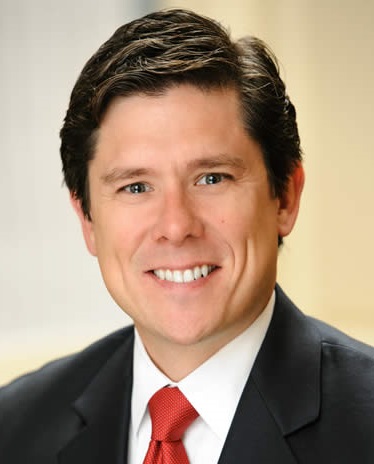
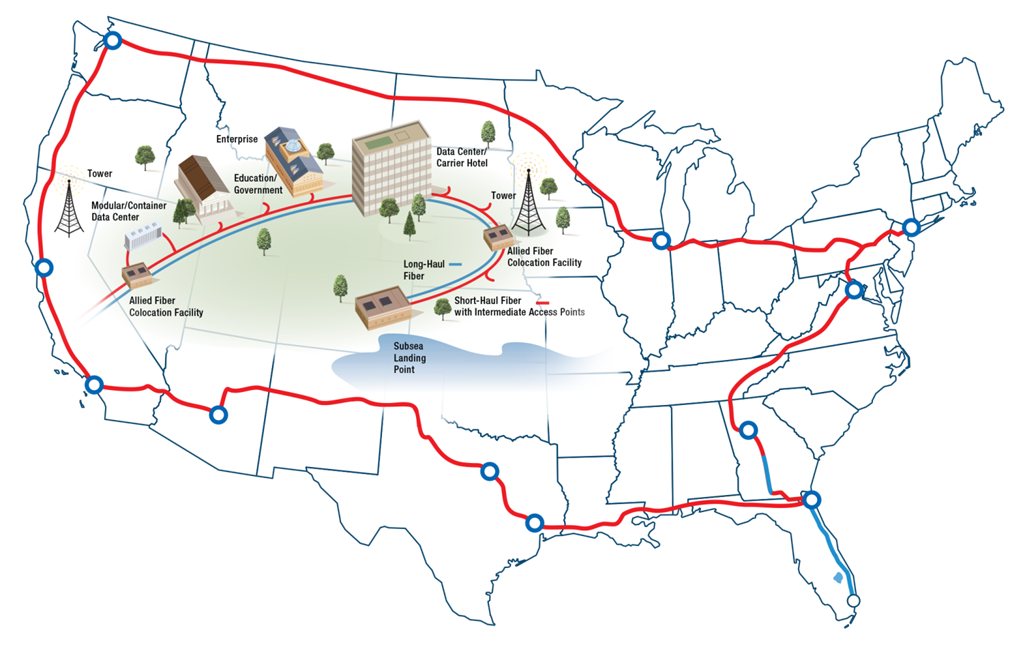
Hunter Newby is the CEO of Allied Fiber, a carrier neutral provider of dark fiber with a national footprint addressing the lack of accessible dark fiber in the market by making it available for long term lease. He is a twelve year veteran of the telecom networking industry and has built a depth of creative and management experience and expertise in multiple disciplines within the field ranging from sales, marketing and technical aspects to network engineering and raising capital.
ROBERT STEELE: I encountered Hunter Newby in NYC where he was the opening speaker at LIBTCH NYC (I was the closing speaker). In all the years I have been focusing on cyber as the flip side of intelligence, I cannot think of a more energizing and inspiring package of intelligence and integrity combined with a concept I did not properly understand: dark fiber. Understood in Hunter's terms, this also changes our understanding of net neutrality — communities can opt-in to direct access to this dark fibre, and by-pass all intermediaries with enormous cost savings and bandwidth amplification.
Click on Image to Enlarge
We are going to start following this. Dark fiber is the carrier-neutralphysical layer that is in theory without limit, which Hunter has very brilliantly arranged to run within the railroad right of ways across America. This is “root” for a Smart Nation on the cyber side. This is also what does not exist as a public or universal service. Below is the briefing he presented, followed by a selection of particularly interesting columns he has published before. A complete list of his prior columns is here.
Are we really facing a STEM crisis? Or is this crisis as bogus as the missile gap that started the space race over 50 years ago? It's time to cut through the hyperbole and take a hard look.
EXTRACT
In our desire to heighten technical skills and achieve scientific hegemony, we lost sight of the incredible value of a well-rounded education. And this loss has had a debilitating effect on society today.
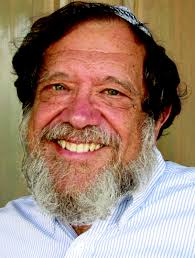
Hal Berghel is currently Professor of Computer Science at the University of Nevada, Las Vegas where he has previously served as Director of the School of Computer Science and Associate Dean of the College of Engineering. He is also the founding Director of the Identity Theft and Financial Fraud Research and Operations Center. His research interests are wide-ranging within the binary and digital ecosystem, ranging from logic programming and expert systems, relational database design, algorithms for non-resolution based inferencing, approximate string matching, digital watermarking and steganography, and digital security (including both computer and network forensics).
It was a clarifying moment on April 30 when the Conference of Presidents of Major American Jewish Organizations rejected an application for membership from J Street. For several years, the J Street leadership has worked hard to create a palatable alternative to hard-line versions of what it means to be pro-Israel. But this spring, J Street’s leaders could not get the seal of approval they craved from the organized American Jewish establishment, which apparently sees little need for Zionism to acquire a more humane face.
The Conference of Presidents was founded in the 1950s to speak with “one voice” for American Jews to U.S. officials. In that context, six decades later, the Conference voted to crush the claim from J Street that dissent — even channeled, “pro-Israel” dissent within Zionist consensus — can be effective or respected. This latest turn of events is a progression in the dynamics that took hold during the late 1940s with the banishment of substantive dissent from major Jewish groups in the United States, an exile that continues to this day.
Since its founding six years ago, J Street has emerged as a major Jewish organization under the banner “Pro-Israel, Pro-Peace.” By now J Street is able to be a partial counterweight to AIPAC, the American Israel Public Affairs Committee. The contrast between the two U.S. groups is sometimes stark. J Street applauds diplomacy with Iran, while AIPAC works to undermine it. J Street encourages U.S. support for “the peace process” between Israel and the Palestinian Authority, while AIPAC opposes any meaningful Israeli concessions. In the pressure cooker of Washington politics, J Street’s emergence has been mostly positive. But what does its motto “Pro-Israel, Pro-Peace” really mean?
That question calls for grasping the context of Zionism among Jews in the United States — aspects of history, largely obscured and left to archives, that can shed light on J Street’s current political role. Extolling President Obama’s policies while urging him to intensify efforts to resolve Israeli-Palestinian conflicts, the organization has staked out positions apt to sound humanistic and fresh. Yet J Street’s leaders are far from the first prominent American Jews who have struggled to square the circles of the moral contradictions of a “Jewish state” in Palestine.